
The climbing bean is closely related to runner beans and bush beans. Like the runner bean, it needs a climbing frame to grow up.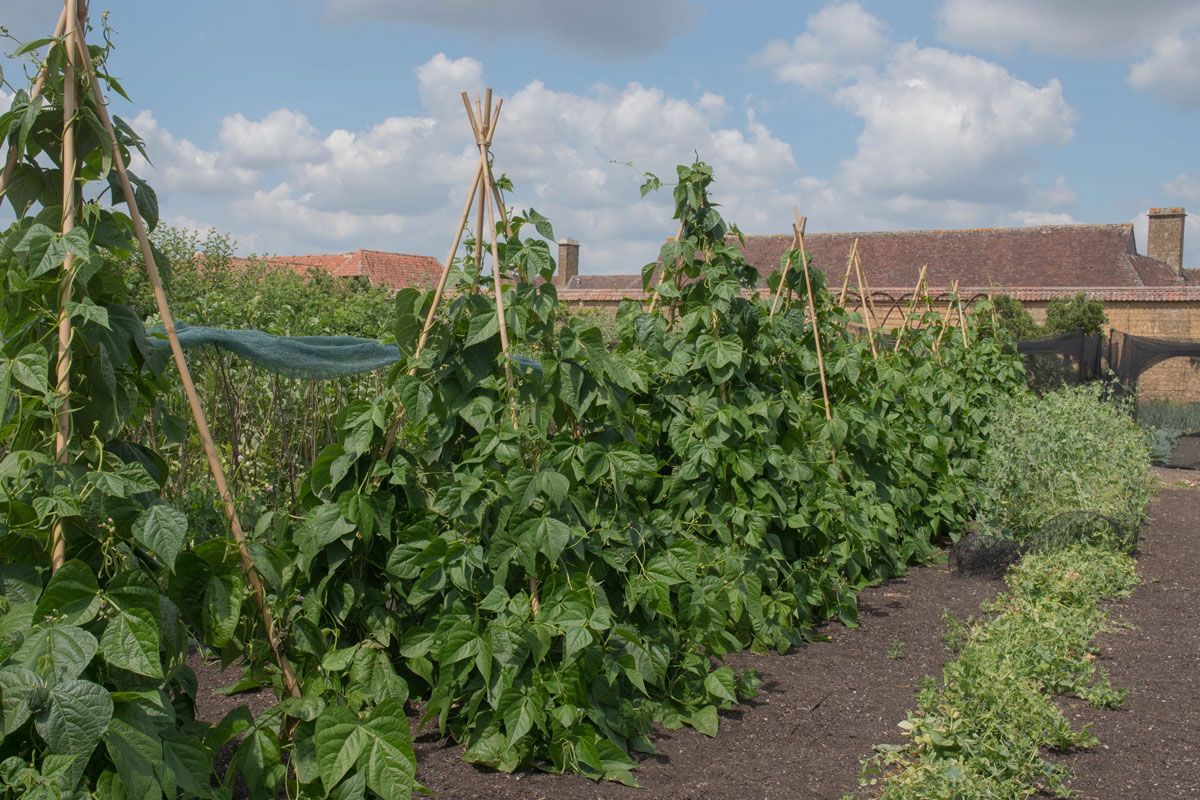
Peter Turner Photography/Shutterstock.com
It originates from South America, just like the other garden beans, so it's sensitive to cold. Don't plant it outdoors until the last night frosts have passed.
Facts and figures
Planting & harvest times of Pole bean
Direct sowing from Late April to Late May. Transplant to bed from Mid May to Mid June. Pre-grow about 30 days before planting out, approximately between Mid April and Mid May. After a growing period of 70 days, harvest can begin around Early July and continues until Late October.
Sow and plant Pole bean
Climbing beans need a support frame to grow up. Put this in place before sowing. Various types of poles work well, such as bamboo canes (also called Tonkin canes), steel rods, or classic bean poles made from spruce, set up in a tipi shape. You can also grow them in a row, with a pole on each side connected at the top by a long horizontal pole. You'll find plenty of great examples online. Once the frame is standing firmly, sow 6 to 8 beans around each pole, about 2 cm deep, and water them thoroughly. The row and planting spacings refer to the approximate distance between the support poles, as the seeds are placed around them.
If slugs are a big problem, you can start climbing beans indoors. Around mid-April, place 6 seeds in a circle in a pot. Plant them out in mid-May. Carefully remove the seedlings and plant them around the poles, wrapping them in the same direction they would naturally twine.
Location and soil
It copes well with most soils. Just make sure the soil is nicely loosened, and during the growing season, give it a gentle loosen now and then if the ground gets compacted. This helps water reach the roots more easily.
Good and bad companions of Pole bean
Alliums – that means onions, garlic, leeks and the like – are not welcome as neighbours for climbing beans.
Predecessors and successors of Pole bean
Other legumes, itself, and also lettuce, spinach, carrots and potatoes are not good as predecessors. As successors, legumes, alliums and lamb's lettuce are best avoided too.
Varieties
Besides the varieties with green pods, there are also ones with purple, yellow, and red or purple speckled pods. These are easier to spot when picking. The colour disappears during cooking – they all turn green again.
Care and fertilising
As a legume, it can fix and use atmospheric nitrogen with the help of root nodule bacteria. So you don't need to fertilise climbing beans. A light helping of compost in spring before planting does no harm though. In dry weather, give them a good watering once or twice a week.
Harvest and processing
Once the first green pods have reached a decent size – the beans inside should only be slightly visible – you can start harvesting on a rolling basis. From then on, pick the pods every 2 to 3 days. This also boosts the yield. You can keep the beans in the fridge for about a week, though the strings along the seams may toughen up. If you've harvested more than you can eat and they're piling up in the fridge, you can blanch and freeze them or preserve them with tasty recipes. You can also wait for the seeds to fully ripen – they're ready when the pods are dry. Our bean poles are so tall that beans at the top always ripen fully, simply because we can't reach them. Let the shelled beans dry thoroughly and store them somewhere airy, for example in small cloth bags. They'll keep for a good 2 years. Beans must be cooked before eating – they're poisonous raw.