
Watercress can now be found almost worldwide along clean, shallow waters with little current, such as springs. It's a perennial and stays green through winter, so it can contribute to a balanced diet even in the cold months. It contains plenty of vitamin C and important minerals like iodine. It also has secondary plant compounds such as mustard oils, which give it its peppery flavour. These many nutrients also make it a valuable medicinal plant. Among other things, it helps reduce fever, acts as a diuretic and loosens mucus. It also aids with digestive complaints and can be applied externally as a tincture against eczema.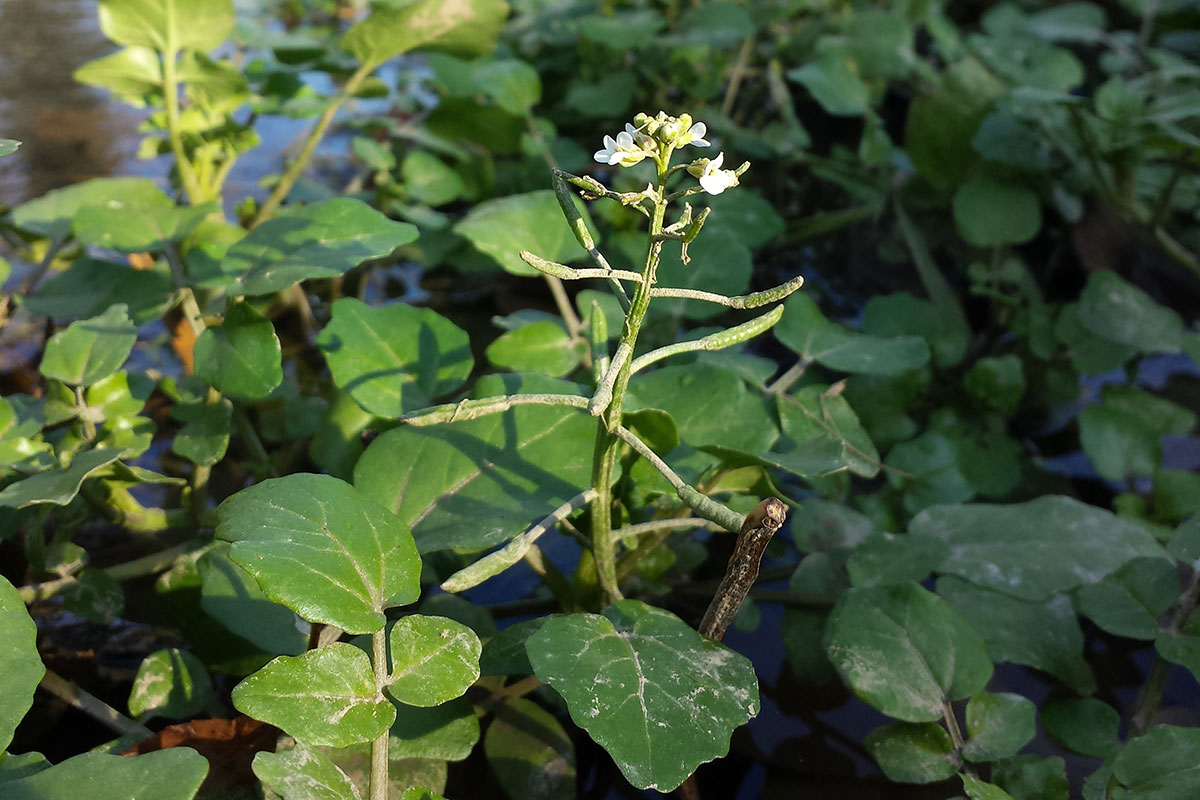
Stefan Lefnaer (CC BY-SA 4.0)
Facts and figures
Planting & harvest times of Watercress
Transplant to bed from Early August to Late September. Harvest begins around Early September and continues until Late May next year.
Location and soil
Watercress, much like wasabi, is a bit of a special case when it comes to growing. It prefers things moist to wet, as you can probably guess from its name. Cool, clear, flowing water is what it likes best.
If you have a small stream or a cool pond, that's the ideal spot.
You can also grow it with more effort in soil or a water basin, as long as you keep the soil constantly very moist or regularly replace the water in the basin so it doesn't heat up too much. The yield and lifespan usually suffer quite a bit though.
Good and bad companions of Watercress
Predecessors and successors of Watercress
Harvest and processing
Watercress flowers from May to September. Once it starts blooming, the leaves don't taste as good any more.
That means, the other way round, you can harvest the plant from September to May. You can use it like ordinary cress in salads, in herb quark, to season soups, or simply on a slice of buttered bread.