
Flower Sprouts are a relatively new variety developed in Great Britain. A cross between Brussels sprouts and kale, with a slightly nutty flavour. They look like loosely opened Brussels sprout rosettes, growing on a long stem, often with a green-purple colouring. When it comes to planting and care, they are very similar to Brussels sprouts.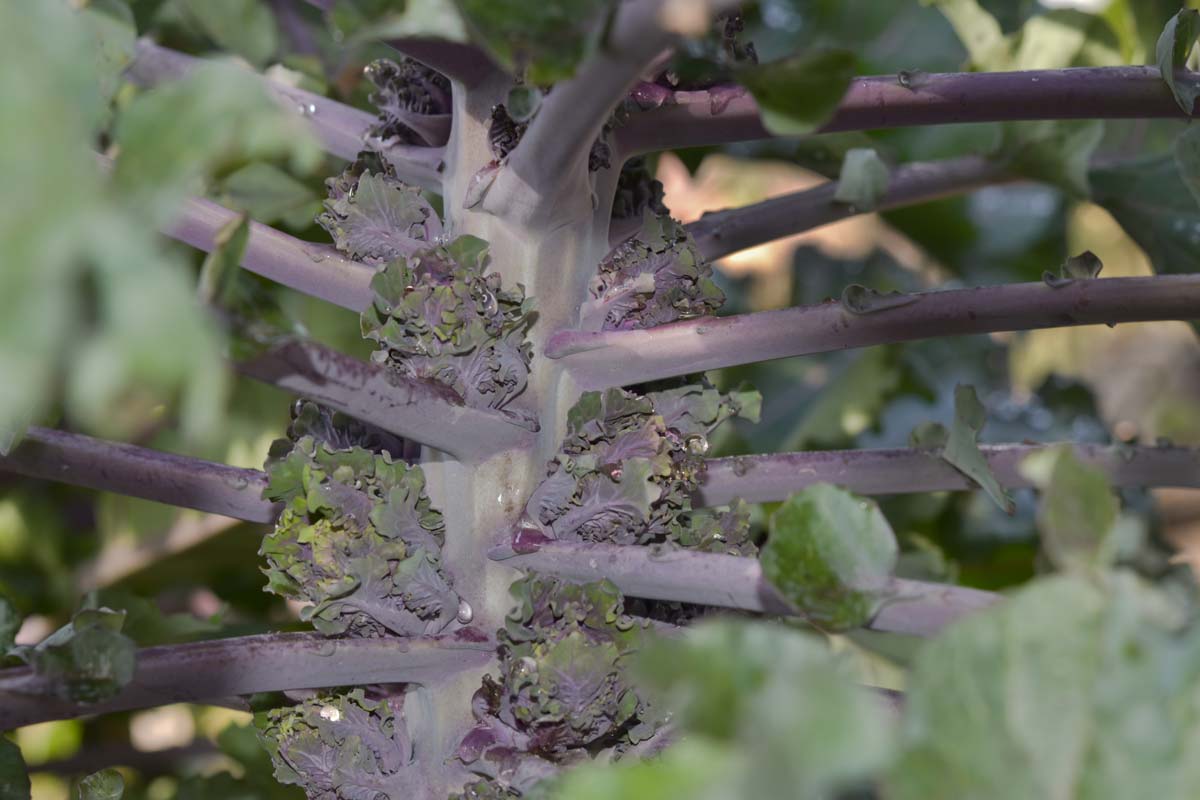
fotomarekka/Shutterstock.com
Facts and figures
Planting & harvest times of Flower Sprouts
Direct sowing from Late March to Mid May. Transplant to bed from Mid May to Late June. Pre-grow about 60 days before planting out, approximately between Mid March and Late April. After a growing period of 165 days, harvest can begin around Late October and continues until Mid March next year.
Sow and plant Flower Sprouts
You can sow directly from mid to late March, but starting them off indoors from early to mid-March is the better option. After a few days of hardening off, plant them out into the bed from early to mid-May. You can add a small amount of organic fertiliser to the planting hole right from the start.
Location and soil
As heavy feeders, they prefer well-composted garden soil in a sunny spot. Brassicas dislike acidic soil, so add lime if needed.
Good and bad companions of Flower Sprouts
Growing them near alliums can lead to stunted growth. They also don't get on well with strawberries and a few other plants. Good neighbours include peppers, lamb's lettuce and radicchio.
Predecessors and successors of Flower Sprouts
As always, avoid planting the same crop in the same spot for several years, and fellow brassicas make poor predecessors or successors. Alliums and a few others don't mix well with brassicas in the rotation either. That said, parsnips, chard and beetroot are among the plants that do well alongside them.
Care and fertilising
To protect them from cabbage white butterflies or whitefly, try planting celery between the brassicas or covering them with insect-proof netting. One or two applications of organic fertiliser and/or watering with plant teas or liquid manure help supply the necessary nutrients and keep the plants healthy. During the main growing period, make sure to water regularly and thoroughly.
Harvest and processing
Depending on the weather and growth, you can harvest the rosettes from late autumn through to spring during frost-free spells. Harvest from the bottom upwards, and new ones will keep forming. In spring, you can also harvest and use the small 'savoy-like head' that develops at the top. The tender rosettes have a short cooking time and are perfect for a quick stir-fry.