
There are several good reasons to grow mustard. First of all, you can use it year-round as green manure for your vegetable beds. But you can also harvest the seeds. You can of course make mustard from them, but they're also popular for pickling gherkins and other vegetables, and as a cooking spice. You can also continuously pick the young leaves for salads or herb quark and similar dishes.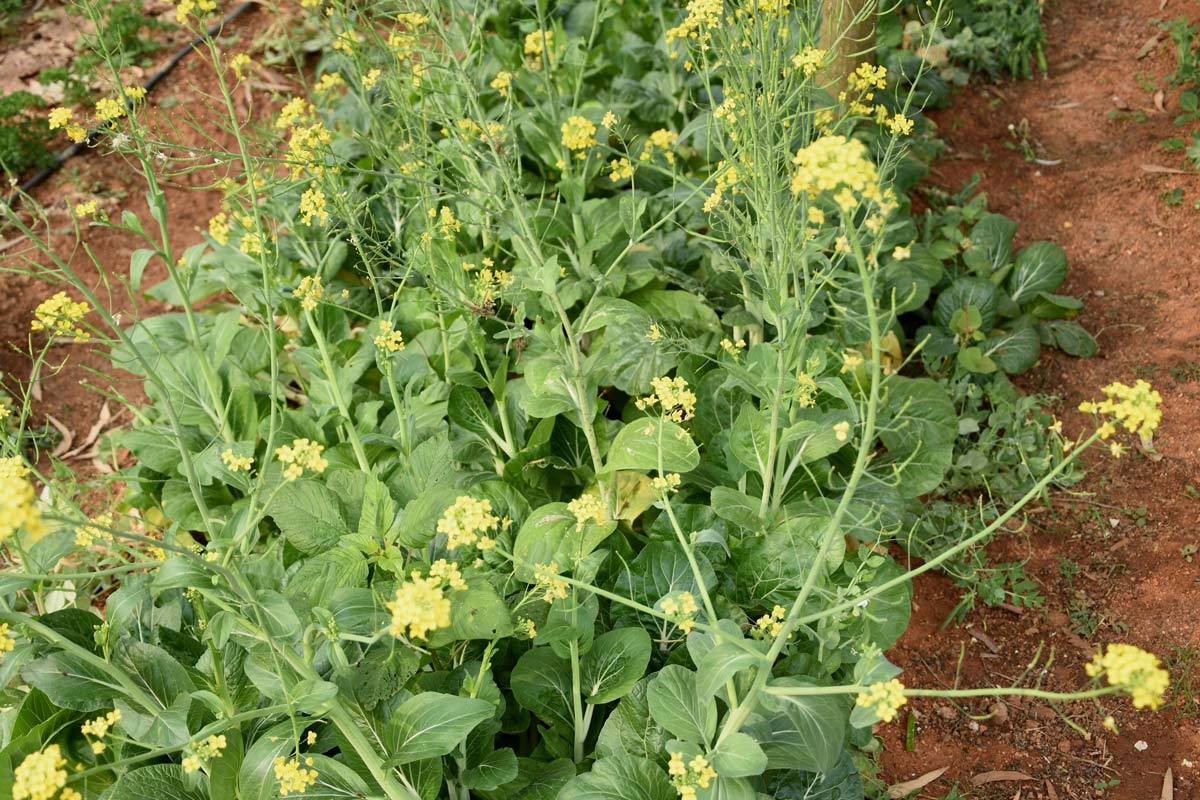
akula bala guravaiah/Shutterstock.com
Facts and figures
Planting & harvest times of Mustard
Green manureDirect sowing from Early January to Late December.
Planting 1Direct sowing from Early May to Late May. Transplant to bed from Early May to Late May. Pre-grow about 14 days before planting out, approximately between Mid April and Mid May. After a growing period of 150 days, harvest can begin around Early October and continues until Late October.
Sow and plant Mustard
For green manure, you can sow mustard all year round.
Planting 1 shows sowing for seed production. Sow the seeds directly in May or plant out seedlings started 14 days earlier. Space them about 15 cm apart with 20 cm between rows.
You can harvest the leaves up until flowering.
Location and soil
The soil shouldn't be acidic — ideally neutral or slightly alkaline, which you can achieve by adding lime. Other than that, mustard isn't fussy. It copes well with both full sun and partial shade. Just keep the soil evenly moist.
Good and bad companions of Mustard
Avoid planting mustard next to other brassicas.
Predecessors and successors of Mustard
You should also avoid brassicas in the crop rotation.
Varieties
Black mustard has the hottest seeds. These are processed together with brown mustard, which has the next hottest seeds, into hot mustard. White mustard has the mildest seeds, which are made into medium-hot mustard.
Care and fertilising
Mustard is undemanding — you just need to keep it slightly moist. It doesn't need any fertiliser.
Harvest and processing
You can start harvesting leaves about 4 weeks after sowing. Always pick the outer ones — they're the most tender. For the seed harvest, you'll need to wait until October. Once the pods are brown and dry and the leaves are starting to wither, you can harvest the pods. The easiest way is to put them in a sack and bash it against a wall or something similar. The lighter pods rise to the top and you can collect them that way. Let them dry on newspaper for another month, then you can store or process them. If you grew the plants as green manure, simply cut them down before they flower and leave them on the bed. Even easier — run the lawnmower over them and spread the cuttings evenly across the bed.