
The cardoon is the largely unknown sibling of the artichoke in this part of the world. In France and Italy you'll find far more recipes for it than here. Unlike the artichoke, you eat the blanched stems rather than the flower buds as a vegetable. Like the artichoke, it belongs to the thistle family and has the same health-promoting compounds.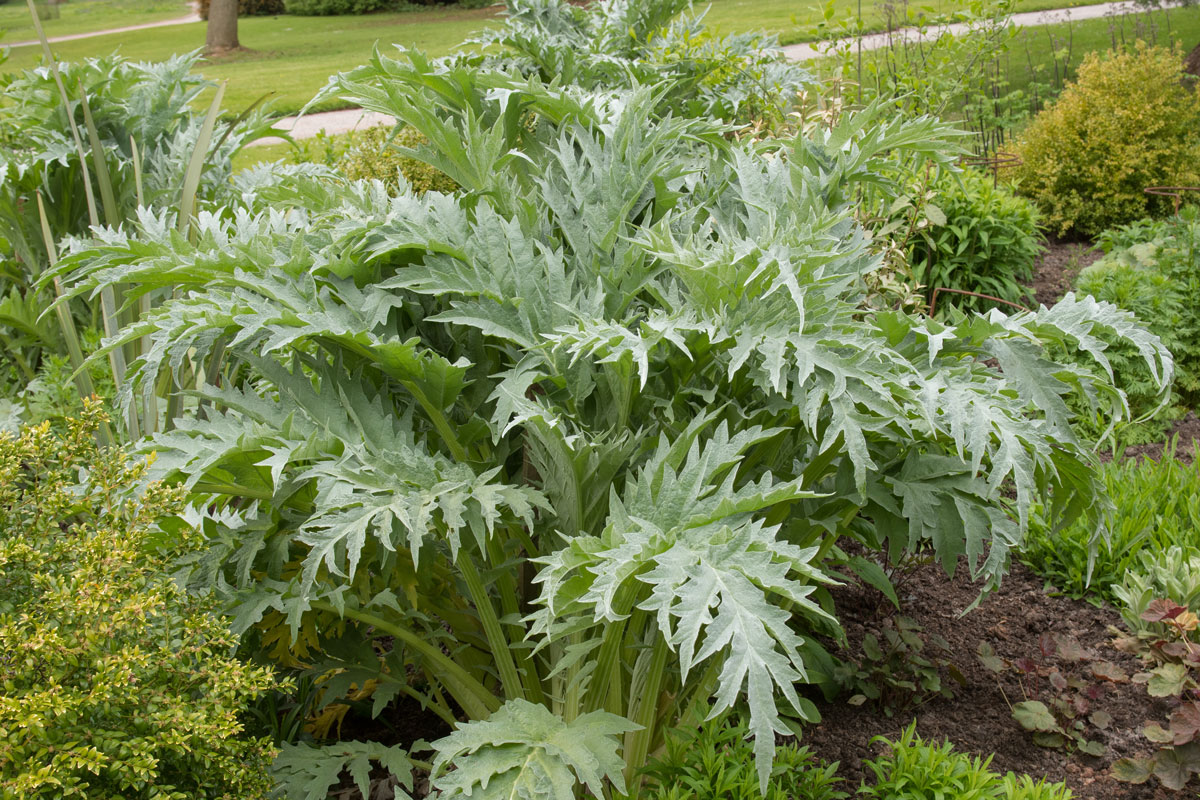
Peter Turner Photography/Shutterstock.com
Facts and figures
Planting & harvest times of Cardoon
SpringDirect sowing from Mid April to Mid May. Transplant to bed from Mid April to Mid May. Pre-grow about 30 days before planting out, approximately between Mid March and Mid April. After a growing period of 150 days, harvest can begin around Mid September and continues until Late October.
SpringAfter a growing period of 150 days, harvest can begin around Early August and continues until Late October next year.
Sow and plant Cardoon
Sow cardoon seeds from mid to late April into 10 cm pots. Put three seeds per pot and then keep the strongest seedling. Once the plant has 3 to 5 true leaves, you can plant it out – that's roughly late April to mid-May. Harden the plants off for about a week beforehand.
Location and soil
Like the artichoke, the cardoon needs a warm, fully sunny and sheltered spot with deep, nutrient-rich soil. Prepare the soil with a generous amount of compost or well-rotted manure. And it needs space – about one square metre.
Care and fertilising
Cardoons like it moist and warm. Keep the plants well watered but avoid waterlogging, and give the leaves a spray now and then. One or two feeds during the season will also be appreciated.
The cardoon is considerably more frost-tolerant than the artichoke. In winter, either cut back the leaves without damaging the heart leaves, or tie them loosely together at the top. Then mound up soil around the base and add a covering of leaves around the outside. Ideally, place a container loosely over the top as well. If you overwinter this way, dig the plants out again in mid to late April. As an alternative, you can dig up the plant, shorten the leaves and overwinter it in a box of damp sand in a cool cellar, garage, or frost-free greenhouse. Don't let it dry out.
You can even try growing cardoon in a pot. It needs to be a really large and deep pot, though, as the plant develops a long taproot. So at least 50 litres. Then you can overwinter the whole thing, pot and all, in damp sand.
Harvest and processing
You harvest the lower part of the stems. Most varieties need blanching first. To do this, carefully wrap the stems up to the leaf base with straw, mulch film or hessian from early to mid-August. Bundle smaller groups of stems together, then tie them all up like a small palm tree. You can mound up soil around the base to keep it all stable. Leave it like that until you can harvest the blanched leaf stalks from early September onwards. They don't keep for long, so harvest bit by bit. For further preparation, cook the stems (usually without the leaves) for 20 minutes in salted water and then peel off the skin. After that, you can use them in whatever recipe you like. If you've harvested too much, you can chop up the pre-cooked stems and freeze or preserve them.