
Growing and eating different chilli varieties has become increasingly popular over the last few years. There's a huge range of varieties with different flavours and heat levels. The substance that causes the heat is called capsaicin, and the heat level is measured in Scoville units. The hottest chilli in the world, the `Carolina Reaper', has clocked in at around 2 million Scoville. For comparison, pepper spray only has about 200,000 Scoville and Tabasco only about 4,000 Scoville. Chilli plants have a very long growing period and need a lot of warmth. That's why they're not really suited to outdoor growing, unless you live in a region with a mild, wine-growing climate. Some robust varieties can be grown in pots in a sheltered spot on a balcony or terrace though.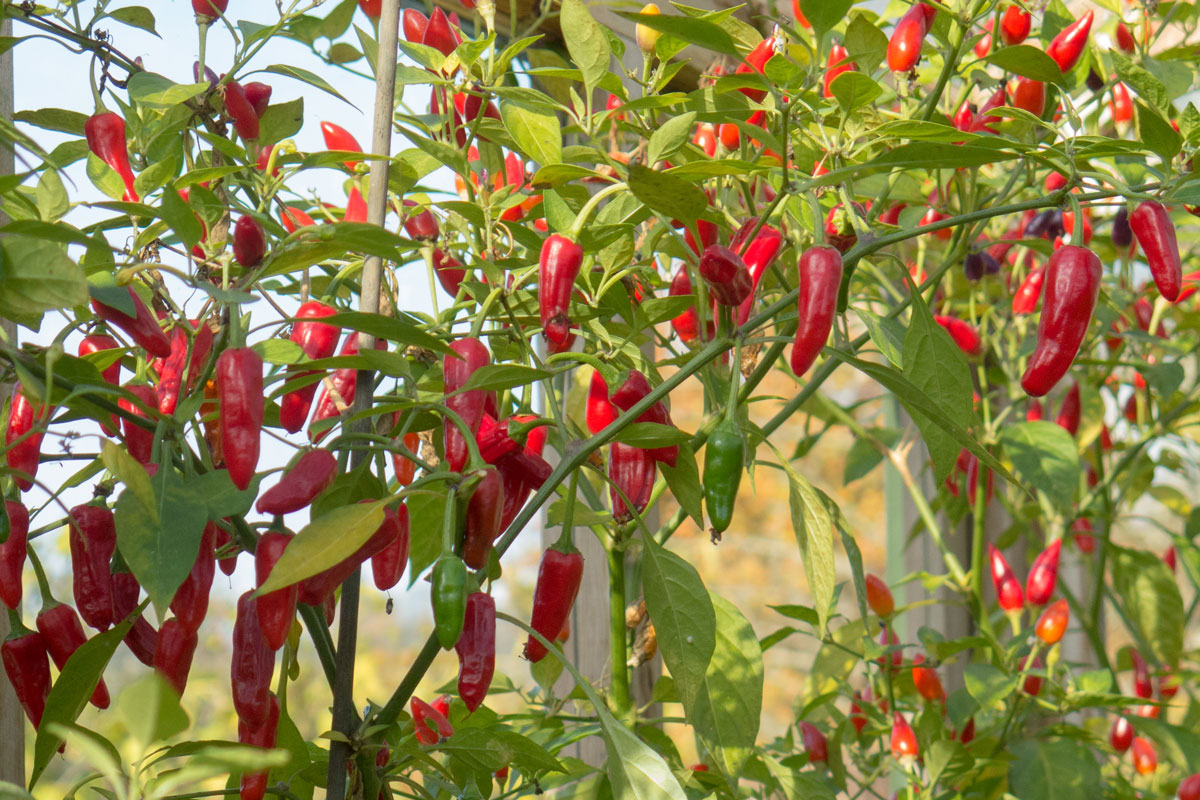
Peter Turner Photography/Shutterstock.com
Facts and figures
Planting & harvest times of Chilli
OutdoorsTransplant to bed from Early June to Early July. Pre-grow about 85 days before planting out, approximately between Early March and Early April. After a growing period of 180 days, harvest can begin around Mid August and continues until Late October.
GreenhouseTransplant to bed from Late April to Early July. Pre-grow about 85 days before planting out, approximately between Late January and Early April. After a growing period of 180 days, harvest can begin around Mid July and continues until Mid November.
Plant Chilli
Whether chilli and pepper seeds are dark germinators or light germinators depends on the variety. Most varieties are dark germinators, but a few need light to germinate.
Location and soil
Sunny and warm. Ideally in a greenhouse or on a sunny balcony or terrace.
Good and bad companions of Chilli
Predecessors and successors of Chilli
Varieties
There's a rich palette of varieties. They differ enormously in shape, colour, flavour and above all heat level. Everything from a mild tingle on the tongue to "chemical weapon" territory is possible.
Harvest and processing
When processing chillies, always wear gloves if you want to avoid your hands — and everything you touch with them (eyes, nose...) — burning for hours. Most of the capsaicin sits in the seeds and the membranes they're attached to. Capsaicin isn't water-soluble. That's why water or lemonade won't help against the heat. Fatty foods like milk, yoghurt or a cheese sandwich will soothe the pain though.