
Chives are one of the most popular herbs. They're perennial, so you don't need to replant them every year. A well-established clump is sometimes enough to supply a family of four. Because chives are helpful to other plants and their pretty flowers attract bees and other insects, they're a popular choice for bed edging in monastery gardens.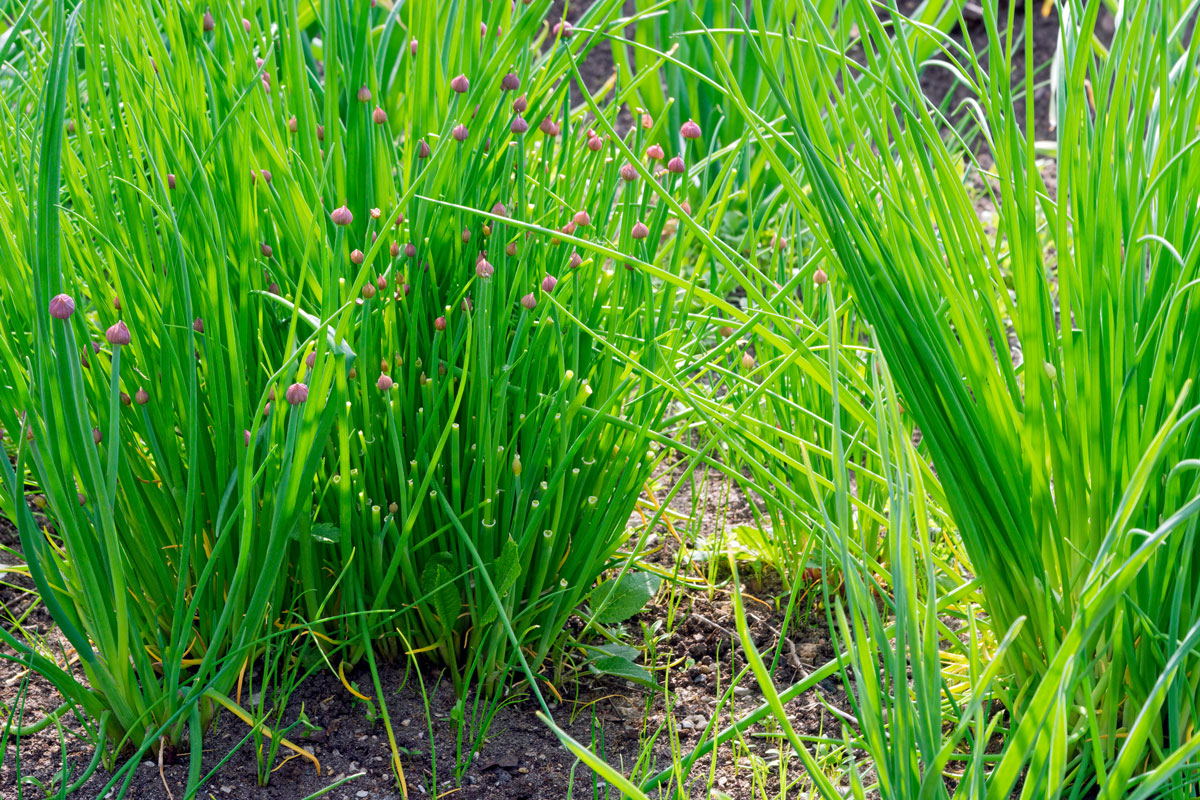
Ad Oculos/Shutterstock.com
Facts and figures
Planting & harvest times of Chives
Direct sowing from Early March to Late July. Transplant to bed from Early April to Late July. Pre-grow about 30 days before planting out, approximately between Early March and Late June. Harvest begins around Early May and continues until Late November.
Sow and plant Chives
You can sow chives in pots or directly outdoors. In a 12 cm pot, scatter about 20 to 30 seeds across the whole surface. Outdoors, use a few more seeds over roughly the same area, as the failure rate is higher. Only one spacing is given, since chives are perennial and aren't planted in the vegetable bed. Over the years, chives form dense clumps that you can divide. In theory, one such clump is enough for a family of four.
Location and soil
Chives like it sunny, nutrient-rich and not too dry.
Good and bad companions of Chives
Chives make a good neighbour for many plants. Their scent drives away carrot fly, for example. They also reduce the risk of fungal infections in other plants – grey mould on strawberries or downy mildew on cucumbers, for instance.
They don't get along with other alliums or brassicas, though.
Predecessors and successors of Chives
Don't plant after other members of the onion family.
Varieties
There are different varieties, some with fine and others with coarser stems. Flower colour also varies, from white through red to the well-known violet.
Care and fertilising
Unlike most other herbs, chives need an occasional feed and a helping of mature compost in spring before new growth starts. Since they constantly have to produce new leaves when you harvest them regularly, that's no surprise.
They don't cope well with drought either. The stems turn tough, or the plant dies off altogether.
Harvest and processing
You can happily eat the beautiful flowers too. They have a delicate flavour and look lovely in a salad.