
The radish arrived in Europe from Japan or China around the 16th century. The peppery spring vegetable quickly became popular. With its vibrant red colours and healthy nutrients, it lifts not only your digestion but also your mood.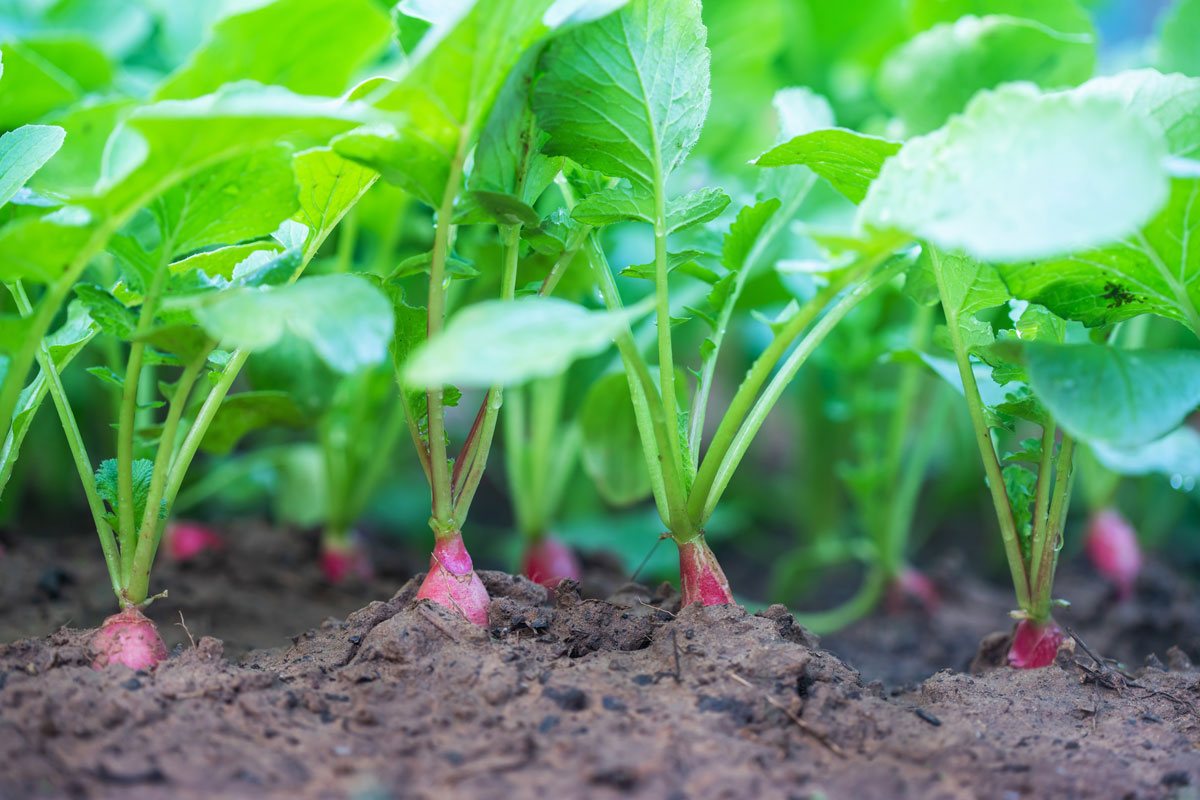
nednapa/Shutterstock.com
Facts and figures
Planting & harvest times of Radish
Direct sowing from Early March to Late August. After a growing period of 25 days, harvest can begin around Late March and continues until Late September.
Sow Radish
You can sow radishes outdoors from the end of February if you choose the right variety. Sow one seed every 5 cm in shallow drills with 15 cm between rows. It's best to sow small batches every 14 days, as they should be used up quickly once they're ready.
Location and soil
Radishes like it sunny and airy with good garden soil. Ideally humus-rich, loamy and consistently moist.
Good and bad companions of Radish
Beans, lettuce and tomatoes make good neighbours. Cucumbers, kohlrabi and other brassicas are less suitable.
Predecessors and successors of Radish
Other brassicas are unsuitable as both predecessors and successors.
Varieties
There are varieties for every season. Some for particularly early sowing, others that can handle the summer heat, and so on.
Care and fertilising
Radishes are light feeders. They don't need any extra fertiliser while growing. Just keep them evenly moist. Otherwise they turn woody and bolt.
Harvest and processing
It's best to harvest them fresh, as they don't keep for long. If you do store them, put them in a small container with a lid or wrap them in a damp cloth in the fridge. But even then only for 3 days at most — after that they go hollow inside and become inedible. The harvest window is quite short before they turn woody. That's why it's best to keep sowing small batches regularly.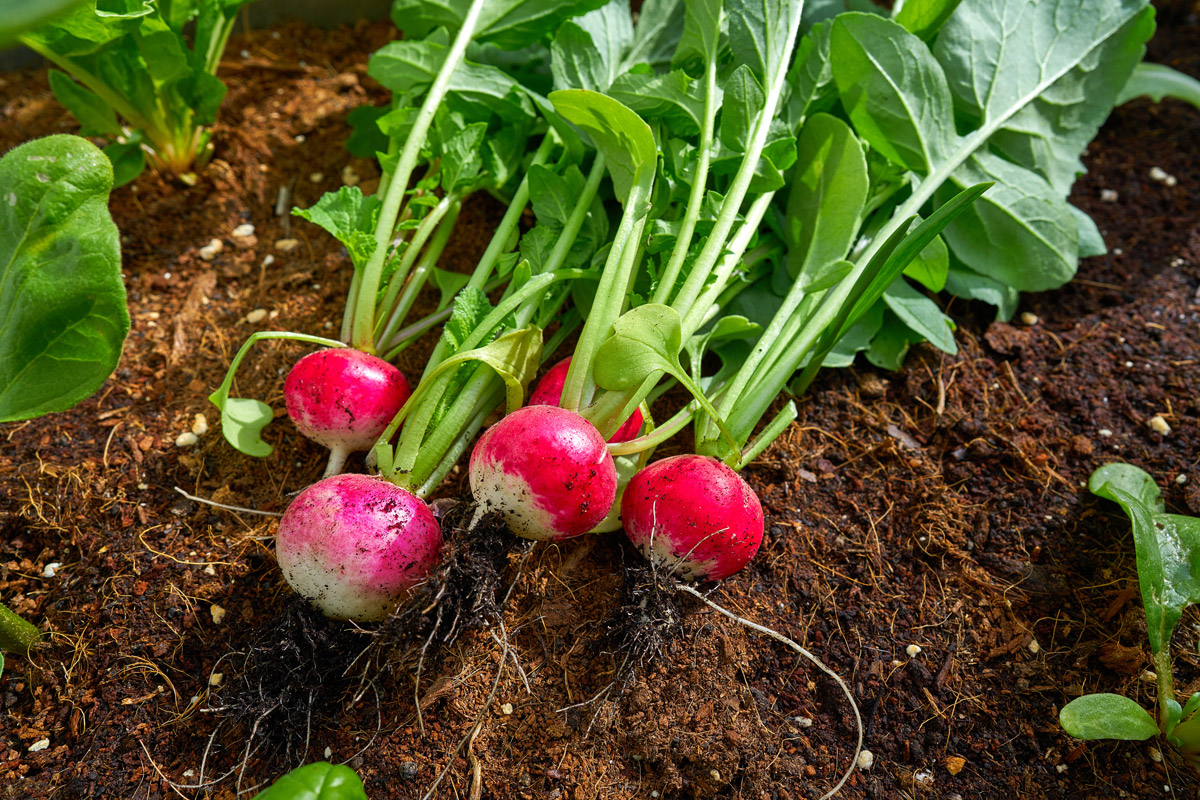
lunamarina/Shutterstock.com