
The soya bean has been cultivated in Japan since 3000 BC and from there conquered the world. It's now grown wherever the climate allows it. Sometimes under controversial conditions, such as the clearing of rainforests.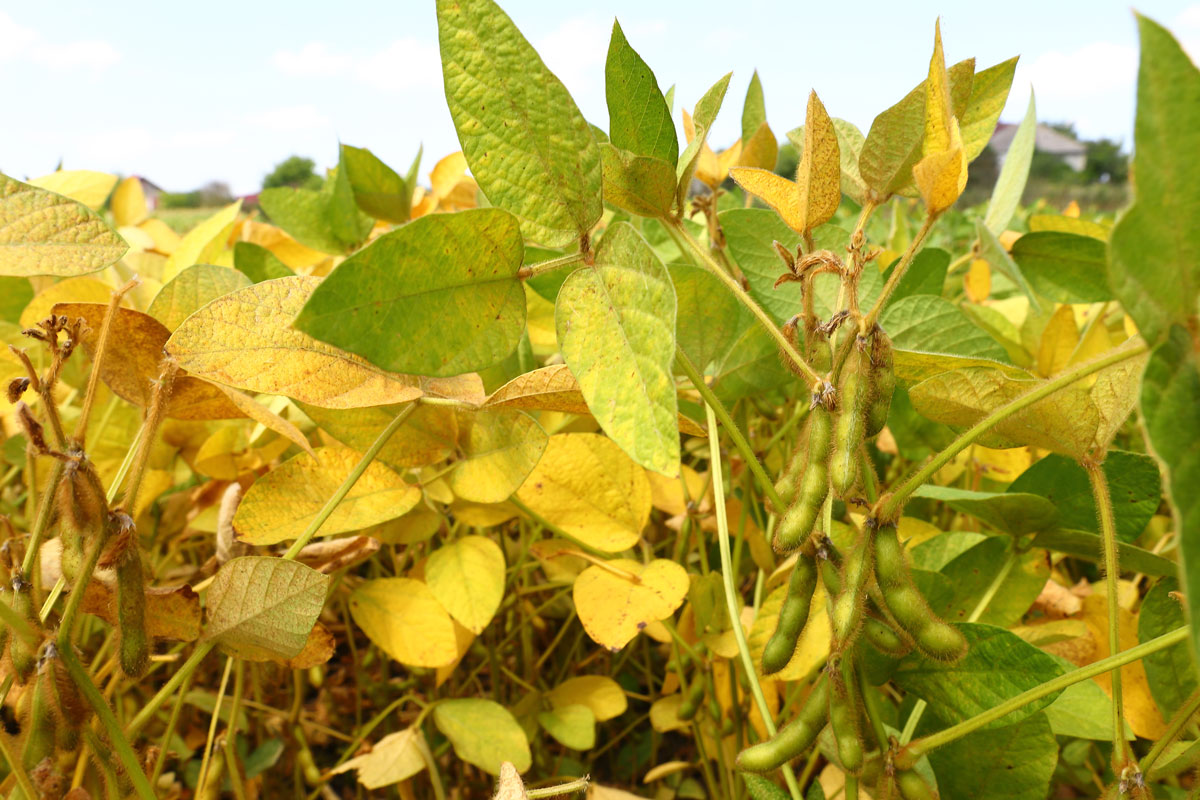
Stepanych/Shutterstock.com
It owes its popularity to its high protein content, which makes it an excellent meat substitute.
In the home garden, you'll most likely grow soya beans as edamame – large-seeded varieties that you harvest green, briefly boil and salt, and eat as a snack. Some of you might also want to make your own tofu or soya milk.
Facts and figures
Planting & harvest times of Soya bean
Direct sowing from Early May to Mid June. Transplant to bed from Mid June to Late June. Pre-grow about 30 days before planting out, approximately between Mid May and Late May. After a growing period of 100 days, harvest can begin around Early August and continues until Late October.
Sow and plant Soya bean
Soya beans depend on a specific rhizobium bacterium that doesn't naturally occur in European soils. That's why you need to inoculate the seeds with it. Usually, a small sachet of these bacteria comes with the seeds, and you mix them in according to the instructions before sowing.
Location and soil
They like loose, humus-rich, deep soil, as they develop long taproots. The spot should be warm and sheltered from the wind. They prefer a mild, wine-growing climate.
Good and bad companions of Soya bean
Predecessors and successors of Soya bean
As always, legumes make great predecessors for heavy feeders, since they enrich the soil with nitrogen.
Varieties
There are many different varieties – some with large pods for edamame, others for oil production or tofu making. You'll need to do a bit of research depending on what you're after.
Care and fertilising
Water your soya beans regularly if it's too dry. Keep them weed-free, especially in the early stages, and loosen the soil a bit.
If the leaves turn pale, check whether enough root nodules have formed. If not, the inoculation didn't work properly and you'll need to feed them with organic fertiliser.
Harvest and processing
If you're growing soya beans as edamame, harvest them while they're still green. The pods will still be slightly fuzzy at this stage. In Japan, they're boiled in the pod for about 5 minutes in salted water, perhaps with a little extra salt, and then served as a starter, snack, or with beer. You squeeze the beans straight out of the salty pod.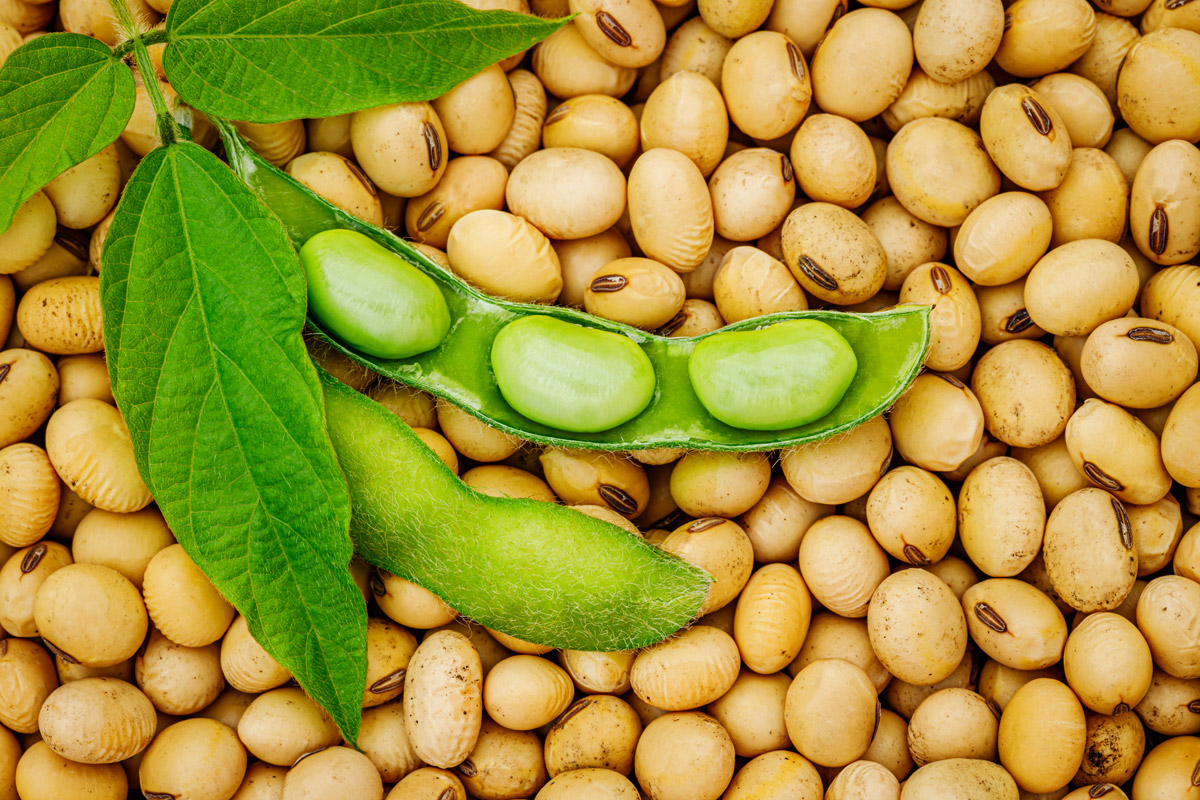
nnattalli/Shutterstock.com
The shelled beans are brilliant in bowls and rice dishes.