
Courgettes, the 'little squash', can be harvested just 5 weeks after planting, since you basically pick the fruits continuously while they're still unripe. You can often keep this up right until the first frosts, as the plants are quite robust. The main difference between a courgette and a squash is that courgettes don't form runners and are always harvested unripe. Though the lines are blurry. There are climbing courgette varieties and squashes without runners. The pattypan squash is also sometimes listed as either squash or courgette.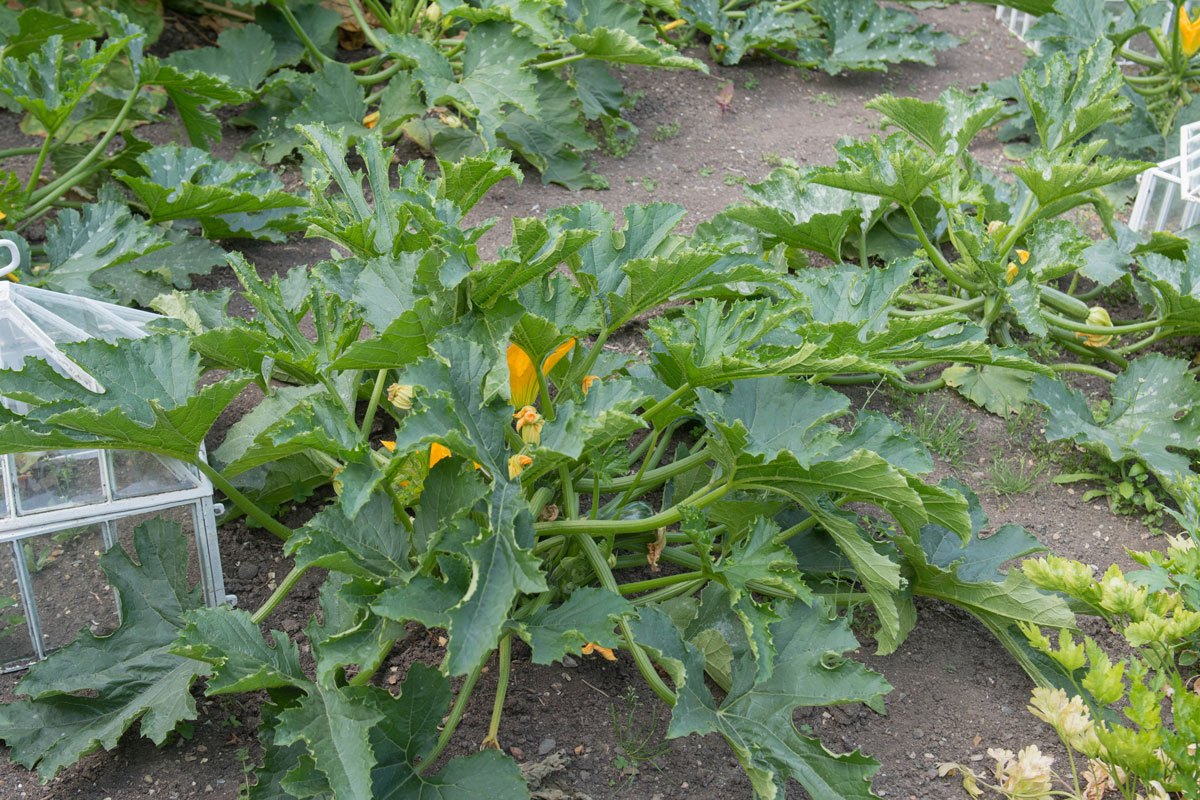
Peter Turner Photography/Shutterstock.com
Facts and figures
Planting & harvest times of Courgette
Direct sowing from Mid May to Mid June. Transplant to bed from Mid May to Mid June. Pre-grow about 30 days before planting out, approximately between Mid April and Mid May. Harvest begins around Mid June and continues until Late October.
Sow and plant Courgette
The plants often grow very large. If you don't have much space, make sure to look for compact varieties or grow your courgettes in a large pot (at least 30 litres).
You should have at least 2 plants, otherwise yields can be very low if there's no pollinator plant nearby.
Courgette plants, like squash or cucumber plants, don't like having their roots disturbed. So don't prick them out — sow the seeds directly into larger pots (8 cm or more).
Good and bad companions of Courgette
Predecessors and successors of Courgette
This isn't strictly crop rotation, but a useful tip:
As a preceding crop you can grow green manure or broad beans, which will already be harvested by the time you plant your courgettes and leave behind pre-fertilised soil. You could also plant lettuce and radishes beforehand so the space doesn't sit empty for too long. In that case, fertilise the soil just before planting the courgettes.
Care and fertilising
Courgettes are prone to mildew, both downy and powdery, so they benefit from a regular boost with horsetail tea or fermented horsetail, sprayed directly onto the leaves as well. Prepare the bed well with compost or manure before planting.
For a steady harvest and good-looking fruits, you need to water regularly.
Harvest and processing
Pick courgettes young — 10 to 25 cm is plenty. The bigger they get, the mushier and less flavourful they become. Watch out for bitter courgettes. Never eat them! The bitter compounds are toxic and even in small amounts cause vomiting and diarrhoea, and can seriously damage the mucous membranes of your digestive tract.
Fruits can turn bitter if you saved seeds from courgettes that grew next to ornamental gourds. Ornamental gourds still contain high levels of these bitter compounds and must not be eaten. If they're grown too close together, the bitter traits cross back in.
Plants can also start producing these compounds again during prolonged drought, as a stress response.