
This plant goes by countless names – Gambo, Okolo, Lady's Fingers, Rosenapfel, bamya and many more. It probably originates from Ethiopia and belongs to the mallow family. In Mediterranean, Arabic, African and many Asian cuisines, okra is a common vegetable on the table. It needs even more warmth than aubergine and pepper, so growing it – even in wine-growing regions – is really only possible in a greenhouse or in a pot in a very sheltered, sunny spot against the house. It does like high humidity though, similar to cucumbers. Below 18 °C it simply stops growing. Once you do get it going, it first rewards you with the beautiful flowers typical of mallows, before you get to enjoy the pods.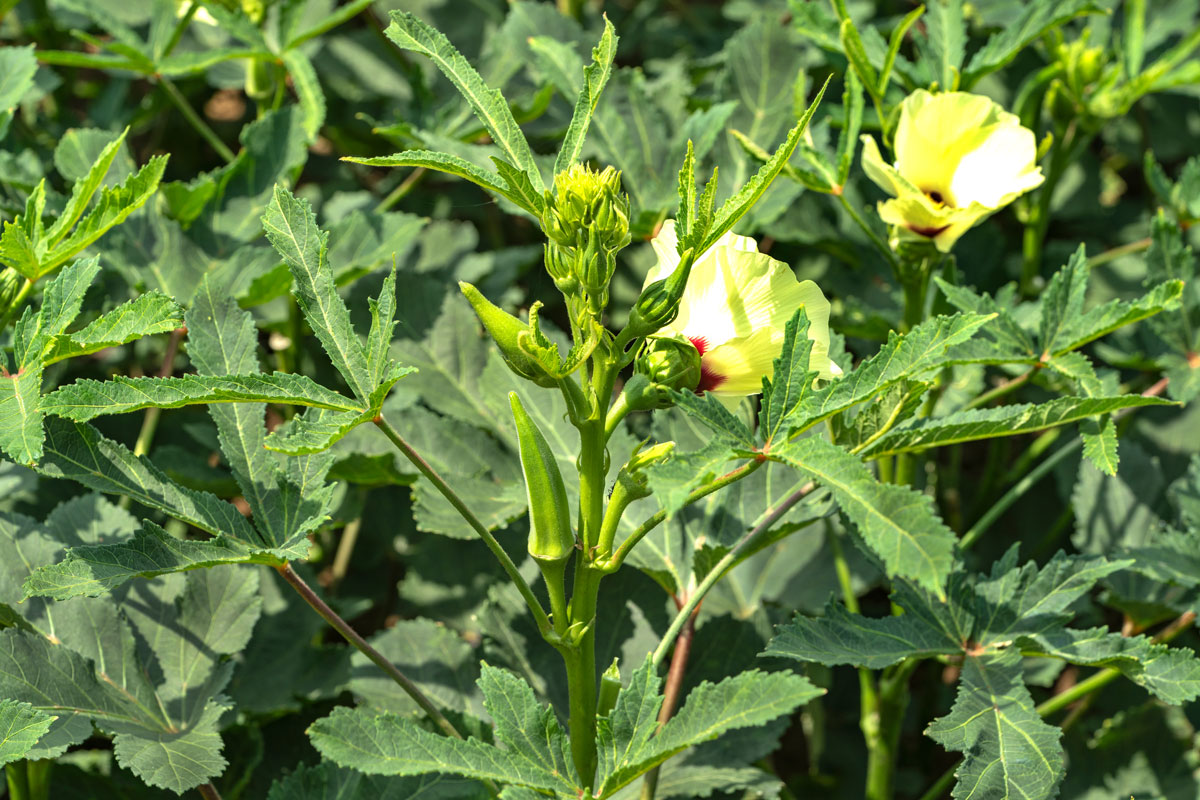
Hari Mahidhar/Shutterstock.com
Facts and figures
Planting & harvest times of Okra
Transplant to bed from Early June to Early July. Pre-grow about 60 days before planting out, approximately between Early April and Early May. After a growing period of 120 days, harvest can begin around Late July and continues until Mid October.
Plant Okra
If you soak the seeds in water overnight, they germinate better.
Location and soil
The soil should be humus-rich and nutrient-rich – tomato compost works well, for example.
And as already mentioned, it needs sun and warmth.
Good and bad companions of Okra
Since okra isn't related to any other vegetable we commonly grow, there are probably few issues with companion planting or crop rotation, except with itself.
Predecessors and successors of Okra
Care and fertilising
Keep it warm and moist, and add fertiliser twice once the fruits start forming.
Harvest and processing
If you soak the pods in lemon water for one to two hours before cooking, or briefly blanch them in vinegar water, they won't release any slime – which they would without this preparation. You can even use okra as a medicinal plant. In terms of taste, okra is reminiscent of green beans.
You can use the slime for thickening though, if you like.
The mucilage is good for the digestive tract and for colds.
For irritations of the mouth and throat, the cooking liquid works well as a rinse or gargle.