
Ice plant belongs to the Aizoaceae family and originally comes from the dry coastal regions of South Africa. In the Mediterranean, especially in the south of France, you can find it growing wild in cracks in walls and also in pots. It's still enjoyed there quite often as a refreshing salad.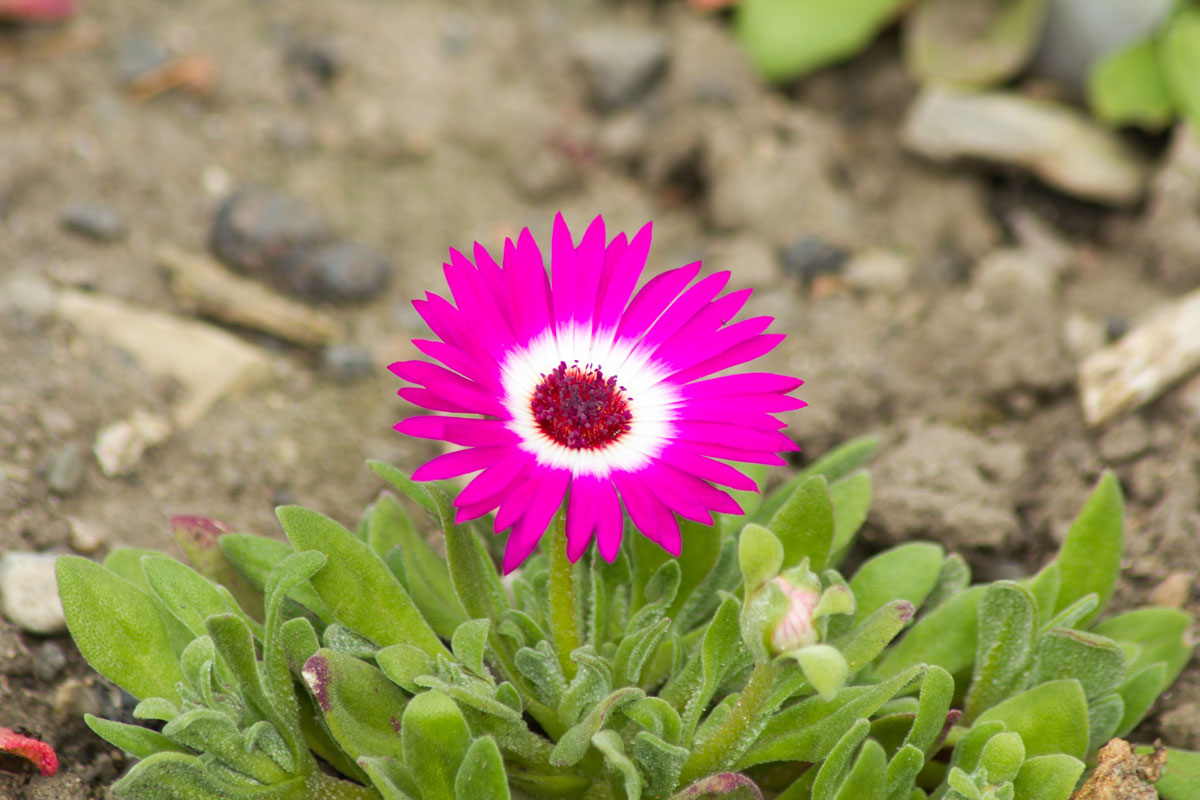
Nicolette_Wollentin/Shutterstock.com
Facts and figures
Planting & harvest times of Ice plant
Transplant to bed from Mid May to Mid June. Pre-grow about 30 days before planting out, approximately between Mid April and Mid May. After a growing period of 70 days, harvest can begin around Late June and continues until Late October.
Plant Ice plant
In mid-April, press the seeds lightly into seed compost mixed with 1/3 sand and keep them warm and moist until germination. You can stretch some cling film over the top and air it daily. When the first true leaves appear, carefully prick the seedlings out into potting or herb compost, again mixed with 1/3 sand. I'd almost recommend growing it in pots. 2 or 3 pots in the greenhouse, on the terrace or the balcony are plenty to supply a whole family. The plants will grow decoratively over the rim of the pot and trail down. And if there's too much to eat, just let one pot go to flower. The blooms are really beautiful too.
Location and soil
The soil should be sandy and not too rich in nutrients. Ice plant likes it sunny and warm, and rather dry than too moist. Growing it outdoors is really only recommended in mild wine-growing regions — otherwise you're better off in a greenhouse. In a pot on a sunny terrace or balcony you can definitely give it a go though.
Care and fertilising
To always harvest tender leaves, you need to prevent flowering. You achieve this by regularly picking the shoot tips at about 10 cm length. Do this every 2 to 3 weeks once they've grown back. You don't really need to feed it. Maybe water it with a plant broth now and then. Overall, keep it rather dry than too moist.
Harvest and processing
You can chop the harvested shoot tips and use them as a salad addition, or make a salad of their own with a herb vinaigrette and finely diced onion. You can also briefly heat them like spinach. The leaves have a salty-sour, fresh and crunchy taste. You can keep the leaves in the fridge for a short while too.