
Fennel is really only suited for early spring and autumn growing. Above 24 degrees it bolts and turns woody. That makes summer growing very tricky. It's a popular vegetable with children because it tastes quite sweet when cooked. It's still used today as a remedy for bloating, coughs and as a mild sedative.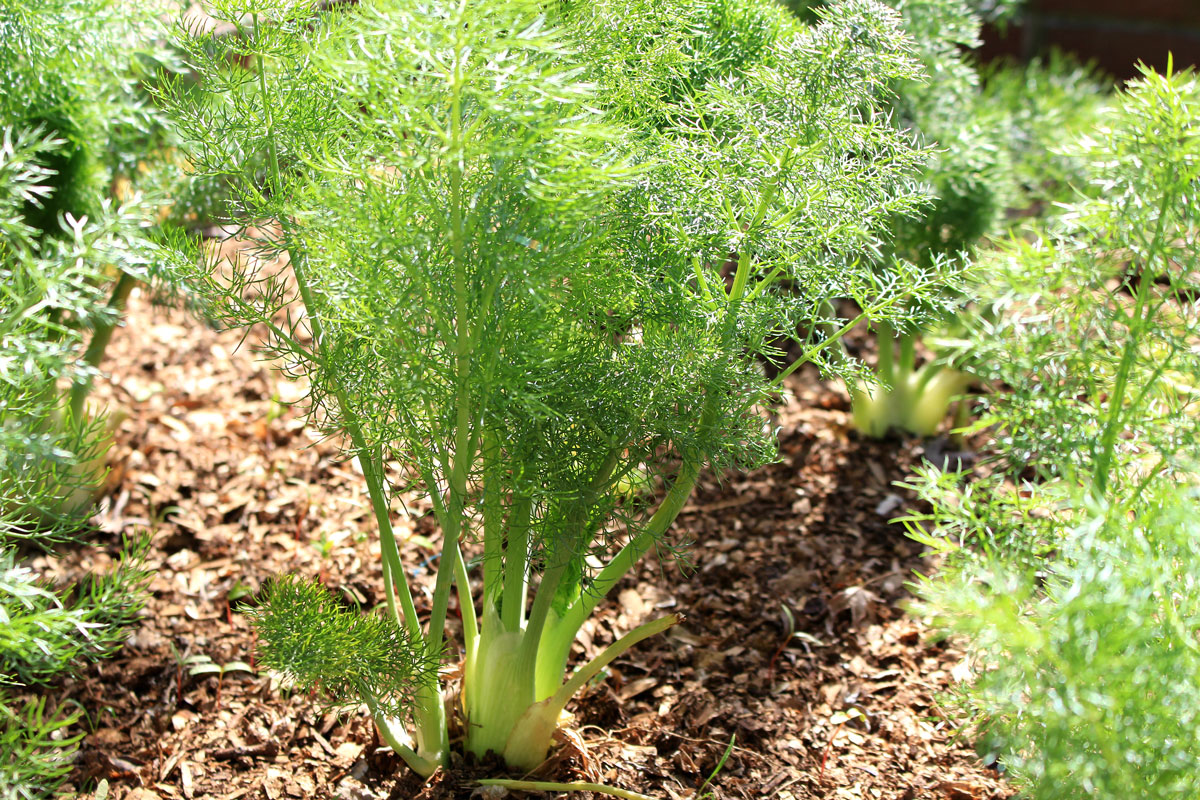
pilialoha/Shutterstock.com
Facts and figures
Planting & harvest times of Fennel
SpringDirect sowing from Mid February to Mid April. Transplant to bed from Mid March to Mid May. Pre-grow about 30 days before planting out, approximately between Mid February and Mid April. After a growing period of 100 days, harvest can begin around Mid May and continues until Mid July.
AutumnDirect sowing from Mid June to Mid July. Transplant to bed from Mid July to Mid August. Pre-grow about 30 days before planting out, approximately between Mid June and Mid July. After a growing period of 100 days, harvest can begin around Mid September and continues until Mid October.
Sow and plant Fennel
It's best to start fennel plants indoors first. Add a bit of compost to the planting hole. Once they're big enough, plant them out at roughly 30 x 30 cm spacing – don't set them too deep.
Location and soil
It likes a calcareous, nutrient-rich, humus-rich clay soil in full sun.
Good and bad companions of Fennel
Avoid planting it next to dill. Tomatoes make good neighbours. You can sow dwarf French beans between the harvested fennel plants. The fennel plants will then sprout several small bulbs again.
Predecessors and successors of Fennel
Spinach works well as a predecessor. Dwarf French beans, endive and lettuce have proven themselves as follow-on crops.
Varieties
When choosing varieties, you need to look carefully at when you want to grow your fennel. Traditionally it's grown in autumn. You'll need to search specifically for varieties that can also be grown in spring.
Care and fertilising
Unless your beds are well fertilised, a dose of nettle brew when the bulbs start forming is a good idea. Water regularly and keep the area weed-free.
To get tender white bulbs, earth up the plants about 2 weeks before harvesting. Do this so the bulb isn't completely covered – the tips should just peek out.
Harvest and processing
When harvesting, cut the bulbs off at the root neck and trim the leaves back to about 8 cm. This way you can store them in the fridge for a good 2 weeks. They'll keep until late winter if you bury them in damp sand in a cold cellar or cold frame.