
Ginger belongs to the ginger family (Zingiberaceae) and originally comes from the tropical rainforests of Southeast Asia. What we know as the ginger root is botanically a rhizome, an underground stem. It contains the characteristic pungent compounds gingerol and shogaol, which not only give ginger its distinctive flavour but also have anti-inflammatory and digestive benefits. In 2018, ginger was even named medicinal plant of the year in Germany. The plant sends up reed-like, annual shoots directly from the rhizome, with leaves resembling those of maize or bamboo. In our climate, it reaches heights between 50 and 120 cm, and as a houseplant sometimes up to 150 cm. In autumn, the above-ground parts die back, but the rhizome survives in the soil or pot. A nice detail: the leaves and stems are edible too. They have a gentle lemongrass flavour and work well in soups or salads. Despite its tropical origins, you can grow ginger in temperate climates. The Bavarian State Institute for Viticulture and Horticulture in Bamberg has been researching this since 2017 and confirms that freshly harvested home-grown ginger clearly outperforms imported produce in terms of flavour. The plant does need a growing season of at least eight months with enough warmth, though. That's why container growing on a windowsill or in a greenhouse is the surest path to success.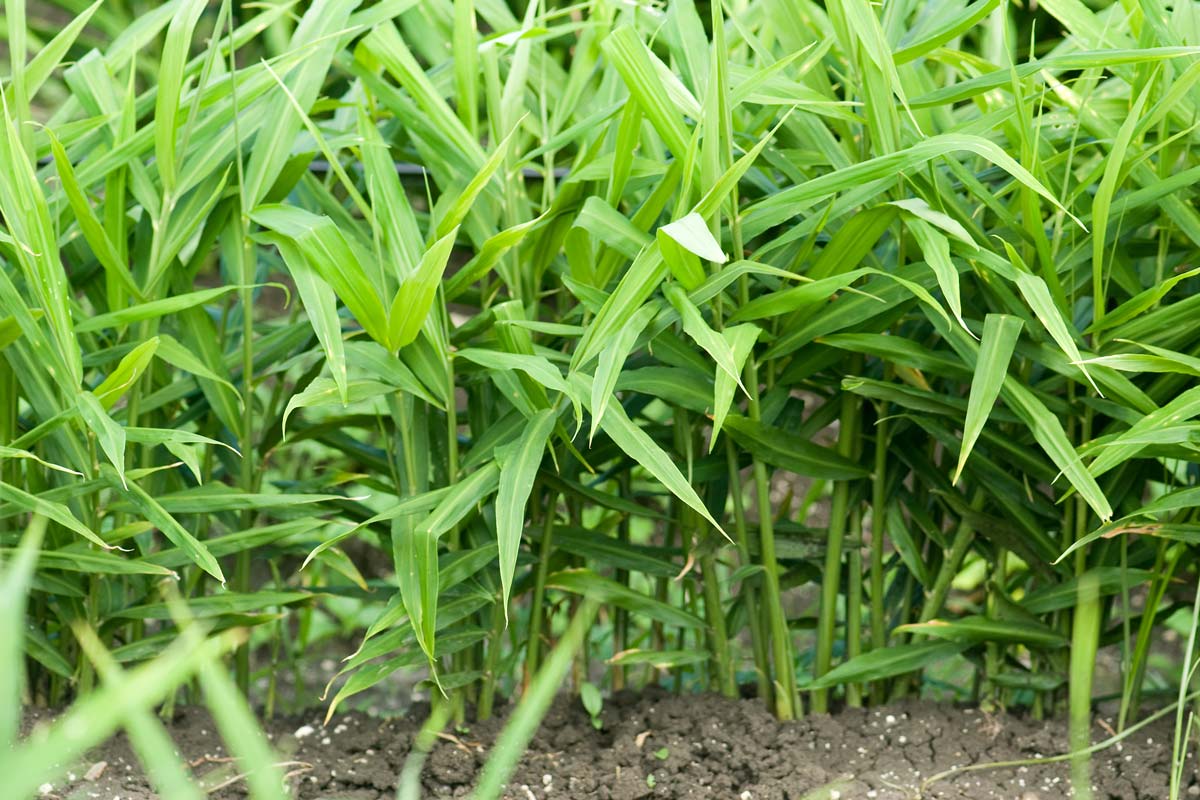
Tukaram.Karve/Shutterstock.com
Facts and figures
Planting & harvest times of Ginger
GreenhouseTransplant to bed from Early February to Late February. After a growing period of 240 days, harvest can begin around Early October and continues until Late November.
OutdoorsTransplant to bed from Early May to Late May. After a growing period of 240 days, harvest can begin around Early November and continues until Late December.
Plant Ginger
Ginger isn't propagated from seed but exclusively vegetatively from rhizome pieces. Your best bet is to get a fresh organic ginger root from the shops, as conventionally grown ginger may have been treated with growth inhibitors. Make sure the rhizome is plump and as smooth as possible. Ideally, look for a piece that already shows small knobbly bumps — the so-called eyes, similar to potato eyes.
Cut off a piece about 3 to 5 cm long with at least two eyes and soak it overnight in lukewarm water. Let fresh cut surfaces dry in the air for a few hours to prevent rotting. Then plant the rhizome piece about 2 to 5 cm deep in nutrient-rich, well-drained soil, with the eyes pointing upwards. Ginger is a shallow rooter, so wide pots with at least 30 cm diameter work better than deep containers. In the bed, keep a spacing of 20 to 30 cm.
You can start pre-sprouting indoors from late January to February. Place the pot in a warm spot at a minimum of 20 °C — ideally 25 to 26 °C. A piece of cling film over the pot creates a tropical microclimate during the first few weeks. Germination takes 3 to 8 weeks depending on temperature. In a greenhouse, you can plant from late March. Outdoors, ginger shouldn't go out until after the last frosts in mid-May.
Location and soil
Ginger needs a bright to partially shaded spot. In its native habitat, it grows as an understorey plant, so it doesn't cope well with harsh midday sun. A position with plenty of light but no direct sun during the hottest hours is just right. In summer, you can gradually acclimatise the pot and move it outdoors.
The optimum growing temperature is between 20 and 30 °C. On summer nights, the temperature shouldn't drop below 12 to 15 °C. Frost is absolutely fatal for the plant. Humidity should be at least 60 to 70 per cent — regularly misting the foliage helps with this.
As for soil: nutrient-rich, humus-rich and above all well-drained. Ginger can't tolerate waterlogging, which inevitably leads to the rhizomes rotting. A drainage layer of expanded clay or gravel at the bottom of the pot is essential. Outdoors, light, sandy soil works best. The ideal pH is between 5.5 and 6.5, so slightly acidic. For watering, use low-lime water, ideally rainwater.
Good and bad companions of Ginger
Ginger is considered a rather tricky companion planting partner. The plant has an allelopathic effect, meaning it can inhibit the growth of neighbouring plants. That's one of the reasons why container growing is so strongly recommended. Coriander is mentioned as a compatible neighbour in the herb bed. Since ginger is a monocot and botanically quite distant from most vegetable crops, it at least shares very few diseases and pests with them.
As a general rule: if you grow ginger in a bed rather than a pot, keep a good distance from sensitive neighbouring crops. The safest option remains growing it on its own in a separate container.
Predecessors and successors of Ginger
In crop rotation, ginger is a real asset. As a monocot from the ginger family, it breaks the cycle of soil-borne diseases that can build up after years of growing nightshades like tomatoes, peppers or aubergines. The Bavarian State Institute for Viticulture and Horticulture (LWG) in Bamberg confirms this effect from their own research: ginger gives the soil a genuine breather and is therefore particularly well suited as a rotation crop in the greenhouse.
Ginger makes a good successor for tomatoes, peppers, aubergines and cucurbits like cucumbers or courgettes. Conversely, these crops also benefit as successors to ginger, because the soil has had a chance to regenerate.
You should avoid planting ginger directly after other members of the ginger family, such as turmeric or galangal. A break of at least one year at the same spot makes good sense.
Varieties
Unlike tomatoes, there are virtually no named cultivars of ginger. Instead, types are distinguished by their region of origin, each with its own character. Jamaican ginger is considered mild and fresh with citrus notes, while Indian ginger brings a sweet lemony aroma. Australian ginger is the mildest type, whereas Nigerian ginger is known for being particularly hot. Brazilian types produce especially large rhizomes, and Fijian ginger stands out for its tender, juicy texture.
For growing at home, the exact origin plays a secondary role. What matters much more is that the rhizome is fresh and untreated. Organic ginger from the supermarket or health food shop makes excellent starting material.
Care and fertilising
During the growing season from spring to autumn, keep the soil evenly moist. Ginger needs plenty of water, but it can't cope with waterlogging. Striking this balance between moist and not too wet is the main challenge. Its water requirements are comparable to those of tomatoes.
When it comes to feeding, research from the LWG reveals an interesting picture: ginger needs surprisingly little nitrogen but plenty of potassium. Too much nitrogen actually prevents a proper rhizome from forming. Compost is a good source of potassium. You can supplement by watering with nettle liquid feed every three weeks or mixing an organic slow-release fertiliser into the soil in spring.
In autumn, when the shoots turn yellow and die back, stop watering completely. For overwintering, leave the rhizome in the pot and move it to a dark, dry place at 8 to 12 °C. From late February, put the pot back in a warm, bright spot and start watering again carefully. This way, you can keep ginger going for several years.
Diseases and pests
Thanks to its pungent compounds gingerol and shogaol, ginger is largely resistant to pests and diseases. The vast majority of problems come from care mistakes, not from pathogens.
By far the most common issue is rhizome rot, caused by waterlogging. Affected areas go soft and brownish, accompanied by a foul smell. You can prevent this with good drainage, letting fresh cut surfaces dry before planting, and watering in moderation.
When growing indoors, fungus gnats (Sciaridae) occasionally appear, and their larvae damage the fine roots. Yellow sticky traps help control them — as a home remedy, you can also stick matches head-down into the soil. Mould can develop during the sprouting phase under cling film if you don't ventilate regularly. Outdoors, voles may nibble on the rhizomes — a vole basket provides a remedy here.
Harvest and processing
Harvest takes place about eight months after planting. If you planted in February, that means roughly October. The sign of maturity: the above-ground shoots turn yellow and wilt. If you want mild, fresh ginger, harvest a bit earlier while the leaves are still green. For hotter ginger that's good for drying or tea, wait until the yellowing stage. In a pot, simply pull the plant out carefully. In the bed, push your spade in a circle around the plant and lift it out. For next year's crop, set aside a few strong rhizome pieces.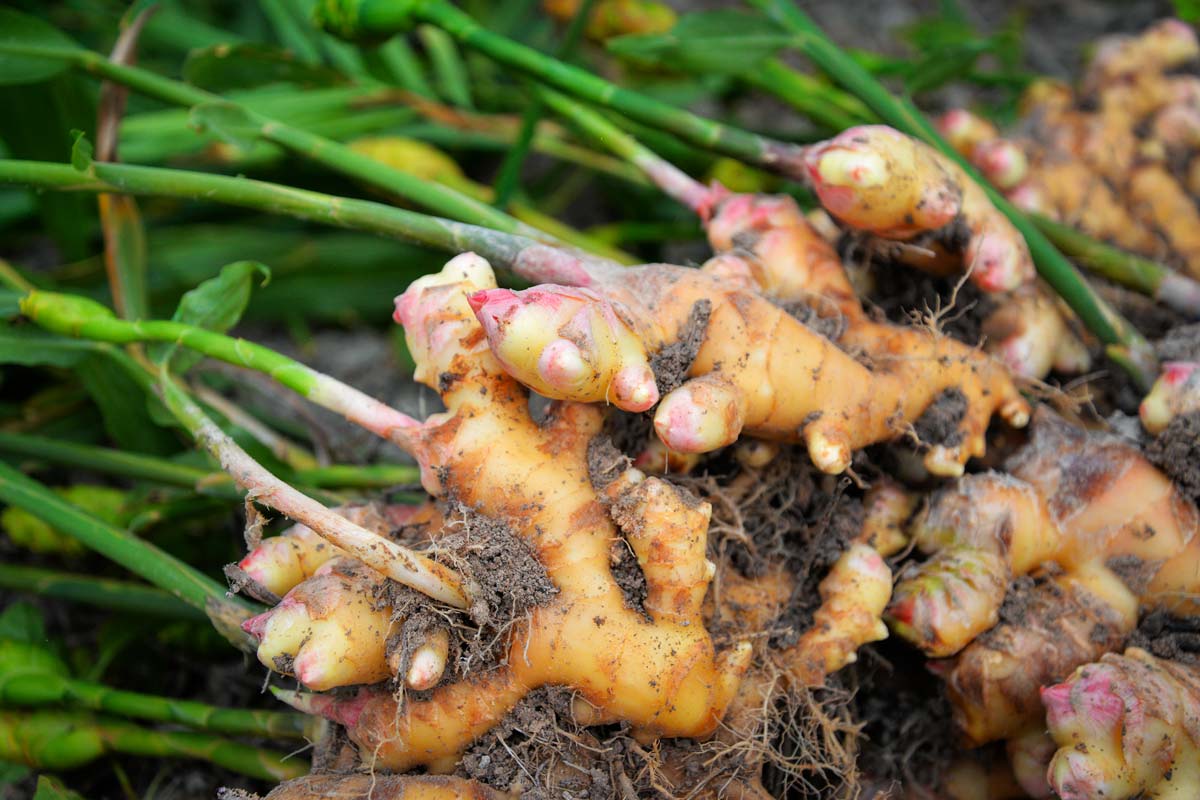
Poring Studio/Shutterstock.com