
Lamb's lettuce is a classic winter salad. It has a pleasant, nutty flavour and is packed with minerals and vitamins — just what you need during the darker months. It makes an ideal early or follow-on crop because it still grows well in cooler temperatures. You can grow it in spring, autumn or as an overwintering crop. It does just as well in a greenhouse.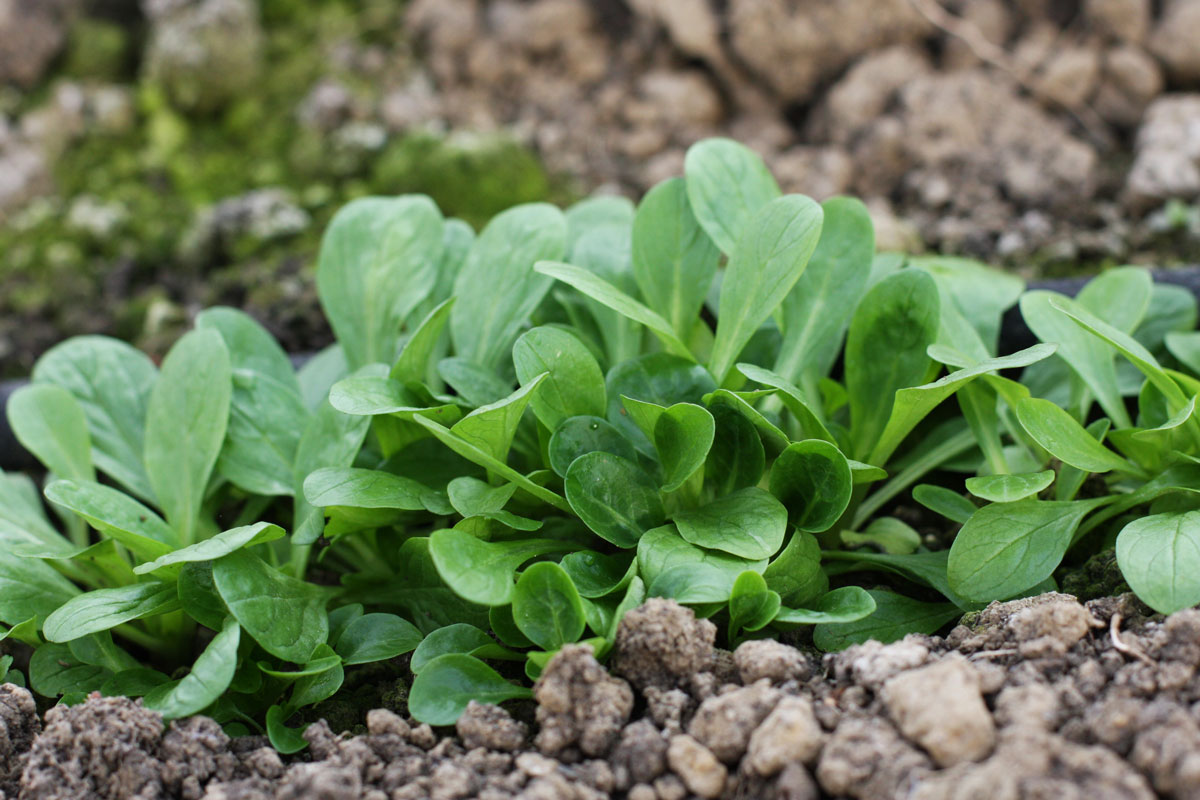
Landrausch/Shutterstock.com
Facts and figures
Planting & harvest times of Lamb's lettuce
SpringDirect sowing from Early March to Mid April. Transplant to bed from Mid March to Late April. Pre-grow about 28 days before planting out, approximately between Mid February and Late March. After a growing period of 70 days, harvest can begin around Mid April and continues until Mid June.
AutumnDirect sowing from Mid July to Mid August. Transplant to bed from Late July to Late August. Pre-grow about 28 days before planting out, approximately between Late June and Late July. After a growing period of 70 days, harvest can begin around Early September and continues until Late October.
WinterDirect sowing from Early September to Mid September. Transplant to bed from Mid September to Early October. Pre-grow about 28 days before planting out, approximately between Mid August and Early September. After a growing period of 70 days, harvest can begin around Early November and continues until Mid January next year.
GreenhouseDirect sowing from Mid January to Mid March. Transplant to bed from Early February to Mid March. Pre-grow about 28 days before planting out, approximately between Early January and Mid February. After a growing period of 70 days, harvest can begin around Early March and continues until Mid May.
Greenhouse 2Direct sowing from Mid September to Late October. Transplant to bed from Early October to Late October. Pre-grow about 28 days before planting out, approximately between Early September and Late September. After a growing period of 70 days, harvest can begin around Early November and continues until Mid January next year.
Sow and plant Lamb's lettuce
You can sow lamb's lettuce directly into the bed or start it indoors and transplant later. Sowing in rows works best, with about 5 cm between plants. Leave 10 to 20 cm between rows, depending on the variety. Broadcasting the seed is also fine, but the bed should be free of weeds.
Sow the seeds about 0.5 to 1 cm deep. Keep the soil evenly moist for the first few weeks and protect the seedlings from frost with fleece. Lamb's lettuce germinates most reliably at 16 to 18 °C, but you can also sow it at much lower temperatures. Above 20 °C, germination slows down.
Location and soil
Lamb's lettuce prefers a sunny spot, but it's not fussy about soil. The more sun it gets, the stronger it grows. Chalky soils are a bonus, but not essential. Because it needs hardly any nutrients, it's perfect as a follow-on crop.
Good and bad companions of Lamb's lettuce
In companion planting, lamb's lettuce is an easy-going partner. It gets on particularly well with strawberries, fennel, radishes and onions.
You can also use it as an underplanting for brassicas — under broccoli, cauliflower, Brussels sprouts, red cabbage, white cabbage, Chinese cabbage, savoy cabbage or kohlrabi.
Predecessors and successors of Lamb's lettuce
In late summer or autumn, you can sow it as a follow-on crop after tomatoes, cucumbers or other main crops. As an early crop, it scores with its short growing period and fine root system, which leaves the soil nice and loose.
Avoid using legumes or other lettuces as a preceding crop, though.
Varieties
There's a wide range of lamb's lettuce varieties. Robust winter types have firm, dark green leaves, while more delicate, light green varieties are better suited to autumn harvesting. Some varieties are particularly resistant to downy mildew or can handle hard frosts. Others are especially good for growing under glass, grow particularly quickly or stand out with unusual leaf colouring.
Care and fertilising
Lamb's lettuce is low-maintenance and needs very little attention. Keep the beds as weed-free as possible and water sparingly so the leaves stay dry and fungal diseases don't get a foothold.
If temperatures threaten to drop below minus 15 °C, cover overwintering plants with fleece or fir branches. A single hoeing after the plants have established is usually enough. A splash of nettle tea can give them an extra boost.
Diseases and pests
Lamb's lettuce is generally tough, but like all lettuces it can be affected by fungal diseases such as downy mildew or botrytis. This happens mainly in damp weather or when plants are too close together. Always water the soil, not the leaves. Overcrowding also encourages aphids. In a greenhouse, regular ventilation helps. To prevent seed-borne diseases, you can treat the seed with hot water before sowing.
Harvest and processing
Depending on when you planted, you can harvest lamb's lettuce as early as 5 to 7 weeks after sowing. Pick a frost-free day and cut the rosettes just above the soil. You can also pick individual leaves — the plant will keep growing. The leaves wilt quickly, so use them fresh. In the fridge, lamb's lettuce keeps for up to a week if you wrap the washed leaves in a damp cloth. If the leaves have gone a bit limp, pop them in water briefly and they'll crisp up again.