
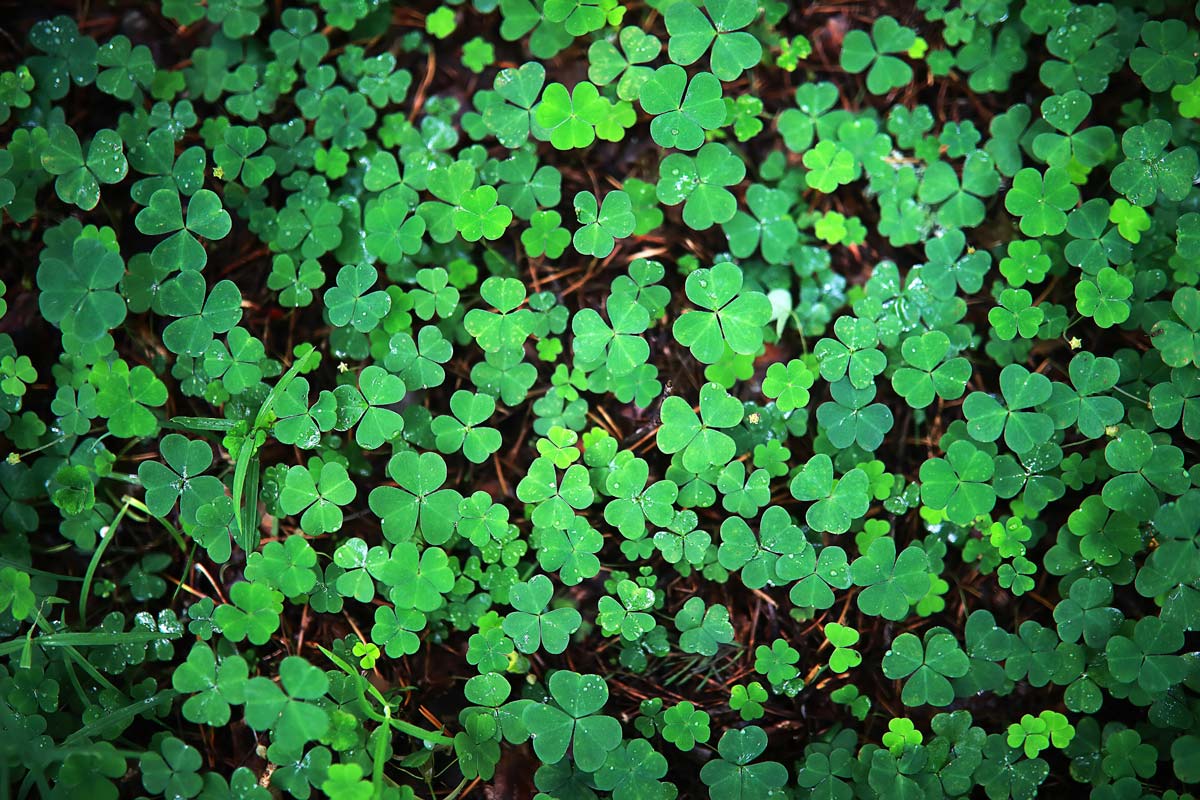
Subterranean clover is one of the most versatile green manure plants for the vegetable garden. This small legume rarely grows taller than 25 cm and spreads flat across the ground like a green carpet. While doing so, it takes care of several jobs at once: it enriches the soil with nitrogen, suppresses weeds through dense ground cover and protects the earth from drying out and eroding. Undersown beneath vegetables, subterranean clover even helps keep pests like carrot fly or cabbage flea beetle in check.
Botanically it belongs to the legume family (Fabaceae) and carries the scientific name Trifolium subterraneum. The Latin species name gives away its special trait: after flowering, the fruit stalk bends down into the soil, where the seeds ripen underground. This so-called geocarpy is unique among clover species and is where its name comes from.
Subterranean clover originally comes from the Mediterranean region, where it grows on dry meadows and in open woodland from Portugal to Turkey. In Australia it was discovered as a crop for agriculture and systematically bred further. In our gardens it behaves as an annual and reliably dies off in winter, which makes it particularly easy to look after.
Subterranean clover plays a special role in the Langerhorst family's companion planting system. There it's used for the so-called clover paths, which are laid out after every three crop rows. These clover paths serve two purposes at once: a comfortable working path from which every vegetable row is within arm's reach, and a moving strip of green manure that supplies the soil with nitrogen year after year. As an alternative to subterranean clover, white clover can also be used for the clover paths. It can be sown from March onwards, but you'll need to actively hoe it off before winter.
Facts and figures
Planting & harvest times of Subterranean clover
Direct sowing from Early April to Late August. Incorporation takes place around Early February until Late March next year.
Sow Subterranean clover
Subterranean clover is only ever sown directly into the bed. Starting it indoors is neither necessary nor sensible. Sow it by broadcasting onto loose soil. Scatter the seed evenly and work it about 1 to 2 cm deep into the earth. You'll need roughly 2.5 g of seed per square metre.
The sowing period runs from April to August. If you want to sow early in April, make sure temperatures are stably above 10 °C. At an optimal 12 to 18 °C, germination takes about 12 to 18 days. After 7 to 9 weeks the subterranean clover has formed a full stand and covers the ground densely.
As an undersown crop beneath brassicas, it's best to sow the subterranean clover about 5 weeks before planting the main crop. That gives it enough of a head start to cover the ground before the cabbages arrive. With carrots, you can sow the clover directly in or next to the carrot rows.
With sowings from May onwards, conditions are often already getting drier. In that case, water regularly after sowing until the stand has closed up. That's actually the only point at which subterranean clover asks for a little attention.
Location and soil
Subterranean clover is happiest in sunny to lightly part-shaded spots. It comes from the rather dry Mediterranean regions and copes with drought far better than with waterlogging or permanently damp soils.
It makes hardly any demands on the soil. As a legume, it supplies itself with nitrogen through its symbiosis with root nodule bacteria and therefore does well even on nutrient-poor ground. The soil should be loose and free-draining, though. Heavy, compacted or waterlogged sites are less suitable. When it comes to pH, subterranean clover prefers slightly acidic to neutral conditions.
Good and bad companions of Subterranean clover
Subterranean clover is an excellent companion for carrots. Practical experience shows that a dense sowing in or next to carrot rows effectively disrupts the carrot fly. Science hasn't fully explained the exact mechanism yet, but many gardeners report noticeably less damage.
Brassicas like broccoli, white cabbage, cauliflower or kohlrabi also benefit greatly from subterranean clover as an undersown crop. Trials by the Bavarian State Institute for Viticulture and Horticulture have shown that subterranean clover measurably reduces cabbage flea beetle damage. You simply plant the cabbages into the existing stand of clover.
Under lettuce, subterranean clover also works well as a ground cover without noticeably crowding the main crop. It has also proven itself in practice as an undersown crop for leeks, sweetcorn and asparagus.
You should avoid combining it with other legumes like peas, beans or vetches. As a legume, subterranean clover shares their crop rotation restrictions, and the result would be a one-sided strain on the soil organisms.
Predecessors and successors of Subterranean clover
As a preceding crop, subterranean clover is a real gift for whatever follows. After it dies back in winter or after you dig it in, the nitrogen it has fixed becomes available to the next planting. Nitrogen-hungry heavy feeders like cabbage, tomatoes, peppers, aubergines, sweetcorn or celery reward you with vigorous growth.
Before subterranean clover, you can grow practically any vegetable. It happily follows early harvests like radishes, early potatoes, lettuce or spinach and uses the freed-up bed as a green manure area until winter.
Under no circumstances should you sow subterranean clover after other legumes like peas, beans or other clover species. Leave at least 3 to 4 years between two legume crops on the same ground to avoid soil sickness. For the same reason, legumes are a poor choice to follow subterranean clover.
Varieties
In the German garden trade, subterranean clover is usually sold simply as Trifolium subterraneum without any variety stated. For the home garden, that's perfectly adequate. If you're interested in the question of varieties: in research projects, the varieties 'Mount Barker' and 'Denmark' have proven themselves under German conditions. 'Denmark' showed particularly good biomass production and reliable self-seeding. You'll rarely find named varieties in regular garden shops, though. They're more likely to be available from agricultural suppliers.
Care and fertilising
Subterranean clover is one of the easiest plants to care for in the garden. Fertilising isn't necessary and would even be counterproductive, because applying nitrogen inhibits the formation of the root nodule bacteria the plant uses to feed itself. You can also skip hoeing and weeding, because the dense carpet of clover leaves suppresses weeds all by itself.
After sowing, water during dry spells until the stand has closed up. After that, subterranean clover copes well with dry periods too.
In autumn or winter, subterranean clover dies off by itself. You can work the dead material shallowly into the soil or simply leave it lying as a mulch layer. If you dig it in, allow about 3 to 6 weeks for it to rot down before you plant or sow the next crop. In very mild winters without hard frost, the odd tuft may survive, but that's no problem.
Diseases and pests
Subterranean clover is extremely robust in the home garden. We're not aware of any specific pests that target subterranean clover.
The most important disease is probably clover rot (Sclerotinia trifoliorum), which subterranean clover shares with other clover species and many legumes.
Harvest and processing
Subterranean clover isn't harvested or eaten in the vegetable garden. Its value lies entirely in improving the soil and acting as a companion plant for other crops. Instead of a harvest time, you'll see the turning-in date. That's the moment when you work the dead or still-green clover into the soil to prepare the bed for the next crop. It's best to work the plant material in during spring, after it has died back over winter. In summer, if you want to turn in the clover before the seeds ripen, a shallow raking-in is enough. After that, allow at least 2 to 3 weeks in summer, and up to 6 weeks in the cooler spring, before you plant the next crop. During this time the plant remains rot down and the temporarily locked-up nutrients become available to plants again.