
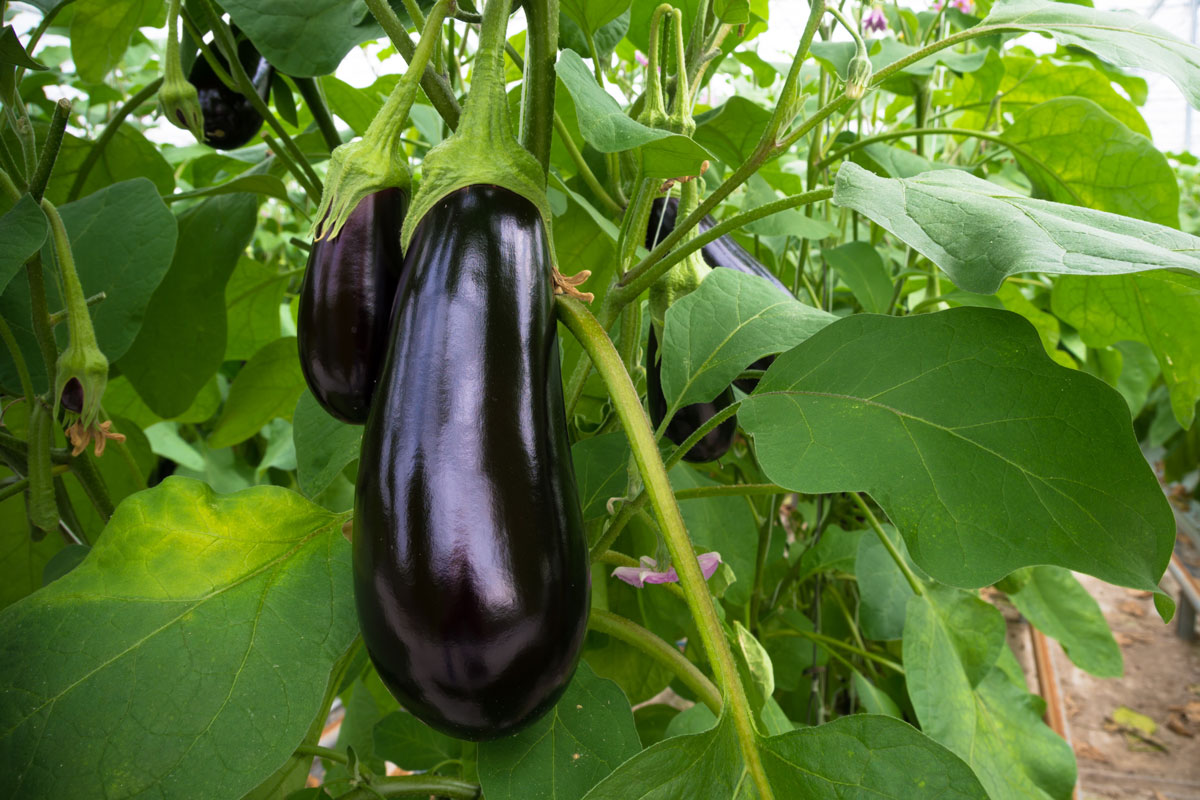
The aubergine has been grown in its country of origin, India, for over 3,000 years. In many growing regions the climate is tropical, and there the plant is perennial. In our temperate climate, we grow it as an annual.
Facts and figures
Planting & harvest times of Aubergine
OutdoorsTransplant to bed from Mid May to Late June. Pre-grow about 80 days before transplanting, approximately between Late February and Early April. After a growing period of 160 days, harvest can begin around Early August and continues until Late October.
GreenhouseTransplant to bed from Mid April to Late June. Pre-grow about 80 days before transplanting, approximately between Late January and Early April. After a growing period of 160 days, harvest can begin around Early August and continues until Late October.
Location and soil
The aubergine likes it warm — even warmer than peppers. Below 15 degrees Celsius it really doesn't want to grow any more. That's why it's happier in a greenhouse, unless you live in a particularly mild wine-growing region. A large pot with generous fertiliser on a sunny terrace also works well. The paving and house walls store the warmth of the sun.
Good and bad companions of Aubergine
Predecessors and successors of Aubergine
The recommendation is to wait at least 4 years before growing aubergines and other nightshades like tomatoes or peppers in the same bed again. In a greenhouse this can be tricky, since these are exactly the plants you tend to grow under glass — and space there is usually quite limited.
Crop rotation
What stood on that bed three years ago is hard to recall come spring. grove remembers. Once you have planned with it for a few seasons it knows your beds and warns you as you plant when a growing break is still running. The other way round, grove points you to the spots where Aubergine fits particularly well right now.
As green manure before Aubergine, grove suggests Oil radish good for example, provided the crop before it fits as well. As the crop before it, grove suggests Pea good, Bush bean good or Ginger good. After it come Pea good, Bush bean good or Pole bean good.
As a preceding crop: Tomato poor, Pepper poor, Sunflower poor and 3 more plants may only return to the same spot after 4 years. grove still remembers that three years from now. As a following crop: Tomato poor, Pepper poor, Chilli poor and 2 more plants may only return to the same spot after 4 years.
And as soon as next year is planned, the Garden Fairy looks for the right green manure for the cold season in between all by itself, Phacelia for example. How the Garden Fairy works
Plan crop rotation in the bed planner Try free for 7 days, web, iOS and Android
iv id="textCultivar">Varieties
There are many varieties that differ in shape, colour and size. The older English name "egg plant" comes from egg-shaped, white-fruited varieties that at first glance you'd hardly recognise as aubergines, since over here we mainly see the typical dark violet fruits.