
Other names
black oyster plant, viper's herb, Spanish salsify
Botanical name
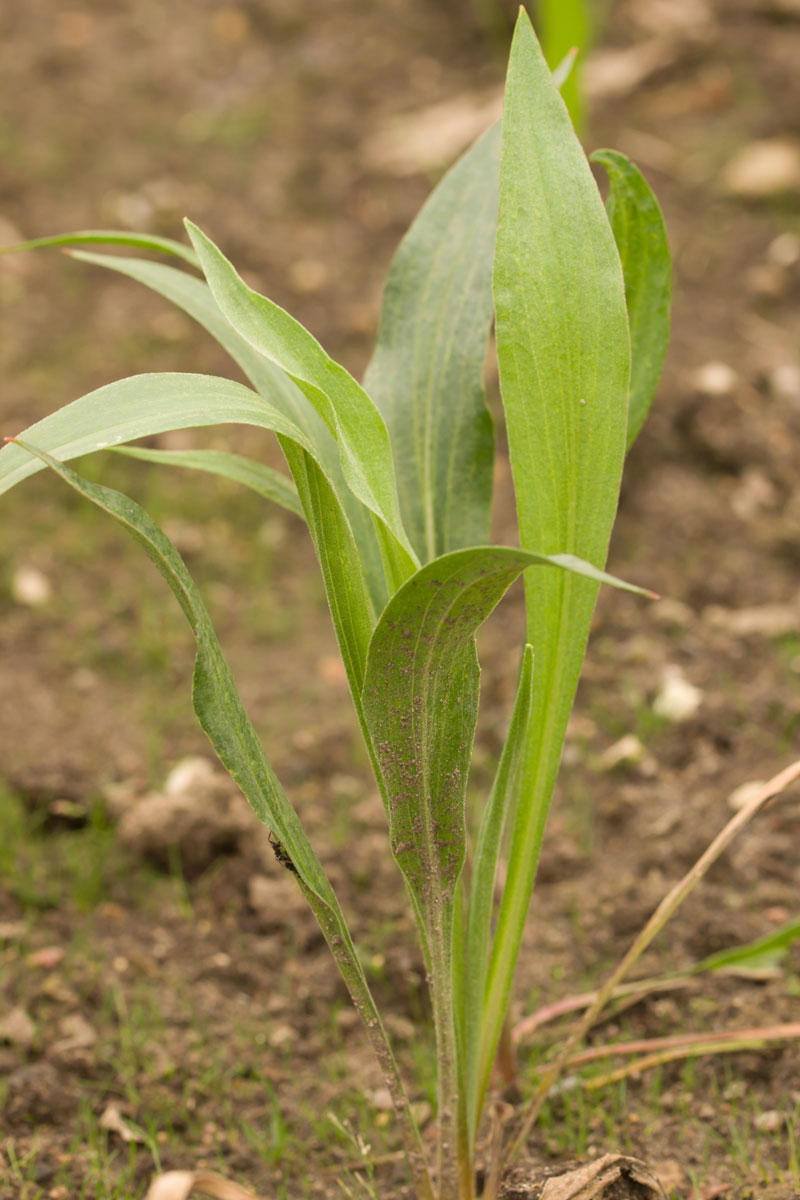
Scorzonera hispanica
Family / Genus
Asteraceae / Pseudopodospermum
Plant category
Root and tuber vegetables
A.Luna/Shutterstock.com
Facts and figures
Light requirements
Sun / partial shade
Nutrient requirements
Medium feeder
Difficulty level
Intermediate
Culture (according to Gertrud Franck)
B - early, B - late
Culture (according to Sister C. Weinrich)
Companion crop
Growing period
220 days
Row spacing
35 cm
Plant spacing
9 cm
Growth height
20 - 40 cm
Sowing depth
3 cm
Germination temperature (minimum)
3 °C
Germination temperature (optimal)
15 - 25 °C
Germination type
Light and dark
Planting & harvest times of Scorzonera
1
2
3
4
5
6
7
8
9
10
11
12
Direct sowing
Harvest
Harvest (next year)
Direct sowing from Mid March to Late April. After a growing period of 220 days, harvest can begin around Mid October and continues until Mid April next year.
Good and bad companions of Scorzonera
Good neighbours
Leek
Evidence quality: moderate
Evidence: Long-standing companion planting practice (e.g. Gertrud Franck, Schwester C. Weinrich), Guidebooks, companion planting charts, tradition
Radish
Radishes germinate quickly and mark the rows of slow-germinating scorzonera. They are harvested before the scorzonera need the space.
Evidence quality: good
Evidence: Specialist book, Long-standing companion planting practice (e.g. Gertrud Franck, Schwester C. Weinrich)
Reasons:
- Practical tip for this pair
Bad neighbours
Sunflower
Both are composites and hosts of white mould. The sclerotia persist in the soil for up to 10 years.
Very bad neighbours
Predecessors and successors of Scorzonera
Good predecessors
Bad predecessors
Black kale
roots grow poorly through the hard plant residues of previous crops
Rotation break: 3 years
Broccoli
Cabbage leaves coarse crop residues. Scorzonera grown afterwards forms many side roots.
Rotation break: 1 year
Evidence quality: good
Evidence: Specialist book
Brussels sprouts
roots grow poorly through the hard plant residues of previous crops
Rotation break: 3 years
Cauliflower
Cabbage leaves coarse crop residues behind. Scorzonera grown afterwards forms many side roots.
Rotation break: 1 year
Evidence quality: good
Evidence: Specialist book
Flower Sprouts
roots grow poorly through the hard plant residues of previous crops
Rotation break: 3 years
Kale
Brassicas leave coarse crop residues. Scorzonera grown afterwards forms many side roots.
Rotation break: 1 year
Evidence quality: good
Evidence: Specialist book
Maize
roots grow poorly through the hard plant residues of previous crops
Rotation break: 3 years
Pointed cabbage
roots grow poorly through the hard plant residues of previous crops
Rotation break: 3 years
Red cabbage
roots grow poorly through the hard plant residues of previous crops
Rotation break: 3 years
Savoy cabbage
roots grow poorly through the hard plant residues of previous crops
Rotation break: 3 years
Sunflower
Both are composites and hosts of white mould. The sclerotia persist in the soil for up to 10 years.
Rotation break: 4 years
Tomato
Rotation break: 3 years
White cabbage
roots grow poorly through the hard plant residues of previous crops
Rotation break: 3 years
Good successors
Lamb's lettuce
Lasting effect: 3 years
Bad successors
Sunflower
Both are composites and hosts of white mould. The sclerotia persist in the soil for up to 10 years.
Rotation break: 4 years
Diseases and pests
Susceptible to
Stem nematode
Harvest and processing
Wouter Midavaine/Shutterstock.com
Open the bed planner Try free for 7 days, web, iOS and Android