
Winter savory is a perennial, evergreen sub-shrub from the mint family. It originally comes from the dry, chalky rock slopes of the Balkan Peninsula, where it thrives on poor soils in full sun. In the garden it can stay in the same spot for many years and gradually becomes woody at the base. Compared to annual summer savory, the flavour is noticeably stronger, sharper and more peppery. Many people find the pure aroma almost too intense, so it's used sparingly in the kitchen. In the kitchen, winter savory goes beautifully with bean dishes, pulses and stews. In the home garden, though, it has another real value: many wild bee species, bumblebees and butterflies love the white to violet flowers that appear from July to September.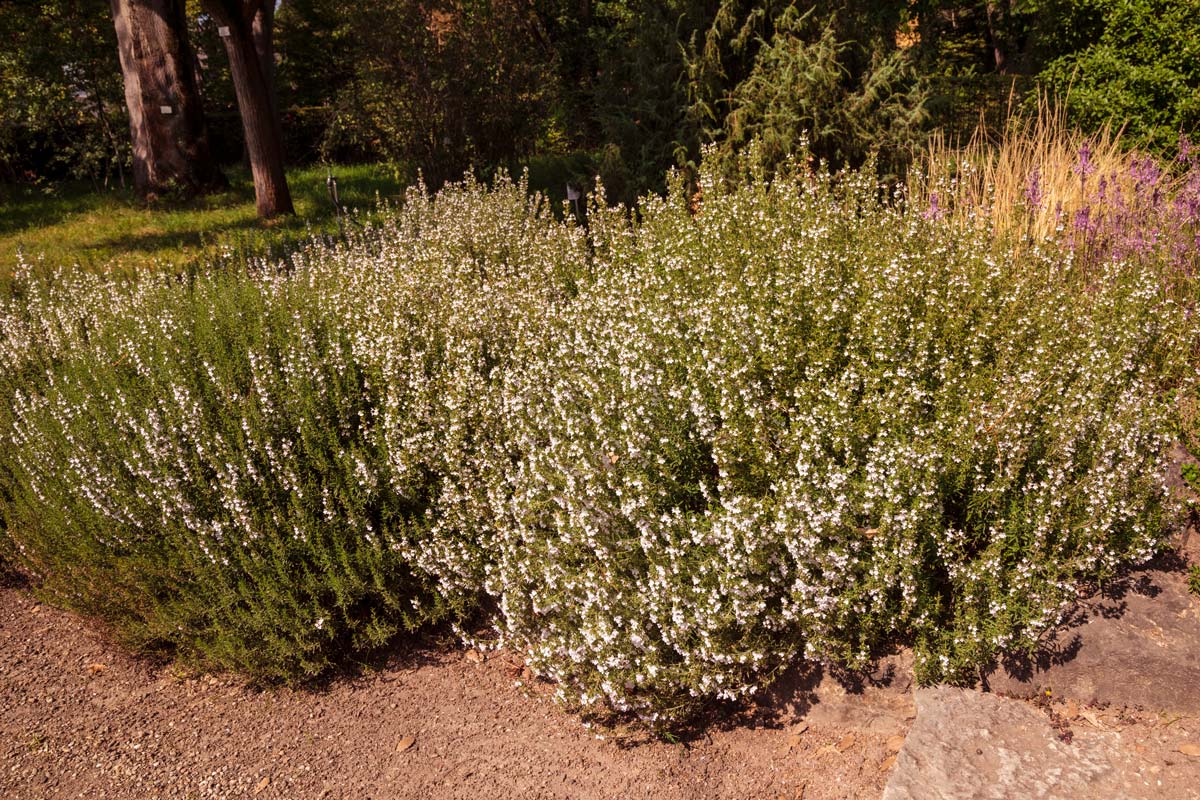
Horst Lieber/Shutterstock.com
Facts and figures
Planting & harvest times of Winter savory
Direct sowing from Early May to Late August. Transplant to bed from Early May to Late May. Pre-grow about 45 days before planting out, approximately between Mid March and Mid April. After a growing period of 90 days, harvest can begin around Early June and continues until Late December next year.
Sow and plant Winter savory
Winter savory needs light to germinate. Place the seeds on moist substrate, press them down lightly, and cover with no more than a dusting of sand. Start them indoors from March on a windowsill, or sow directly outdoors from April — ideally after the last frosts.
Germination takes 2 to 4 weeks. Make sure you use fresh seed, as viability drops off after just one year.
Besides sowing, you can also propagate winter savory vegetatively: divide the rootstock in spring, or take semi-woody cuttings in summer (July to August). Young plants should spend their first winter in a sheltered spot and only move permanently outdoors the following year.
Location and soil
Winter savory needs full sun with at least six hours of direct sunlight per day. Even in light partial shade the plant struggles and produces far fewer aromatic compounds. The soil must be well-drained, loose and fairly low in nutrients. Chalky to neutral soils are ideal — winter savory really doesn't like acidic soils.
If you have heavy clay soil, loosen it up before planting with sand, pumice or gravel.
The top tier of a herb spiral, a Mediterranean herb bed, rock gardens or dry stone walls are all perfect spots. Winter savory also does well in a pot on the balcony, as long as drainage is good.
Good and bad companions of Winter savory
Beans and winter savory make great partners. The strong essential oils repel black bean aphids and bean beetles, and because winter savory stands in the bed year-round as a permanent crop, it protects the beans from early spring onwards. Both bush beans and runner beans benefit equally.
Since the position of beans in the bed changes every year, it's easier to do companion planting with summer savory instead.
Winter savory also gets on well with strawberries. Lettuce and cut-and-come-again lettuce, beetroot and onions are grateful neighbours too. Among herbs, it harmonises particularly well with oregano, thyme, rosemary, lavender, sage and hyssop, since they all share the same preferences: sunny, dry, lean soil.
As with summer savory, keep your distance from basil and lovage.
Predecessors and successors of Winter savory
As a perennial permanent crop, winter savory typically stays in the same spot for 5 to 10 years. Traditional crop rotation planning doesn't apply here.
When you remove an old plant after years, don't follow it with other members of the mint family such as thyme, sage, oregano, mint or basil. The incompatibility within this plant family is well documented.
Varieties
The wild form of winter savory is the reliable classic for the garden: 20 to 40 cm tall, intensely peppery and completely unfussy. If you're short on space, try the compact variety 'Aromakugel', which is particularly suited to pots and small beds.
The most interesting variant is lemon winter savory (Satureja montana var. citriodora). It surprises with a warm, lemony aroma almost without any bitter notes and works beautifully in teas, salads, barbecue marinades and fish dishes.
Care and fertilising
Winter savory is undemanding. Water sparingly. A light top-dressing of compost in spring is enough as feed. Too much nitrogen weakens both the flavour and the winter hardiness.
The most important pruning happens in spring: cut the shoots back hard, but never into the old wood. A light trim after flowering is also possible. Regularly picking the shoot tips encourages bushy growth.
Outdoors, established winter savory handles temperatures down to minus 15 to minus 20 degrees. In a container, wrap the pot or overwinter it somewhere cool and bright.
Diseases and pests
Thanks to its essential oils, winter savory is a tough plant. The biggest risk is root rot from waterlogging — well-drained soil and restrained watering prevent this.
Powdery mildew can appear in warm, humid conditions, especially if plants are too closely spaced or getting too much nitrogen. Aphids are easy to deal with using a strong jet of water or beneficial insects. A brew made from winter savory (10 ml concentrate to 1 litre of water) also works as a natural spray.
Harvest and processing
The big advantage of winter savory over annual summer savory: as an evergreen sub-shrub it supplies fresh leaves year-round, even in the middle of winter. The leaves have their most intense aroma just before and at the start of flowering in July and August. That's also the best time for a larger harvest for drying. Keep snipping off shoot tips regularly — this encourages bushy new growth at the same time. Use mainly the leaves, not the woody stems. For a bigger harvest, never take more than a third of the plant at once. The flowers are edible too, by the way, and have a mildly peppery taste. To preserve, hang the sprigs upside down in an airy, shady spot. Dried winter savory keeps its aroma beautifully and lasts for months in sealed jars. Naturally, it tastes best fresh from the plant straight into the pot.