
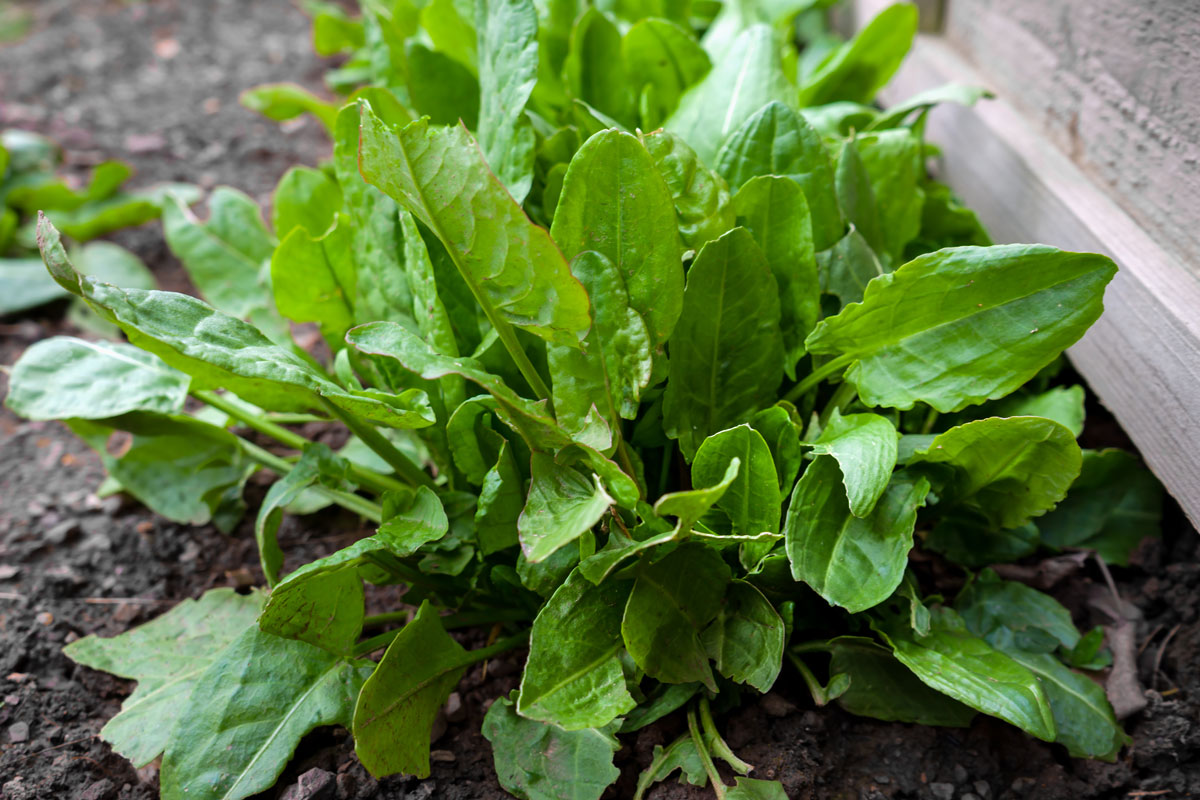
Facts and figures
Planting & harvest times of Sorrel
SpringDirect sowing from Early March to Mid May. Transplant to bed from Early March to Mid May. Pre-grow about 30 days before transplanting, approximately between Early February and Mid April. In the first year, harvest can begin after a growing period of 60 days and continues until Mid November. From the second year on, harvest can begin as early as around Early May.
AutumnDirect sowing from Early August to Late August. Transplant to bed from Early August to Late August. Pre-grow about 30 days before transplanting, approximately between Early July and Late July. Harvest begins around Early May and continues until Mid November, starting from year 2.
Location and soil
Sorrel grows well in partial shade too, and its leaves stay more tender there. However, the oxalic acid content increases with less light. That means the shadier the spot, the more sour and less digestible it becomes.
Good and bad companions of Sorrel
Don't plant next to tarragon.
- Practical tip for this pair
Predecessors and successors of Sorrel
Sorrel is a perennial and can happily keep a permanent spot for 3 to 4 years. After that, you should divide and replant it.
- Shared soil-borne pathogen
- Self-incompatibility
- Shared soil-borne pathogen
- Self-incompatibility
- Shared soil-borne pathogen
- Self-incompatibility
- Shared soil-borne pathogen
- Self-incompatibility
- Shared soil-borne pathogen
- Self-incompatibility
- Shared soil-borne pathogen
- Self-incompatibility
Care and fertilising
During dry spells, give your sorrel a good watering — it prefers things on the moist side.
Diseases and pests
Harvest and processing
You can already harvest in the year of sowing, though possibly a bit later than indicated. In the following years, just keep harvesting, cut it back occasionally and transplant it every few years. To harvest fresh leaves all year round, cut the sorrel back several times.
Open the bed planner Try free for 7 days, web, iOS and Android