
The tomatillo belongs to the nightshade family and, despite its name, isn't a tomato but a husk cherry (Physalis). It originally comes from Mexico and Central America, where it's been cultivated for thousands of years. In Aztec milpa farming, it grew alongside sweetcorn, beans and squash. Here in the UK, it's still a real garden gem and surprises many growers with its toughness and unique flavour. The tomatillo's most striking feature is its lantern-shaped fruit husk made of papery calyx tissue. This husk completely encloses the fruit and splits open when ripe. The flesh tastes tangy and savoury, has an apple-like texture and a slightly sticky surface. In Mexican cooking, the tomatillo is essential for salsa verde, green enchilada sauces and hearty stews. Tomatillos are strictly cross-pollinating. A single plant won't set any fruit. You always need at least two plants flowering at the same time. Bees and bumblebees handle the pollination, and the flowers are very popular with insects. As with all nightshades, the green plant parts and unripe fruits contain solanine. With some varieties, though, the fruits are edible even when unripe, unlike the Cape gooseberry.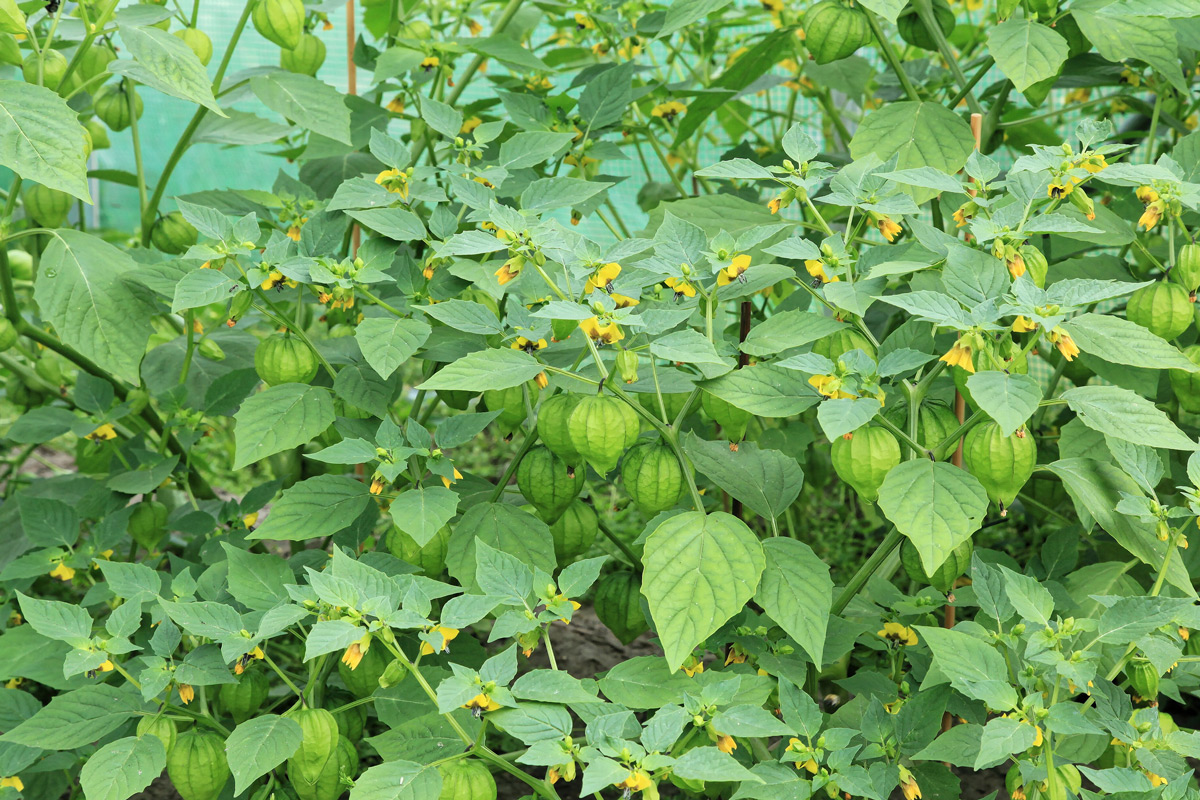
Frank Vincentz/CC BY-SA 3.0
Facts and figures
Planting & harvest times of Tomatillo
Transplant to bed from Mid May to Mid June. Pre-grow about 90 days before planting out, approximately between Mid February and Mid March. After a growing period of 160 days, harvest can begin around Early August and continues until Late October.
Plant Tomatillo
In our climate, tomatillos are almost always started indoors because they're frost-sensitive and need up to 90 days to ripen. Sowing starts from mid-February on a windowsill or from mid-March in a greenhouse. If you soak the seeds in lukewarm water for 12 to 24 hours, it breaks the natural germination inhibition. Sow them straight after that — don't let them dry out.
Place the seeds about 0.5 to 1 cm deep in the soil. At 22 to 27°C, they germinate within one to two weeks. Covering them with cling film or using a mini greenhouse speeds up germination. Once the seedlings are about 5 cm tall and show their first true pair of leaves, prick them out into individual 9 cm pots.
The young plants can only go outdoors after the last frost, from mid-May onwards. Before that, it's worth putting them outside in a sheltered spot during the day so they gradually harden off.
When planting out, set the tomatillo a bit deeper — this way the stem forms additional adventitious roots. Space them 80 x 80 cm apart, because the plants grow quite bushy. Put in a sturdy support or wooden stake right when planting, otherwise the shoots will topple over later under the weight of the fruit.
Location and soil
The tomatillo loves full sun and needs at least 6 hours of direct light per day. Too little sun makes the stems soft and noticeably reduces the yield. A sheltered spot is ideal, because the large leaves make the plant vulnerable to damage in strong winds.
The soil should be loose, nutrient-rich and well-drained. The tomatillo really can't cope with waterlogging and responds with root rot. A slightly acidic to neutral soil is ideal.
When it comes to water, the tomatillo is easy-going. It's surprisingly drought-tolerant and handles short dry spells without any trouble. Regular watering does noticeably boost fruit set, though. In a pot, you can grow it well in containers of at least 40 litres. A good substrate is vegetable compost mixed with some sand for better drainage.
Good and bad companions of Tomatillo
Sweetcorn is probably the most traditional companion for the tomatillo. In Mexican milpa culture, both plants grew together for thousands of years. The sweetcorn provides wind protection and barely competes for the same nutrients. Beans are also an excellent match, because they enrich the soil with nitrogen and the tomatillo benefits from that. Squash completes the trio perfectly: its broad leaves shade the soil, retain moisture and suppress weeds.
Basil has proven its worth with tomatoes and works just as well with tomatillos. The essential oils keep aphids and whitefly at bay. Onions and garlic are also welcome partners. Their strong scent deters aphids, which is always a bonus with nightshades. Marigolds and tagetes combat nematodes in the soil and attract pollinators at the same time, which is particularly valuable for the cross-pollinating tomatillo.
You shouldn't plant other nightshades like tomatoes, potatoes, peppers, aubergines and the closely related Cape gooseberry right next to tomatillos. They share the same pathogens, above all late blight. Fennel inhibits the growth of many vegetables with its root secretions and belongs in its own bed. Cucumbers aren't good neighbours either, because both are susceptible to mildew and have different moisture requirements.
Predecessors and successors of Tomatillo
Legumes like peas and beans are ideal predecessors for the tomatillo. Their root nodule bacteria leave nitrogen in the soil, which the tomatillo can put to good use as a moderate feeder. Lettuce and lamb's lettuce also work well, because they barely deplete the soil and don't carry any diseases from the nightshade family.
After tomatillos, legumes benefit from the deeply worked soil and replenish the nitrogen supply.
You should never plant other nightshades after tomatillos. The same applies the other way round. Leave at least 3 to 4 years between two nightshade crops on the same patch to starve out soil-borne pathogens.
Varieties
Among the available varieties, 'Purple de Milpa' stands out: it produces deep violet to almost black, medium-sized fruits with a nutty, savoury flavour and ripens in about 70 days. 'Toma Verde' is the classic Mexican commercial variety with green, boldly tangy fruits, perfect for an authentic salsa verde. If you prefer something sweeter, go for the pale yellow 'Amarylla', a European variety of Polish origin that's also suitable for jams and mild salsas. 'Grande Rio Verde' delivers particularly large, green fruits and impresses with generous yields.
Care and fertilising
Watering the tomatillo is less fussy than with tomatoes. Once a week is usually enough, a bit more often in hot weather. Fruit set is noticeably better with consistent soil moisture, but short dry spells won't bother it. Waterlogging is the only thing you really need to avoid.
As a moderate feeder, the tomatillo often manages without extra fertilising in well-composted soil. A monthly dose of organic vegetable fertiliser doesn't hurt, though. Potassium-rich fertilisers promote fruit set, while too much nitrogen encourages lush leaf growth rather than fruit.
Pinching out side shoots isn't necessary with tomatillos and isn't common practice. The bushy growth habit is exactly what you want. If you pinch out the growing tip, it encourages branching and makes the plant sturdier. Whether you leave or remove the first flower at the Y-fork (the so-called king flower) is a matter of personal preference.
In a container, you can overwinter the tomatillo in a cool, bright spot at about 10°C if you cut it back by a third in autumn. Alternatively, you can take cuttings with 4 to 5 leaves in summer and bring those through the winter. One thing to know about seed saving: freshly harvested seeds won't germinate — they need at least a year of after-ripening.
Diseases and pests
Compared to tomatoes, the tomatillo is noticeably tougher against typical garden diseases. Late blight (Phytophthora infestans) can still occur, though, especially in damp, cool weather with poor air circulation. An open, airy position, generous spacing and avoiding overhead watering are good preventive measures. Not planting other nightshades nearby is the most important companion planting rule here.
Mildew can appear with tight spacing or very humid conditions and shows as white or grey-brown coatings on the leaves. Root rot develops with waterlogging and shows up as yellowing leaves and wilting despite moist soil.
Among pests, aphids are the most common. For light infestations, washing them off or using neem extract helps. Encouraging ladybirds, parasitic wasps and lacewings as natural predators is always worthwhile. Basil, tagetes and alliums planted nearby also keep pest pressure low. Spider mites appear mainly in hot, dry conditions — a good blast of water on the undersides of the leaves often does the trick. You can spot thrips by silvery-brown discolouration on leaves and fruits. Yellow sticky traps help with early detection.
Harvest and processing
The surest sign of ripeness: the papery husk splits open and the tomatillo practically bursts out of it. From that point, you can pick the fruits. The harvest season starts around August here and runs until the first frost in October or November. Depending on what you want to cook, it's worth picking at the right moment. Slightly unripe fruits taste more tart and are excellent for classic salsa verde. Fully ripe tomatillos develop a softer, sweeter note. Overripe, limp fruits have hung on the plant too long. The shelf life is impressive: in their husks, tomatillos keep at room temperature for 4 to 6 weeks. Without the husk, they shrivel up quickly. Freezing is possible, but the fruits go mushy when thawed and are then only good for sauces. The sticky layer on the fruit surface washes off easily with warm water.