
Bush beans belong to the common bean family, just like runner beans and climbing beans. They grow much shorter though, in a bushy shape, and don't need any climbing support. You can usually start harvesting them earlier than their climbing relatives.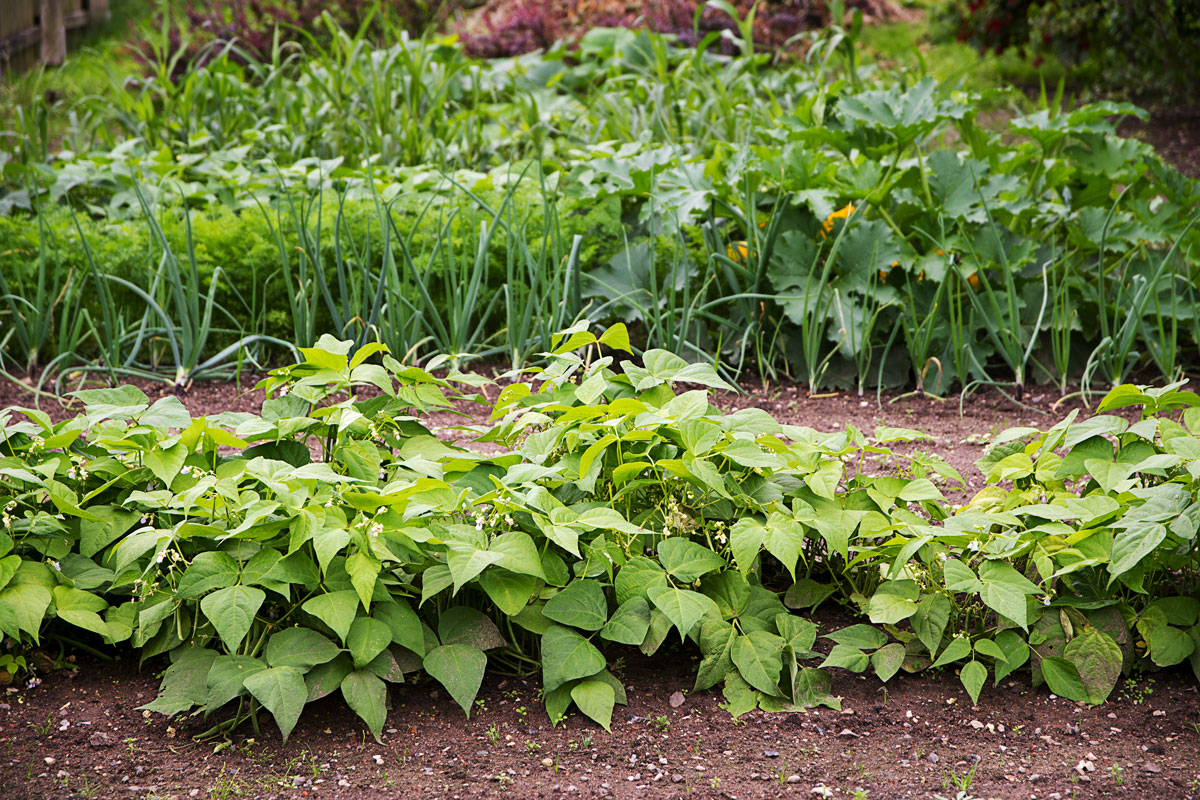
Maren Winter/Shutterstock.com
Like all common beans, they originally come from South America. That makes them sensitive to cold, so only plant them outdoors once the last night frosts have passed.
Facts and figures
Planting & harvest times of Bush bean
OutdoorsDirect sowing from Mid May to Mid July. Transplant to bed from Mid May to Mid July. Pre-grow about 14 days before planting out, approximately between Early May and Late June. After a growing period of 50 days, harvest can begin around Mid July and continues until Mid October.
GreenhouseDirect sowing from Early April to Mid July. After a growing period of 50 days, harvest can begin around Mid June and continues until Mid October.
Sow and plant Bush bean
Instead of sowing beans in rows, you can also sow them in clusters. That means you put 5 seeds into a 3 cm deep hole every 40 cm, rather than just one. The little plants then support each other. This works especially well if you have heavy clay soil.
Location and soil
They don't need any special soil, just make sure it's not too acidic. If it is, add some lime.
They're a bit sensitive to wind.
Good and bad companions of Bush bean
Predecessors and successors of Bush bean
Beans aren't good predecessors for themselves, other legumes (especially peas), or a few other plants like potatoes, spinach, lettuce and sunflowers. That's because of the fungus Sclerotinia, which can infect all of them.
Cereals make good predecessors for beans.
Beans are great preceding crops for many plants though, especially the hungrier ones, since they leave behind well-fertilised soil thanks to their nitrogen-fixing root nodule bacteria.
Care and fertilising
Thanks to their symbiosis with root nodule bacteria that capture nitrogen from the air and pass it on to the plants, they don't need any fertiliser. A steady water supply gives you nicer pods.
Earth up the bush beans once they're 15 cm tall — this helps the little plants stand firm.
Harvest and processing
Unlike peas, beans are toxic when raw. You need to cook them before eating.