
Phacelia, also known as scorpionweed or bee's friend, originates from the dry highlands of North America and belongs to the borage family (Boraginaceae). Since it's not related to any common vegetable family, it doesn't share any typical diseases or pests with them. This makes it an ideal companion plant in the vegetable garden. As a green manure, phacelia does several things at once: its roots loosen the soil down to 60 cm depth, the abundant biomass suppresses weeds and prevents erosion. On over-fertilised soils it has a balancing effect, drawing nutrients up from deeper layers and storing them in its plant mass. When you work the remains into the soil, those nutrients are released again. It doesn't fix nitrogen from the air though — that's something only legumes can do. The blue-violet flowers are a magnet for bees, bumblebees, butterflies and hoverflies. If you grow phacelia in your garden, your pollinators will thank you for it.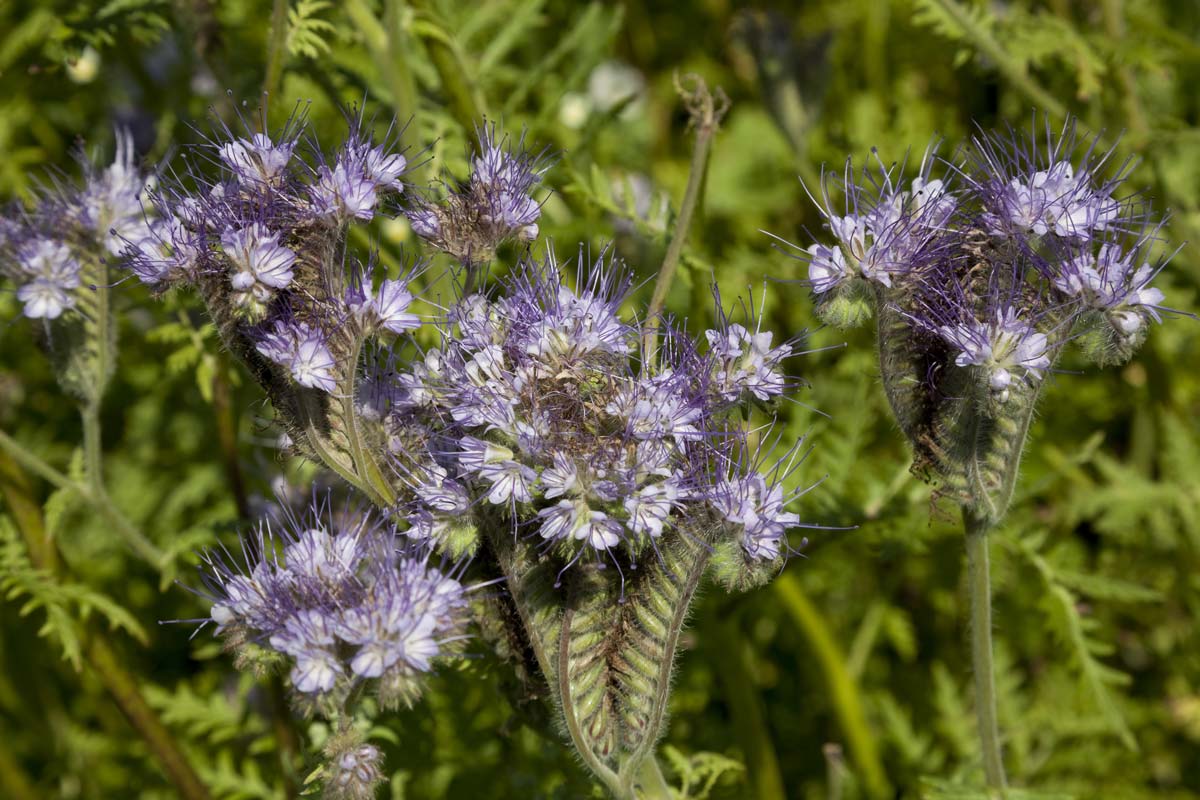
dabjola/Shutterstock.com
Facts and figures
Planting & harvest times of Phacelia
Direct sowing from Early March to Late October.
Sow Phacelia
Phacelia is sown directly into the bed — there's no need to start it indoors. The sowing window runs from March to October, depending on what you're aiming for. For a flowering bee pasture or individual blooms to attract pollinators, sow from late April after the last frost. For green manure, the period from March to September works well, and as an autumn green manure even until the end of October. Sowings up to July will still flower; later ones mainly deliver the green manure effect.
Seeds germinate from 5°C, with an optimum of 12 to 18°C, and germination takes 7 to 14 days. Phacelia tolerates frost down to about -5 to -8°C. If you don't want self-seeding, simply mow the plants before the seeds ripen.
Location and soil
Phacelia is undemanding: full sun to partial shade, and almost any soil will do — sandy, poor or clay. The only exception is waterlogging, which it can't tolerate.
Keep the soil evenly moist for the first two weeks after sowing; after that it copes well with dry conditions. There's no need to fertilise — its deep-reaching roots fetch everything they need on their own.
Good and bad companions of Phacelia
Phacelia and potatoes make a great pairing: it's been shown to repel Colorado beetles and harmful nematodes. The best approach is to sow it between potato rows or create a narrow border bed around your potato patch. It also works well as a bed edging for other crops, since the flowers attract pollinators that benefit the whole bed. Cucumbers, courgettes and squash profit from this especially. Brassicas get the added benefit that phacelia reduces the risk of clubroot.
Since phacelia doesn't belong to any common vegetable family, there are virtually no bad neighbours in the vegetable garden. You can plant it next to practically any crop, sow it into gaps or use it as mulch.
Predecessors and successors of Phacelia
Since phacelia isn't related to any vegetable family, it fits into the crop rotation before, after and between practically any crop. This sets it clearly apart from mustard, for instance, which as a brassica can be problematic before and after cabbages.
Phacelia is especially useful as a follow-on crop after heavy feeders like cabbage, tomatoes, potatoes or squash. Its roots loosen the soil, encourage soil life and take up remaining nutrients before they leach away over winter. When you work the plant matter into the soil, those nutrients become available again the following year.
There is one notable exception though: don't grow phacelia before strawberries, as it can carry verticillium wilt, which triggers the dreaded strawberry wilt.
Varieties
For the vegetable garden you don't need a fancy variety. Standard phacelia seed without a named cultivar does an excellent job.
Care and fertilising
Phacelia is low-maintenance. After sowing, keep the soil evenly moist for about one to two weeks. Watering is only necessary during extreme drought, and feeding not at all.
There are two ways to work it in as green manure. For spring or summer sowings, cut the plants down when they start to flower — roughly 5 to 8 weeks after sowing. Let the plant remains dry briefly, then work them shallowly into the soil without digging over. This protects the soil structure. For autumn sowings, simply leave the plants standing until the first frost. Phacelia reliably dies off in the cold, and the dead remains stay as a protective mulch layer over winter. In spring you then work these remains in.
In any case, cut the plants before the seeds ripen, otherwise you'll have little phacelia seedlings popping up everywhere the following year.
Diseases and pests
Phacelia is virtually trouble-free in the home garden. Diseases like powdery mildew or sclerotinia can occasionally appear but are rarely a serious problem. As for pests, really only slugs are worth mentioning — they can attack fresh seedlings.
Note: phacelia can carry verticillium wilt and should therefore not be grown before strawberries.
If you have sensitive skin, wear gloves when handling the plants, as phacelia can trigger contact allergies.
Harvest and processing
Phacelia isn't harvested in the traditional sense in the vegetable garden — it's worked into the soil as green manure. If you want to save seed for the following year, let a few plants flower fully. The seeds ripen roughly 6 to 8 weeks after flowering begins. Harvest the seed heads on a dry day when they turn brown and the capsules open easily. The seed stays viable for 4 to 5 years.