
Botanical name
Onobrychis viciifolia
Family / Genus
Fabaceae / Onobrychis
Plant category
Green manure
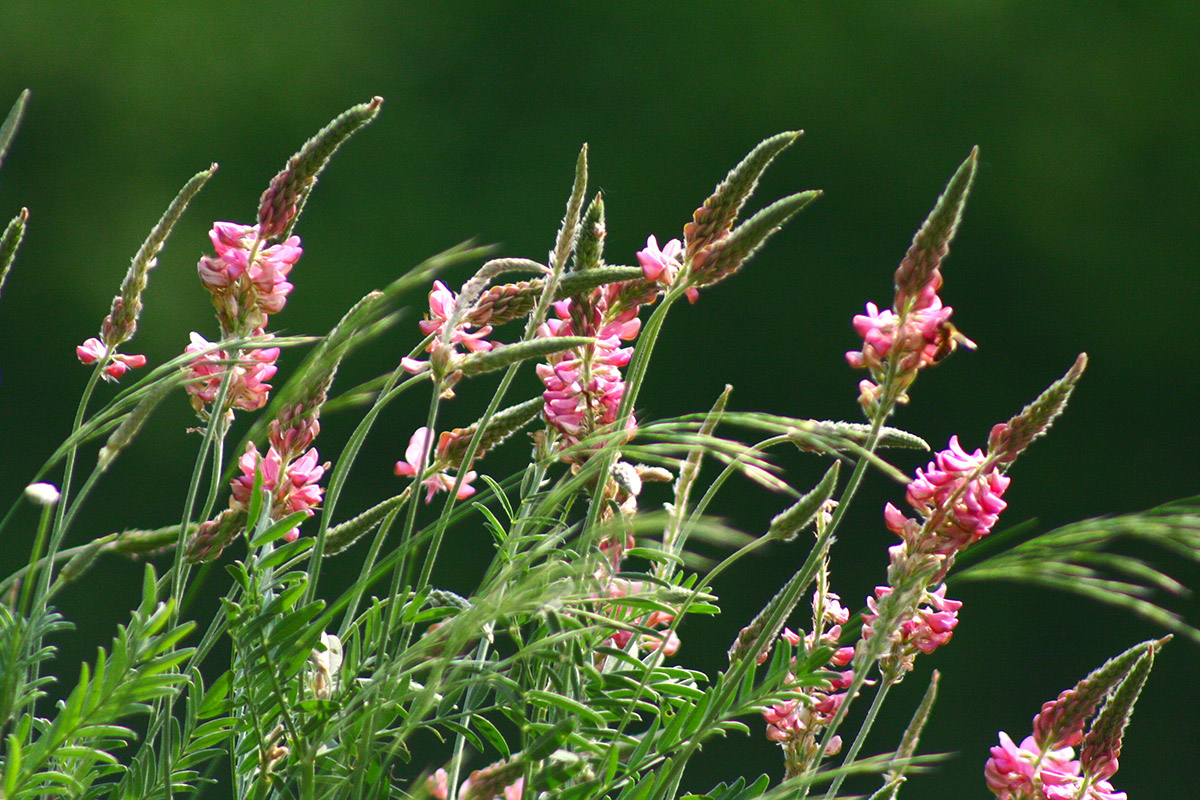
Enrico Blasutto / CC BY-SA 4.0
Facts and figures
Light requirements
Sun
Nutrient requirements
Light feeder
Difficulty level
Intermediate
Green manure
Fixes nitrogen through root nodule bacteria, Loosens compacted deep soil layers, Valuable bee and insect pasture, Binds soil nitrogen to prevent leaching
Frost resistance
Hardy to -20 °C
Row spacing
15 cm
Plant spacing
5 cm
Growth height
30 - 90 cm
Sowing depth
3 cm
Germination temperature (minimum)
8 °C
Germination temperature (optimal)
15 - 20 °C
Germination type
Dark
Planting & harvest times of Sainfoin
1
2
3
4
5
6
7
8
9
10
11
12
Direct sowing
Direct sowing from Early April to Late August.
Good and bad companions of Sainfoin
Good neighbours
Predecessors and successors of Sainfoin
Bad predecessors
Broad bean
Besides clover and lucerne, clover rot also attacks winter vetch and broad beans. Keep a four-year gap.
Rotation break: 4 years
Evidence quality: good
Evidence: Advisory service, research institute, Specialist book
Reasons:
- Shared soil-borne pathogen
Broccoli
High residual nitrogen suppresses nodulation. Weak-competing sainfoin is then overgrown by weeds.
Rotation break: 3 years
Brussels sprouts
High residual nitrogen suppresses nodulation. Weak-competing sainfoin is then overgrown by weeds.
Rotation break: 3 years
Bush bean
Legumes share root diseases that build up in the soil. Keep a three-year gap.
Rotation break: 3 years
Evidence quality: good
Evidence: Advisory service, research institute, Specialist book
Reasons:
- Shared soil-borne pathogen
Cauliflower
High residual nitrogen suppresses nodulation. Weak-competing sainfoin is then overgrown by weeds.
Rotation break: 3 years
Cavolo nero
High residual nitrogen suppresses nodulation. Weak-competing sainfoin is then overgrown by weeds.
Rotation break: 3 years
Chickpea
Legumes share root diseases that build up in the soil. Keep a three-year gap.
Rotation break: 3 years
Evidence quality: good
Evidence: Advisory service, research institute, Specialist book
Reasons:
- Shared soil-borne pathogen
Chinese cabbage
High residual nitrogen suppresses nodulation. Weak-competing sainfoin is then overgrown by weeds.
Rotation break: 3 years
Common vetch
Legumes share root diseases that build up in the soil. Keep a three-year gap.
Rotation break: 3 years
Evidence quality: good
Evidence: Advisory service, research institute, Specialist book
Reasons:
- Shared soil-borne pathogen
Flower Sprouts
High residual nitrogen suppresses nodulation. Weak-competing sainfoin is then overgrown by weeds.
Rotation break: 3 years
Hairy vetch
Besides clover and lucerne, clover rot also attacks winter vetch and broad beans. Keep a four-year gap.
Rotation break: 4 years
Evidence quality: good
Evidence: Advisory service, research institute, Specialist book
Reasons:
- Shared soil-borne pathogen
Kale
High residual nitrogen suppresses nodulation. Weak-competing sainfoin is then overgrown by weeds.
Rotation break: 3 years
Kohlrabi
High residual nitrogen suppresses nodulation. Weak-competing sainfoin is then overgrown by weeds.
Rotation break: 3 years
Lentils
Legumes share root diseases that build up in the soil. Keep a three-year gap.
Rotation break: 3 years
Evidence quality: good
Evidence: Advisory service, research institute, Specialist book
Reasons:
- Shared soil-borne pathogen
Lupin
Legumes share root diseases that build up in the soil. Keep a three-year gap.
Rotation break: 3 years
Evidence quality: good
Evidence: Advisory service, research institute, Specialist book
Reasons:
- Shared soil-borne pathogen
May turnip
High residual nitrogen suppresses nodulation. Weak-competing sainfoin is then overgrown by weeds.
Rotation break: 3 years
Mizuna (Asian Greens)
High residual nitrogen suppresses nodulation. Weak-competing sainfoin is then overgrown by weeds.
Rotation break: 3 years
Pak choi
High residual nitrogen suppresses nodulation. Weak-competing sainfoin is then overgrown by weeds.
Rotation break: 3 years
Pea
Legumes share root diseases that build up in the soil. Keep a three-year gap.
Rotation break: 3 years
Evidence quality: good
Evidence: Advisory service, research institute, Specialist book
Reasons:
- Shared soil-borne pathogen
Pointed cabbage
High residual nitrogen suppresses nodulation. Weak-competing sainfoin is then overgrown by weeds.
Rotation break: 3 years
Pole bean
Legumes share root diseases that build up in the soil. Keep a three-year gap.
Rotation break: 3 years
Evidence quality: good
Evidence: Advisory service, research institute, Specialist book
Reasons:
- Shared soil-borne pathogen
Red cabbage
High residual nitrogen suppresses nodulation. Weak-competing sainfoin is then overgrown by weeds.
Rotation break: 3 years
Romanesco
High residual nitrogen suppresses nodulation. Weak-competing sainfoin is then overgrown by weeds.
Rotation break: 3 years
Runner bean
Legumes share root diseases that build up in the soil. Keep a three-year gap.
Rotation break: 3 years
Evidence quality: good
Evidence: Advisory service, research institute, Specialist book
Reasons:
- Shared soil-borne pathogen
Savoy cabbage
High residual nitrogen suppresses nodulation. Weak-competing sainfoin is then overgrown by weeds.
Rotation break: 3 years
Soya bean
Of all legumes, soybeans are the least prone to soil sickness. One year's gap to other legumes is usually enough.
Rotation break: 1 year
Evidence quality: good
Evidence: Advisory service, research institute
Reasons:
- Shared soil-borne pathogen
Swede
High residual nitrogen suppresses nodulation. Weak-competing sainfoin is then overgrown by weeds.
Rotation break: 3 years
White cabbage
High residual nitrogen suppresses nodulation. Weak-competing sainfoin is then overgrown by weeds.
Rotation break: 3 years
Very bad predecessors
Alfalfa
Clover rot attacks clover, lucerne and sainfoin, its resting bodies survive several years in the soil. Keep a four-year gap.
Rotation break: 4 years
Evidence quality: good
Evidence: Advisory service, research institute, Specialist book
Reasons:
- Shared soil-borne pathogen
Berseem clover
Clover rot attacks clover, lucerne and sainfoin, its resting bodies survive several years in the soil. Keep a four-year gap.
Rotation break: 4 years
Evidence quality: good
Evidence: Advisory service, research institute, Specialist book
Reasons:
- Shared soil-borne pathogen
Crimson clover
Clover rot attacks clover, lucerne and sainfoin, its resting bodies survive several years in the soil. Keep a four-year gap.
Rotation break: 4 years
Evidence quality: good
Evidence: Advisory service, research institute, Specialist book
Reasons:
- Shared soil-borne pathogen
Persian clover
Clover rot attacks clover, lucerne and sainfoin, its resting bodies survive several years in the soil. Keep a four-year gap.
Rotation break: 4 years
Evidence quality: good
Evidence: Advisory service, research institute, Specialist book
Reasons:
- Shared soil-borne pathogen
Red clover
Clover rot attacks clover, lucerne and sainfoin, its resting bodies survive several years in the soil. Keep a four-year gap.
Rotation break: 4 years
Evidence quality: good
Evidence: Advisory service, research institute, Specialist book
Reasons:
- Shared soil-borne pathogen
Sainfoin
Sainfoin does not tolerate itself, clover rot and wilts build up. Keep a four-year gap.
Rotation break: 4 years
Evidence quality: good
Evidence: Advisory service, research institute
Reasons:
- Shared soil-borne pathogen
- Self-incompatibility
Subterranean clover
Clover rot attacks clover, lucerne and sainfoin, its resting bodies survive several years in the soil. Keep a four-year gap.
Rotation break: 4 years
Evidence quality: good
Evidence: Advisory service, research institute, Specialist book, Derived from plant family or pathogen, pair not directly documented
Reasons:
- Shared soil-borne pathogen
White clover
Clover rot attacks clover, lucerne and sainfoin, its resting bodies survive several years in the soil. Keep a four-year gap.
Rotation break: 4 years
Evidence quality: good
Evidence: Advisory service, research institute, Specialist book
Reasons:
- Shared soil-borne pathogen
Good successors
Aubergine
Lasting effect: 3 years
Broccoli
Lasting effect: 3 years
Brussels sprouts
Lasting effect: 3 years
Carrot
Lasting effect: 3 years
Cauliflower
Lasting effect: 3 years
Cavolo nero
Lasting effect: 3 years
Celeriac
Lasting effect: 3 years
Celery
Lasting effect: 3 years
Chilli
Lasting effect: 3 years
Chinese cabbage
Lasting effect: 3 years
Courgette
Lasting effect: 3 years
Cucumber
Lasting effect: 3 years
Fennel
Lasting effect: 3 years
Flower Sprouts
Lasting effect: 3 years
Kale
Lasting effect: 3 years
Kohlrabi
Lasting effect: 3 years
Leek
Lasting effect: 3 years
Maize
Lasting effect: 3 years
May turnip
Lasting effect: 3 years
Mizuna (Asian Greens)
Lasting effect: 3 years
Oats
Lasting effect: 3 years
Pak choi
Lasting effect: 3 years
Phacelia
Phacelia catches the nitrogen that legumes leave behind in the soil.
Lasting effect: 3 years
Pointed cabbage
Lasting effect: 3 years
Red cabbage
Lasting effect: 3 years
Romanesco
Lasting effect: 3 years
Savoy cabbage
Lasting effect: 3 years
Squash
Lasting effect: 3 years
Swede
Lasting effect: 3 years
Sweet pepper
Lasting effect: 3 years
Sweet potato
Lasting effect: 3 years
Swiss chard
Lasting effect: 3 years
Tomato
Lasting effect: 3 years
White cabbage
Lasting effect: 3 years
Bad successors
Broad bean
Besides clover and lucerne, clover rot also attacks winter vetch and broad beans. Keep a four-year gap.
Rotation break: 4 years
Evidence quality: good
Evidence: Advisory service, research institute, Specialist book
Reasons:
- Shared soil-borne pathogen
Bush bean
Legumes share root diseases that build up in the soil. Keep a three-year gap.
Rotation break: 3 years
Evidence quality: good
Evidence: Advisory service, research institute, Specialist book
Reasons:
- Shared soil-borne pathogen
Chickpea
Chickpeas are particularly prone to foot rot diseases. Do not sow any other legumes in the bed for five years before chickpeas.
Rotation break: 5 years
Evidence quality: good
Evidence: Advisory service, research institute, Specialist book
Reasons:
- Shared soil-borne pathogen
Common vetch
Legumes share root diseases that build up in the soil. Keep a three-year gap.
Rotation break: 3 years
Evidence quality: good
Evidence: Advisory service, research institute, Specialist book
Reasons:
- Shared soil-borne pathogen
Hairy vetch
Besides clover and lucerne, clover rot also attacks winter vetch and broad beans. Keep a four-year gap.
Rotation break: 4 years
Evidence quality: good
Evidence: Advisory service, research institute, Specialist book
Reasons:
- Shared soil-borne pathogen
Lentils
Lentils suffer badly from foot rots. Do not sow other legumes in the bed for five years before lentils.
Rotation break: 5 years
Evidence quality: good
Evidence: Advisory service, research institute, Specialist book
Reasons:
- Shared soil-borne pathogen
Lupin
Legumes share root diseases that build up in the soil. Keep a three-year gap.
Rotation break: 3 years
Evidence quality: good
Evidence: Advisory service, research institute, Specialist book
Reasons:
- Shared soil-borne pathogen
Pea
Legumes share root diseases that build up in the soil. Keep a three-year gap.
Rotation break: 3 years
Evidence quality: good
Evidence: Advisory service, research institute, Specialist book
Reasons:
- Shared soil-borne pathogen
Pole bean
Legumes share root diseases that build up in the soil. Keep a three-year gap.
Rotation break: 3 years
Evidence quality: good
Evidence: Advisory service, research institute, Specialist book
Reasons:
- Shared soil-borne pathogen
Potato
A multi-year clover or grass stand builds up wireworms. Plant potatoes only 3 to 4 years after ploughing in.
Rotation break: 4 years
Runner bean
Legumes share root diseases that build up in the soil. Keep a three-year gap.
Rotation break: 3 years
Evidence quality: good
Evidence: Advisory service, research institute, Specialist book
Reasons:
- Shared soil-borne pathogen
Soya bean
Of all legumes, soybeans are the least prone to soil sickness. One year's gap to other legumes is usually enough.
Rotation break: 1 year
Evidence quality: good
Evidence: Advisory service, research institute
Reasons:
- Shared soil-borne pathogen
Sunflower
After legumes there is a lot of nitrogen in the soil. Sunflowers then become more prone to fungal diseases and ripen later.
Rotation break: 1 year
Evidence quality: good
Evidence: Advisory service, research institute
Reasons:
- Too much nitrogen for a sensitive successor
Very bad successors
Alfalfa
Clover rot attacks clover, lucerne and sainfoin, its resting bodies survive several years in the soil. Keep a four-year gap.
Rotation break: 4 years
Evidence quality: good
Evidence: Advisory service, research institute, Specialist book
Reasons:
- Shared soil-borne pathogen
Berseem clover
Clover rot attacks clover, lucerne and sainfoin, its resting bodies survive several years in the soil. Keep a four-year gap.
Rotation break: 4 years
Evidence quality: good
Evidence: Advisory service, research institute, Specialist book
Reasons:
- Shared soil-borne pathogen
Crimson clover
Clover rot attacks clover, lucerne and sainfoin, its resting bodies survive several years in the soil. Keep a four-year gap.
Rotation break: 4 years
Evidence quality: good
Evidence: Advisory service, research institute, Specialist book
Reasons:
- Shared soil-borne pathogen
Persian clover
Clover rot attacks clover, lucerne and sainfoin, its resting bodies survive several years in the soil. Keep a four-year gap.
Rotation break: 4 years
Evidence quality: good
Evidence: Advisory service, research institute, Specialist book
Reasons:
- Shared soil-borne pathogen
Red clover
Clover rot attacks clover, lucerne and sainfoin, its resting bodies survive several years in the soil. Keep a four-year gap.
Rotation break: 4 years
Evidence quality: good
Evidence: Advisory service, research institute, Specialist book
Reasons:
- Shared soil-borne pathogen
Sainfoin
Sainfoin does not tolerate itself, clover rot and wilts build up. Keep a four-year gap.
Rotation break: 4 years
Evidence quality: good
Evidence: Advisory service, research institute
Reasons:
- Shared soil-borne pathogen
- Self-incompatibility
Subterranean clover
Clover rot attacks clover, lucerne and sainfoin, its resting bodies survive several years in the soil. Keep a four-year gap.
Rotation break: 4 years
Evidence quality: good
Evidence: Advisory service, research institute, Specialist book, Derived from plant family or pathogen, pair not directly documented
Reasons:
- Shared soil-borne pathogen
White clover
Clover rot attacks clover, lucerne and sainfoin, its resting bodies survive several years in the soil. Keep a four-year gap.
Rotation break: 4 years
Evidence quality: good
Evidence: Advisory service, research institute, Specialist book
Reasons:
- Shared soil-borne pathogen
Diseases and pests
Susceptible to
Clover rot
Legume soil sickness
Open the bed planner Try free for 7 days, web, iOS and Android