
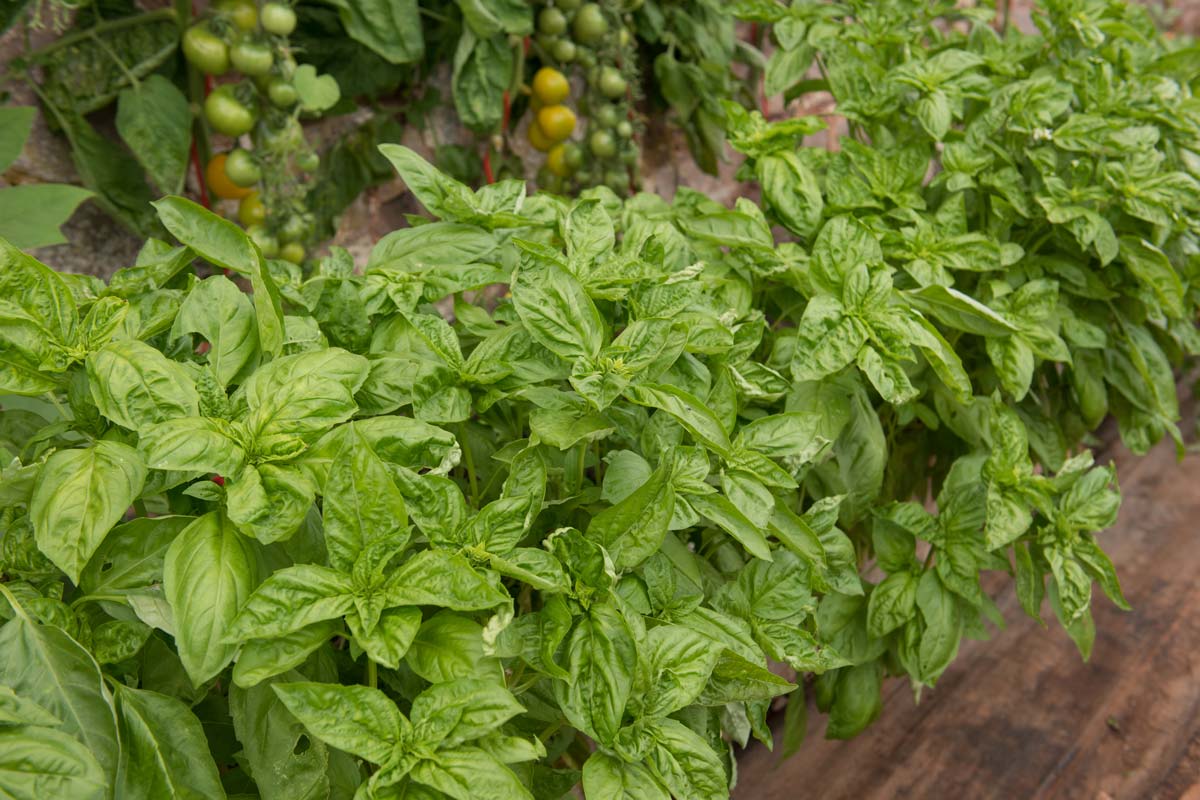
Basil (Ocimum basilicum) belongs to the mint family and is probably one of the most popular culinary herbs around. It most likely originates from north-west India and has been cultivated for over 2,000 years. Within the species Ocimum basilicum there is remarkable diversity: large-leaved Genovese types, red-leaved varieties, lettuce-leaved forms with soft, large leaves, and compact globe basil varieties. Depending on the variety, flavours range from classic and savoury to peppery or slightly sweet.
In our climate, basil is grown as an annual because it reacts badly to cold and won't survive winter outdoors. Depending on the variety, the plant can reach between 20 and 60 cm in height. Compared to many other herbs, basil has higher nutrient requirements and counts as a moderate feeder. The essential oils in the leaves, including linalool, estragole, eugenol and cineole, create that typical aroma and also act as a natural pest deterrent in the bed.
In the garden, basil is not just a herb but also a valuable companion plant. The strongly scented flowers attract bees and other pollinators, boosting pollination across the whole bed.
Facts and figures
Planting & harvest times of Basil
OutdoorsDirect sowing from Mid May to Late July. Transplant to bed from Mid May to Late June. Pre-grow about 45 days before transplanting, approximately between Early April and Mid May. After a growing period of 60 days, harvest can begin around Early July and continues until Late October.
GreenhouseDirect sowing from Early April to Late July. Transplant to bed from Early May to Late June. Pre-grow about 45 days before transplanting, approximately between Mid March and Mid May. After a growing period of 60 days, harvest can begin around Early June and continues until Late October.
Sow and plant Basil
Basil is a light germinator, meaning you scatter the seeds on moist soil and press them down lightly, but don't cover them with earth. From mid-March you can start sowing indoors in seed trays or small pots on a windowsill. The germination temperature should be between 18 and 22 °C and not drop below 13 °C. After about two weeks the first seedlings appear. Keep the growing medium evenly moist but not wet, as too much moisture quickly causes damping off in the delicate seedlings.
After roughly four weeks you can prick out the seedlings and move them into a more nutrient-rich growing medium. In pots, a nutrient-rich compost works better than a lean herb mix. The sturdy young plants shouldn't go outdoors until after the last frost, so from mid to late May. Plant spacing should be about 20 cm within the row and 25 cm between rows. Direct sowing into the bed is possible from mid-May to June, once the last frosts have passed and soil temperatures are consistently warm enough.
Shop-bought supermarket pots usually contain far too many plants crammed into a small space. You can carefully divide the root ball and plant them out. In our experience, though, you need to acclimatise them to real light first.
Location and soil
Basil loves warmth and needs a sunny to partially shaded spot that is sheltered from wind. It thrives particularly well against a protected south-facing wall, in a raised bed, or in a greenhouse. At temperatures below 10 °C it stops growing and suffers damage.
The soil should be loose and well-drained. Before planting out, it's worth working in some compost. Waterlogging is this plant's worst enemy and almost inevitably leads to root rot and fungal problems.
Good and bad companions of Basil
Tomato and basil are a dream team in companion planting. The essential oils of basil repel whitefly and can reduce powdery mildew on tomatoes. At the same time, basil benefits from the microclimate beneath the tall tomato plants.
Cucumber is an equally excellent partner: basil protects cucumbers from early mildew and its flowers encourage pollination. Courgette and fennel also go well with basil, as they have similar warmth requirements and don't get in each other's way in the bed. Pepper and aubergine round off the selection of heat-loving neighbours, since all three crops have similar needs for warmth and moisture.
Brassicas like kohlrabi or broccoli also benefit from the proximity, as the scent of basil keeps various pests at bay.
- Practical tip for this pair
- Supports pollination
- Practical tip for this pair
- Practical tip for this pair
- Practical tip for this pair
- Supports pollination
Predecessors and successors of Basil
You shouldn't plant basil in the same spot for several years in a row, as pathogens can build up in the soil.
Varieties
The range of basil varieties is impressive. Classic Genovese basil with its large, soft leaves is the epitome of Italian cuisine and probably the most widely grown variety. There are also red-leaved varieties like 'Dark Opal' with dark purple foliage and a more intense flavour, compact globe types for small containers, and lettuce-leaved forms with a particularly mild aroma. Some varieties need more warmth than others — red basil, for example, requires plenty of heat to develop well.
Good to know: alongside the varieties of Ocimum basilicum, there are several distinct basil species with their own botanical names, sometimes sold under the general label "basil". Lemon basil (Ocimum americanum) with its fine citrus aroma is a separate annual species. Greek bush basil (Ocimum basilicum var. minimum) stays compact, has small leaves and is considered hardier. Thai basil Horapha (Ocimum basilicum var. thyrsiflorum) brings anise-like notes to Asian cooking. Holy basil or Tulsi (Ocimum tenuiflorum, also known as Ocimum sanctum) is highly valued in Indian healing traditions and is botanically a completely different species. African basil (Ocimum gratissimum) from Africa is another distinct species with a camphor-like aroma. These species differ from Ocimum basilicum not only in flavour but sometimes considerably in their care and growing requirements.
Care and fertilising
Because of its large leaf area, basil has a decent water requirement but can't tolerate waterlogging. Water at soil level so the leaves stay dry. Wet leaves in cool weather are an open invitation for fungal diseases.
For vigorous growth, basil needs a good supply of nitrogen.
Remove old leaves from the lower part of the plant regularly. This improves air circulation and helps prevent fungal problems. Overwintering Ocimum basilicum indoors generally doesn't work due to the lack of light, as the species is annual and dies after flowering.
Diseases and pests
The most common problems with basil are almost always linked to too much moisture. Damping off (caused by various fungi including Pythium) mainly affects young plants when the growing medium is too wet. The stems go soft at the base and the seedlings topple over. You can prevent this by watering sparingly and ensuring good drainage.
Septoria leaf spot causes brown patches that spread quickly and lead to the foliage drying out. The fungus has an easy time particularly in warm, humid weather. Alfalfa mosaic virus shows up as mosaic-like discolouration and distortion of the leaves and is often spread by aphids.
Aphids suck plant sap and leave behind sticky honeydew. With a heavy infestation, the leaves are no longer fit for eating. Leaf miners lay eggs in the leaves, and their larvae leave feeding tunnels in the tissue.
As a rule of thumb: if you ensure good air circulation, water at soil level and don't plant too closely together, you'll have avoided most problems before they start. Companion planting with tomatoes also helps, as the microclimate beneath tomato plants is often more favourable.
Harvest and processing
When harvesting, cut the shoot tip just above a leaf node. Two new shoots will grow from that node, making the plant branch out and stay bushy. Don't take too much at once with each harvest, so the plant has time to recover. Basil is best used fresh, as the aroma fades significantly when dried. To freeze it, chop the leaves and put them with a little water into ice cube trays. Alternatively, you can store the leaves preserved in oil in the fridge.
Open the bed planner Try free for 7 days, web, iOS and Android