
Other names
pepper cress, peppergrass, pepperwort
Botanical name
Lepidium sativum
Family / Genus
Brassicaceae / Lepidium
Plant category
Leafy Vegetables, Herbs
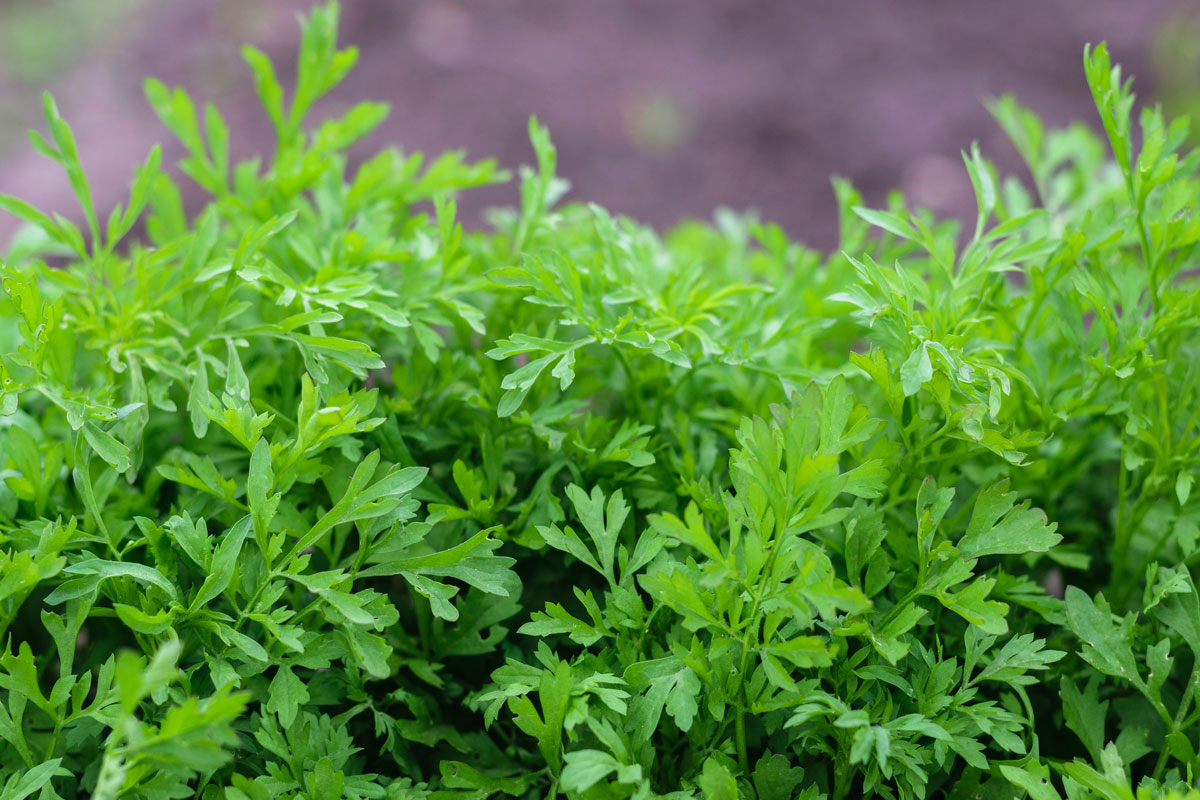
VLADIMIR VK/Shutterstock.com
Facts and figures
Light requirements
Sun / partial shade
Nutrient requirements
Light feeder
Difficulty level
Easy
Culture (according to Gertrud Franck)
C - low growth, short growing period
Growing period
15 days
Row spacing
10 cm
Plant spacing
3 cm
Growth height
30 - 50 cm
Sowing depth
1 cm
Germination temperature (minimum)
3 °C
Germination temperature (optimal)
18 - 25 °C
Germination type
Light and dark
Planting & harvest times of Garden cress
1
2
3
4
5
6
7
8
9
10
11
12
Direct sowing
Harvest
Harvest (next year)
OutdoorsDirect sowing from Mid March to Late September. After a growing period of 15 days, harvest can begin around Early April and continues until Mid October.
GreenhouseDirect sowing from Early October to Late December. After a growing period of 15 days, harvest can begin around Mid October and continues until Late March next year.
Good and bad companions of Garden cress
Good neighbours
Radish
Evidence quality: moderate
Evidence: Long-standing companion planting practice (e.g. Gertrud Franck, Schwester C. Weinrich)
Bad neighbours
Broccoli
Garden cress can inhibit the growth of neighbouring vegetables. Better sow it away from broccoli.
Evidence quality: moderate
Evidence: Long-standing companion planting practice (e.g. Gertrud Franck, Schwester C. Weinrich), Derived from plant family or pathogen, pair not directly documented
Reasons:
- Allelopathy, growth inhibition
Cauliflower
Garden cress can inhibit the growth of neighbouring vegetables. Better sow it away from cauliflower.
Evidence quality: moderate
Evidence: Long-standing companion planting practice (e.g. Gertrud Franck, Schwester C. Weinrich), Derived from plant family or pathogen, pair not directly documented
Reasons:
- Allelopathy, growth inhibition
Kale
Garden cress can inhibit the growth of neighbouring vegetables. Better sow it away from kale.
Evidence quality: moderate
Evidence: Long-standing companion planting practice (e.g. Gertrud Franck, Schwester C. Weinrich), Derived from plant family or pathogen, pair not directly documented
Reasons:
- Allelopathy, growth inhibition
Mustard
Both are brassicas. Clubroot resting spores survive up to 20 years in the soil, so a 4 to 5 year break is needed.
Oil radish
Both are brassicas. Clubroot resting spores survive up to 20 years in the soil, so a 4 to 5 year break is needed.
Predecessors and successors of Garden cress
Bad predecessors
Black kale
Rotation break: 3 years
Black radish
Rotation break: 3 years
Broccoli
Garden cress is also a brassica and shares clubroot with broccoli. Keep four years apart.
Rotation break: 4 years
Evidence quality: good
Evidence: Advisory service, research institute, Specialist book
Reasons:
- Shared soil-borne pathogen
Brussels sprouts
Rotation break: 3 years
Carrot
Rotation break: 3 years
Cauliflower
Garden cress is also a brassica and shares clubroot with cauliflower. Keep four years apart.
Rotation break: 4 years
Evidence quality: good
Evidence: Advisory service, research institute, Specialist book
Reasons:
- Shared soil-borne pathogen
Chinese cabbage
Rotation break: 3 years
Flower Sprouts
Rotation break: 3 years
Garden cress
Rotation break: 3 years
Horseradish
Rotation break: 3 years
Kale
Garden cress is also a brassica and shares clubroot with kale. Keep four years apart.
Rotation break: 4 years
Evidence quality: good
Evidence: Advisory service, research institute, Specialist book
Reasons:
- Shared soil-borne pathogen
Kohlrabi
Rotation break: 3 years
Mizuna (Asian greens)
Rotation break: 3 years
Pak choi
Rotation break: 3 years
Pointed cabbage
Rotation break: 3 years
Radish
Rotation break: 3 years
Red cabbage
Rotation break: 3 years
Rocket
important for large-scale cultivation.
negligible for strip cultivation of rocket.
Rotation break: 3 years
Romanesco
Rotation break: 3 years
Savoy cabbage
Rotation break: 3 years
Swede
Rotation break: 3 years
White cabbage
Rotation break: 3 years
Winter cress
Rotation break: 3 years
Very bad predecessors
Mustard
Both are brassicas. Clubroot resting spores survive up to 20 years in the soil, so a 4 to 5 year break is needed.
Rotation break: 4 years
Oil radish
Both are brassicas. Clubroot resting spores survive up to 20 years in the soil, so a 4 to 5 year break is needed.
Rotation break: 4 years
Bad successors
Batavia lettuce
Rotation break: 3 years
Black kale
Rotation break: 3 years
Black radish
Rotation break: 3 years
Broccoli
Garden cress is also a brassica and shares clubroot with broccoli. Keep four years apart.
Rotation break: 4 years
Evidence quality: good
Evidence: Advisory service, research institute, Specialist book
Reasons:
- Shared soil-borne pathogen
Brussels sprouts
Rotation break: 3 years
Butterhead lettuce
Rotation break: 3 years
Carrot
Rotation break: 3 years
Cauliflower
Garden cress is also a brassica and shares clubroot with cauliflower. Keep four years apart.
Rotation break: 4 years
Evidence quality: good
Evidence: Advisory service, research institute, Specialist book
Reasons:
- Shared soil-borne pathogen
Chinese cabbage
Rotation break: 3 years
Flower Sprouts
Rotation break: 3 years
Garden cress
Rotation break: 3 years
Horseradish
Rotation break: 3 years
Iceberg lettuce
Rotation break: 3 years
Kale
Garden cress is also a brassica and shares clubroot with kale. Keep four years apart.
Rotation break: 4 years
Evidence quality: good
Evidence: Advisory service, research institute, Specialist book
Reasons:
- Shared soil-borne pathogen
Kohlrabi
Rotation break: 3 years
Lollo biando / Lollo rosso
Rotation break: 3 years
Mizuna (Asian greens)
Rotation break: 3 years
Oak leaf lettuce
Rotation break: 3 years
Pak choi
Rotation break: 3 years
Pointed cabbage
Rotation break: 3 years
Radish
After cabbages and other brassicas, clubroot and cabbage root fly pupae remain in the soil. Wait four years before sowing radishes there again.
Rotation break: 4 years
Evidence quality: good
Evidence: Advisory service, research institute, Specialist book
Reasons:
- Shared soil-borne pathogen
Radish
Rotation break: 3 years
Red cabbage
Rotation break: 3 years
Rocket
important for large-scale cultivation.
negligible for strip cultivation.
Rotation break: 3 years
Romaine lettuce
Rotation break: 3 years
Romanesco
Rotation break: 3 years
Savoy cabbage
Rotation break: 3 years
Swede
Rotation break: 3 years
White cabbage
Rotation break: 3 years
Very bad successors
Cucumber
Garden cress sown before cucumbers harms them badly, and they may die afterwards. Mustard or field beans are better as an early sowing.
Rotation break: 1 year
Evidence quality: good
Evidence: Long-standing companion planting practice (e.g. Gertrud Franck, Schwester C. Weinrich)
Reasons:
- Allelopathy, growth inhibition
Mustard
Both are brassicas. Clubroot resting spores survive up to 20 years in the soil, so a 4 to 5 year break is needed.
Rotation break: 4 years
Oil radish
Both are brassicas. Clubroot resting spores survive up to 20 years in the soil, so a 4 to 5 year break is needed.
Rotation break: 4 years
Diseases and pests
Susceptible to
Black rot(low susceptibility)
Clubroot
Flea beetles
Open the bed planner Try free for 7 days, web, iOS and Android