
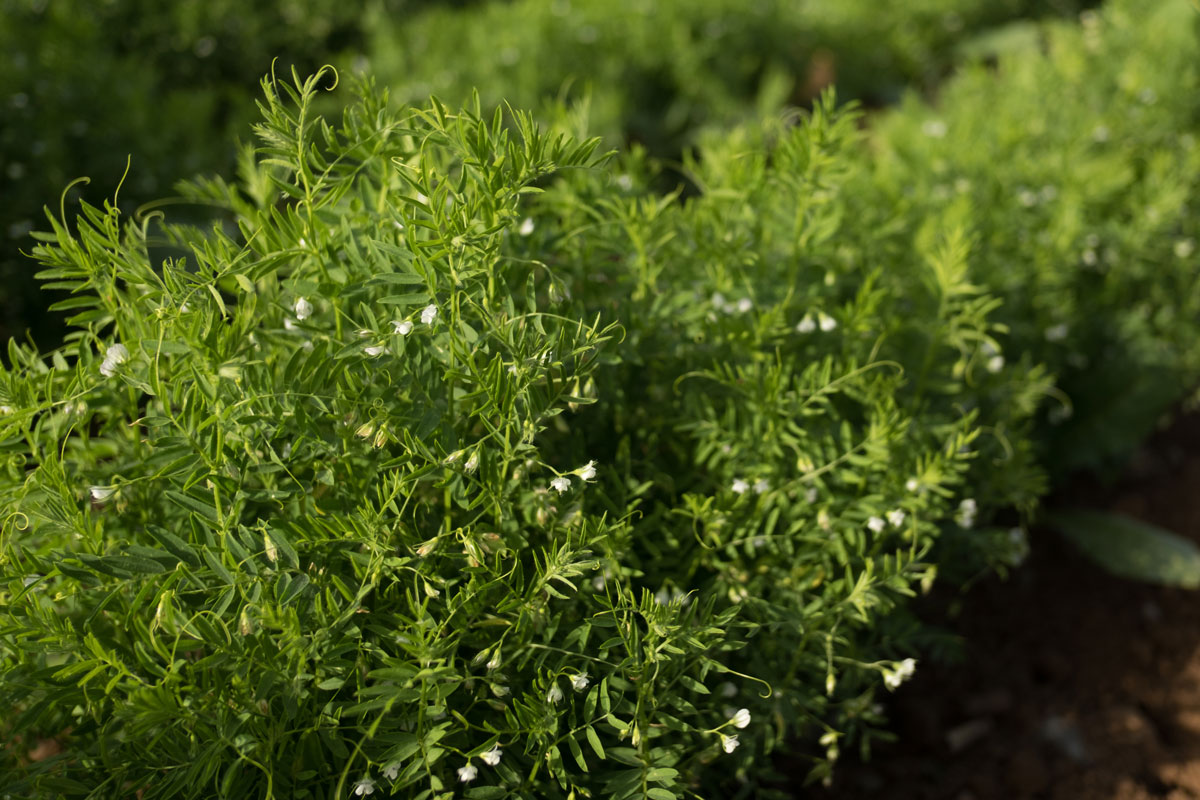
The lentil is one of the oldest cultivated plants in human history. It originally comes from the Mediterranean region and Western Asia. In Germany, you can only grow it in a few areas. It likes things very sparse. The Swabian Alb is one such area, where the famous Alb lentils are grown. Like all pulses, lentils are packed with protein. That’s why pulses fill you up so well.
Facts and figures
Planting & harvest times of Lentils
Direct sowing from Mid April to Mid May. After a growing period of 110 days, harvest can begin around Mid August and continues until Late September.
Sow Lentils
Finding the right soil here is tricky. If you’ve got a very sandy corner somewhere, maybe with some limestone gravel mixed in, you can give it a go — or perhaps try a pot. Sow the seeds about 4 cm deep, spaced 5 cm apart in the row, with 20 cm between rows.
Location and soil
Lentils like it sandy, barren and dry. And sunny.
Good and bad companions of Lentils
In agriculture, lentils are grown together with cereals. With barley or oats, for example, to give the plants some support. Because of the different grain sizes, you can easily separate them by sieving. Lentils don’t like being planted with themselves or other pulses.
Predecessors and successors of Lentils
Alliums, i.e. onions, garlic and the like, as well as pulses are not good as predecessors or successors.
- Loosens soil, improves soil structure
- Nitrogen release
- Nitrogen release
- Nitrogen release
- Nitrogen release
- Nitrogen release
- Nitrogen release
- Nitrogen release
- Nitrogen release
- Nitrogen release
- Nitrogen release
- Too much nitrogen for a sensitive successor
- Too much nitrogen for a sensitive successor
Care and fertilising
Keep them weed-free. Only water when you notice the first signs of dryness, and don’t fertilise.
Harvest and processing
They ripen around August. The leaves and pods slowly dry out from the bottom upwards. Stop watering from that point on. Once they’re completely dry, cut the whole plants off above the ground and leave them to dry for a few more days. You could hang them under a roof overhang. Then you’re supposed to thresh them — I reckon you can also wrap them in a cloth and beat it out. Separate the collected lentils from the husks by sifting.
Open the bed planner Try free for 7 days, web, iOS and Android