
Other names
cos lettuce, little gem
Botanical name
Lactuca sativa var. longifolia
Family / Genus
Asteraceae / Lactuca
Plant category
Leaf Salad
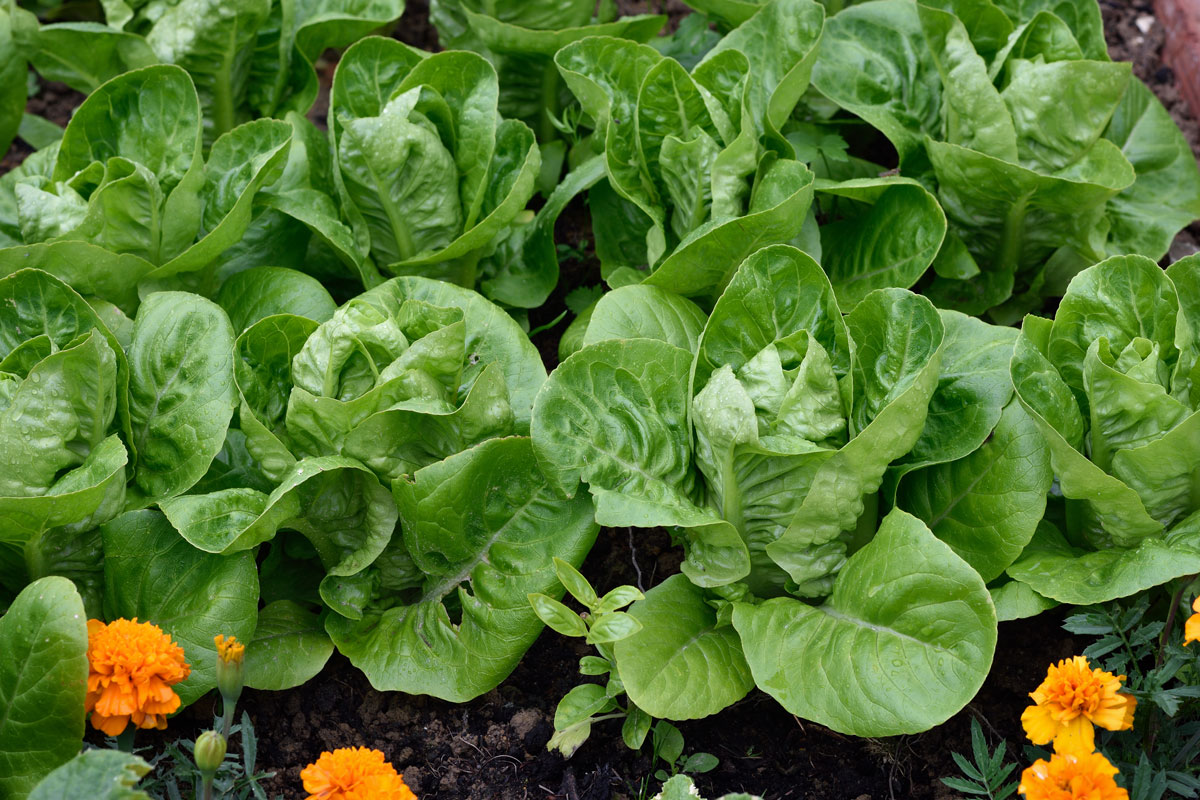
Geo-grafika/Shutterstock.com
Facts and figures
Light requirements
Sun / partial shade
Nutrient requirements
Medium feeder
Difficulty level
Easy
Culture (according to Gertrud Franck)
C - low growth, short growing period
Culture (according to Sister C. Weinrich)
Companion crop
Growing period
50 days
Row spacing
20 cm
Plant spacing
20 cm
Growth height
20 - 30 cm
Sowing depth
1 cm
Germination temperature (minimum)
3 °C
Germination temperature (optimal)
15 - 18 °C
Germination type
Light
Pre-growing period
30 days
Planting & harvest times of Romaine lettuce
1
2
3
4
5
6
7
8
9
10
11
12
Direct sowing
Pre-grow
Transplant
Harvest
OutdoorsDirect sowing from Late March to Mid September. Transplant to bed from Late March to Mid September. Pre-grow about 30 days before transplanting, approximately between Late February and Mid August. After a growing period of 50 days, harvest can begin around Late May and continues until Mid October.
GreenhouseDirect sowing from Late February to Late March. Transplant to bed from Late February to Mid April. Pre-grow about 30 days before transplanting, approximately between Late January and Mid March. After a growing period of 50 days, harvest can begin around Mid March and continues until Late May.
Good and bad companions of Romaine lettuce
Very good neighbours
Radish
Radishes grow well in the lettuce row and are ready long before the lettuce. Lettuce is said to keep flea beetles away from the radishes.
Evidence quality: good
Evidence: Advisory service, research institute, Specialist book, Long-standing companion planting practice (e.g. Gertrud Franck, Schwester C. Weinrich)
Reasons:
- Pest control through scent or camouflage
- Practical tip for this pair
Good neighbours
Broccoli
Lettuce fills the gaps between young broccoli and is harvested before the cabbage needs the space. It is said to keep flea beetles off the cabbage.
Evidence quality: good
Evidence: Specialist book, Long-standing companion planting practice (e.g. Gertrud Franck, Schwester C. Weinrich)
Reasons:
- Pest control through scent or camouflage
- Practical tip for this pair
Cauliflower
Lettuce fills the gaps between young cauliflowers and is harvested before the cabbage needs the space. It is also said to keep flea beetles off.
Evidence quality: good
Evidence: Specialist book, Long-standing companion planting practice (e.g. Gertrud Franck, Schwester C. Weinrich)
Reasons:
- Pest control through scent or camouflage
- Practical tip for this pair
Chives
Evidence quality: good
Evidence: Specialist book, Derived from plant family or pathogen, pair not directly documented, Tradition agrees across several language regions
Cucumber
Evidence quality: good
Evidence: Long-standing companion planting practice (e.g. Gertrud Franck, Schwester C. Weinrich), Tradition agrees across several language regions
Garlic
Evidence quality: moderate
Evidence: Derived from plant family or pathogen, pair not directly documented, Tradition agrees across several language regions
Garlic chives
Evidence quality: good
Evidence: Specialist book, Derived from plant family or pathogen, pair not directly documented, Tradition agrees across several language regions
Honeydew melon
Evidence quality: moderate
Evidence: Tradition agrees across several language regions
Kale
Lettuce fills the gaps between young kale and is harvested before the kale needs the space.
Evidence quality: good
Evidence: Specialist book, Long-standing companion planting practice (e.g. Gertrud Franck, Schwester C. Weinrich)
Reasons:
- Practical tip for this pair
Leek
Sow lettuce and transplant leeks between the rows. The lettuce is harvested before the leeks need the space.
Evidence quality: good
Evidence: Specialist book, Long-standing companion planting practice (e.g. Gertrud Franck, Schwester C. Weinrich), Guidebooks, companion planting charts, tradition, Derived from plant family or pathogen, pair not directly documented
Reasons:
- Practical tip for this pair
Onion
Evidence quality: good
Evidence: Specialist book, Long-standing companion planting practice (e.g. Gertrud Franck, Schwester C. Weinrich), Tradition agrees across several language regions
Shallot
Small lettuces fit well between rows of shallots. The narrow shallots leave them enough light.
Evidence quality: good
Evidence: Advisory service, research institute, Specialist book, Blog, forum, Tradition agrees across several language regions
Reasons:
- Practical tip for this pair
Spring onion
Evidence quality: good
Evidence: Specialist book, Tradition agrees across several language regions
Tree onion
Evidence quality: moderate
Evidence: Specialist book, Guidebooks, companion planting charts, tradition, Derived from plant family or pathogen, pair not directly documented
Bad neighbours
Predecessors and successors of Romaine lettuce
Good predecessors
Courgette
Lasting effect: 1 year
Evidence quality: good
Evidence: Specialist book
Fennel
Lasting effect: 3 years
Garlic
Lasting effect: 1 year
Evidence quality: good
Evidence: Specialist book
Reasons:
- Weed suppression for the next crop
Leek
Lasting effect: 1 year
Evidence quality: good
Evidence: Specialist book
Mustard
Lasting effect: 3 years
Onion
Lasting effect: 1 year
Evidence quality: good
Evidence: Advisory service, research institute, Specialist book
Orache
Lasting effect: 3 years
Phacelia
Lasting effect: 3 years
Pot marigold
Lasting effect: 3 years
Radish
Radishes are a popular early crop before lettuce. Some advise against brassicas before lettuce, but neither view is proven.
Lasting effect: 1 year
Evidence quality: moderate
Evidence: Long-standing companion planting practice (e.g. Gertrud Franck, Schwester C. Weinrich)
We found conflicting sources. This is our current assessment.
Shallot
Lasting effect: 1 year
Evidence quality: good
Evidence: Advisory service, research institute, Specialist book
Signet marigold
Lasting effect: 3 years
Spinach
Lasting effect: 3 years
Spring onion
Lasting effect: 1 year
Evidence quality: moderate
Evidence: Advisory service, research institute, Specialist book, Derived from plant family or pathogen, pair not directly documented
Subterranean clover
Lasting effect: 3 years
White clover
Lasting effect: 3 years
Bad predecessors
Batavia lettuce
Rotation break: 3 years
Black kale
Rotation break: 3 years
Black radish
Rotation break: 3 years
Broccoli
Cabbage is considered a poor crop before lettuce. After broccoli, endive or corn salad are the better choice.
Rotation break: 1 year
Evidence quality: good
Evidence: Specialist book
Brussels sprouts
Rotation break: 3 years
Butterhead lettuce
Rotation break: 3 years
Carrot
Rotation break: 3 years
Cauliflower
Cabbage is considered a poor crop before lettuce. After cauliflower, endive or corn salad are better choices.
Rotation break: 1 year
Evidence quality: good
Evidence: Specialist book
Chicory
Rotation break: 3 years
Chinese cabbage
Rotation break: 3 years
Endive
Rotation break: 3 years
Flower Sprouts
Rotation break: 3 years
Garden cress
Rotation break: 3 years
Iceberg lettuce
Rotation break: 3 years
Kale
Brassicas are considered a poor crop before lettuce. Better grow other vegetables after kale.
Rotation break: 1 year
Evidence quality: good
Evidence: Specialist book
Kohlrabi
Rotation break: 3 years
Lollo biando / Lollo rosso
Rotation break: 3 years
Mizuna (Asian greens)
Rotation break: 3 years
Oak leaf lettuce
Rotation break: 3 years
Pak choi
Rotation break: 3 years
Parsnip
Rotation break: 3 years
Pointed cabbage
Rotation break: 3 years
Potato
Rotation break: 3 years
Radish
Rotation break: 3 years
Red cabbage
Rotation break: 3 years
Romanesco
Rotation break: 3 years
Savoy cabbage
Rotation break: 3 years
Sugar loaf chicory
Rotation break: 3 years
Sunflower
Rotation break: 3 years
White cabbage
Rotation break: 3 years
Winter cress
Rotation break: 3 years
Good successors
Beetroot
Lasting effect: 1 year
Broccoli
Lasting effect: 1 year
Evidence quality: moderate
Evidence: Long-standing companion planting practice (e.g. Gertrud Franck, Schwester C. Weinrich)
Cauliflower
Lasting effect: 1 year
Evidence quality: moderate
Evidence: Long-standing companion planting practice (e.g. Gertrud Franck, Schwester C. Weinrich)
Chilli
Lasting effect: 3 years
Courgette
Lasting effect: 1 year
Evidence quality: good
Evidence: Specialist book
Cucumber
Lasting effect: 1 year
Evidence quality: good
Evidence: Specialist book, Long-standing companion planting practice (e.g. Gertrud Franck, Schwester C. Weinrich)
Honeydew melon
Lasting effect: 1 year
Evidence quality: good
Evidence: Specialist book
Kale
Lasting effect: 1 year
Evidence quality: moderate
Evidence: Long-standing companion planting practice (e.g. Gertrud Franck, Schwester C. Weinrich)
Melothria
Lasting effect: 1 year
Evidence quality: moderate
Evidence: Specialist book, Derived from plant family or pathogen, pair not directly documented
Onion
Lasting effect: 1 year
Evidence quality: good
Evidence: Specialist book
Pepper
Lasting effect: 3 years
Spinach
Lasting effect: 3 years
Swiss chard
Lasting effect: 1 year
Watermelon
Lasting effect: 1 year
Evidence quality: good
Evidence: Specialist book
Bad successors
Batavia lettuce
Rotation break: 3 years
Bush bean
susceptibility to Sclerotinia
Rotation break: 3 years
Butterhead lettuce
Rotation break: 3 years
Chicory
Rotation break: 3 years
Endive
Rotation break: 3 years
Iceberg lettuce
Rotation break: 3 years
Lamb's lettuce
Rotation break: 3 years
Lollo biando / Lollo rosso
Rotation break: 3 years
Oak leaf lettuce
Rotation break: 3 years
Pole bean
Rotation break: 3 years
Runner bean
Rotation break: 3 years
Sugar loaf chicory
Rotation break: 3 years
Sunflower
Both are composites and hosts of white mould. The sclerotia persist in the soil for up to 10 years.
Rotation break: 4 years