
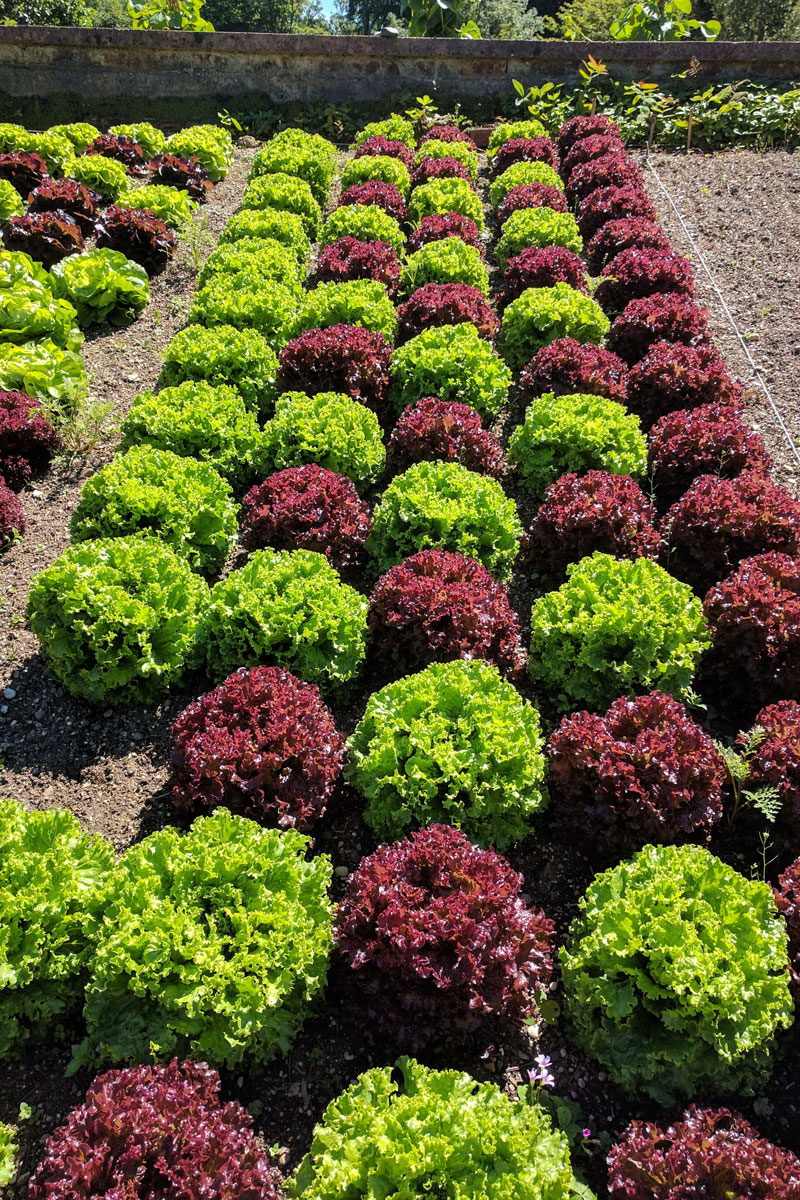
A garden without its own fresh lettuce is only half a garden. You can either direct sow or start indoors Lollo biando and Lollo rosso, as well as other garden lettuces. In spring, starting them indoors works best, while in summer direct sowing is the better choice – the plants develop much longer roots that way, giving them better access to water and making them less likely to bolt, meaning they go to flower and turn bitter.
Lollo, also known as cut-and-come-again or picking lettuce, is a type of garden lettuce. The curly leaves grow in loose rosettes, reach up to 20 cm long, and you can harvest them over a longer period. It also handles heat better than butterhead lettuce and you can plant it well into summer.
Facts and figures
Planting & harvest times of Lollo biando / Lollo rosso
SummerDirect sowing from Late March to Late August. Transplant to bed from Late March to Late August. Pre-grow about 30 days before transplanting, approximately between Late February and Late July. After a growing period of 50 days, harvest can begin around Late May and continues until Mid October.
WinterDirect sowing from Mid September to Mid September. Transplant to bed from Early October to Mid October. Pre-grow about 30 days before transplanting, approximately between Early September and Mid September. After a growing period of 210 days, harvest can begin around Mid April and continues until Late April next year.
Sow and plant Lollo biando / Lollo rosso
From about the end of March you can direct sow Lollo into the bed in most regions, but in spring it’s better to start it indoors – you can do that a month earlier, from the end of February. That way you can plant out the first lettuces in early April. Make sure to harden them off first, meaning you gradually get them used to the sun and outdoor temperatures by putting them outside for a little longer each day over several days. When planting out, set lettuces slightly higher than they were growing in the pot, otherwise they can rot from the bottom.
Location and soil
Pick a sunny spot, or partly shaded in midsummer. In spring and autumn, full sun is preferable. Lollo is quite undemanding and grows well in most soils, as long as they’re not too acidic. Good watering matters, but it won’t tolerate waterlogging.
Good and bad companions of Lollo biando / Lollo rosso
- Pest control through scent or camouflage
- Practical tip for this pair
- Pest control through scent or camouflage
- Practical tip for this pair
- Pest control through scent or camouflage
- Practical tip for this pair
- Practical tip for this pair
- Practical tip for this pair
- Practical tip for this pair
Predecessors and successors of Lollo biando / Lollo rosso
- Weed suppression for the next crop
Care and fertilising
Keep lettuce consistently moist, but not wet. If it gets too dry, the leaves turn tough and the plant may bolt, turning bitter.
Lettuce doesn’t need fertiliser – a layer of compost on the bed in spring or autumn does no harm though. Avoid planting it in heavily fertilised beds, as lettuce can accumulate nitrate.
Harvest and processing
Harvest the lettuce as soon as it’s big enough and looks good. With Lollo you can also pick leaves continuously from the outside in.
Open the bed planner Try free for 7 days, web, iOS and Android