
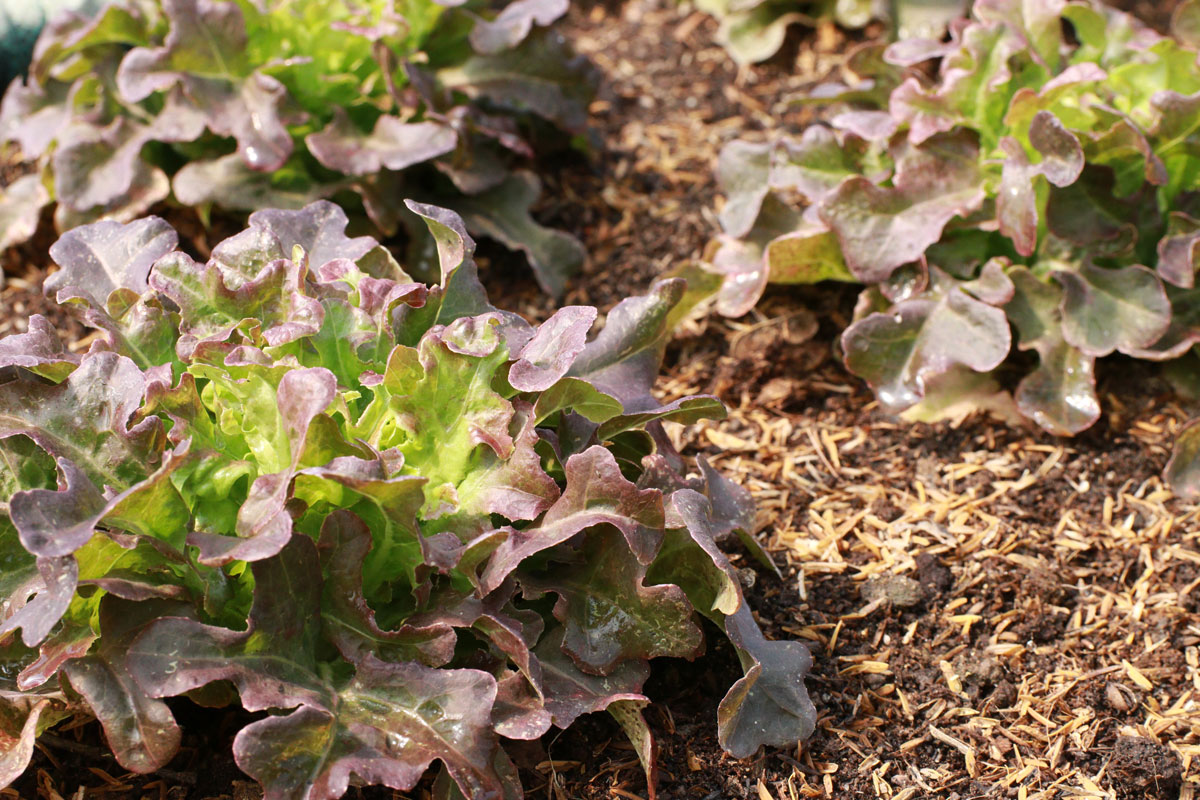
Oak leaf lettuce is a loose-leaf lettuce. It doesn't form a head, just a loose rosette of soft, deeply lobed leaves. The leaf shape looks like oak foliage, which is where the name comes from. Botanically it's the same species as butterhead, lollo and iceberg lettuce. There are green, yellowish-green and reddish-brown varieties, and they look just as good in the bed as in the salad bowl. Because you pick the outer leaves bit by bit, one plant keeps you in fresh salad for weeks. Oak leaf lettuce is one of the fastest-growing garden lettuces, and for a long time it was a typical home-garden lettuce before it made its way into the shops.
Facts and figures
Planting & harvest times of Oak leaf lettuce
OutdoorsDirect sowing from Mid March to Mid August. Transplant to bed from Late March to Late August. Pre-grow about 30 days before transplanting, approximately between Late February and Late July. After a growing period of 70 days, harvest can begin around Early May and continues until Mid November.
GreenhouseDirect sowing from Late January to Mid March. Transplant to bed from Late February to Mid April. Pre-grow about 30 days before transplanting, approximately between Late January and Mid March. After a growing period of 70 days, harvest can begin around Early April and continues until Late May.
WinterDirect sowing from Early September to Late September. Transplant to bed from Late September to Mid October. Pre-grow about 30 days before transplanting, approximately between Late August and Mid September. After a growing period of 210 days, harvest can begin around Mid April and continues until Mid May next year.
Winter 2Transplant to bed from Mid September to Late October. Pre-grow about 30 days before transplanting, approximately between Mid August and Late September. After a growing period of 100 days, harvest can begin around Late November and continues until Late March next year.
Sow and plant Oak leaf lettuce
Winter: Shows overwintering outdoors
Winter 2: Shows overwintering in an unheated greenhouse
In spring it's best to raise oak leaf lettuce indoors, from late February on the windowsill or in an unheated greenhouse. After about four weeks, plant the young plants out into the bed from late March. You can sow directly as soon as the ground is free of frost. Oak leaf lettuce needs light to germinate, so cover the seeds only very thinly. It germinates poorly above 20 degrees, so keep summer sowings cool and shaded or sow them in the evening. Space plants 25 to 30 centimetres apart and set them high enough that the rootball sticks out a little, otherwise they rot from below. Two to three sowings up to early August will see you through the whole season. For cut-and-come-again lettuce, sow thickly in rows 20 centimetres apart and cut after three to four weeks.
Location and soil
Oak leaf lettuce likes a sunny to partly shaded spot and loose, humus-rich soil that stays evenly moist. In high summer it does better in the light shade of peas, climbing beans or sweetcorn, because it bolts faster in full sun. It can't cope with waterlogging, as the rosettes then rot from below. Being a shallow-rooted lettuce, it suits raised beds, pots and window boxes, where you can plant it a little closer together.
Good and bad companions of Oak leaf lettuce
Oak leaf lettuce is a perfect gap filler. It roots shallowly and grows fast, and because you harvest it leaf by leaf, you can clear it gradually as its neighbours need the space. In March, Sister Christa Weinrich sows a row of fast-growing oak leaf lettuce on either side of her kohlrabi, along with a little dill and some radishes. The lettuce is said to keep flea beetles off the brassicas, and by early June the space is free for French beans.
Spinach, beetroot, carrots and parsnips also make good partners. You'll have harvested the lettuce from between their rows before the root crops spread out. Between tomato canes, under sweetcorn or around young cabbage plants you can sow it as cut-and-come-again lettuce and cut it twice before the main crop needs the room. Gertrud Franck mixed radishes or winter radish into every row of lettuce, and chervil in the row is said to keep aphids and slugs away.
Don't put parsley right next to lettuce. The lettuce is said to struggle or bolt beside it, and garden cress makes it bolt as well. Many charts list celery as a bad neighbour, but there's no evidence for it, and strips of loose-leaf lettuce around young celeriac are a tried and tested trick.
- Pest control through scent or camouflage
- Practical tip for this pair
- Pest control through scent or camouflage
- Practical tip for this pair
- Pest control through scent or camouflage
- Practical tip for this pair
- Practical tip for this pair
- Practical tip for this pair
- Practical tip for this pair
- Practical tip for this pair
- Practical tip for this pair
- Pest control through scent or camouflage
- Practical tip for this pair
- Practical tip for this pair
- Practical tip for this pair
- Practical tip for this pair
- Practical tip for this pair
- Pest control through scent or camouflage
- Practical tip for this pair
- Pest control through scent or camouflage
- Practical tip for this pair
- Practical tip for this pair
- Pest control through scent or camouflage
- Practical tip for this pair
- Practical tip for this pair
- Practical tip for this pair
- Practical tip for this pair
- Practical tip for this pair
- Practical tip for this pair
- Practical tip for this pair
- Pest control through scent or camouflage
- Practical tip for this pair
- Practical tip for this pair
- Shade, wind shelter, ground cover
- Practical tip for this pair
- Trap or decoy plant
- Practical tip for this pair
- Practical tip for this pair
- Practical tip for this pair
- Practical tip for this pair
- Practical tip for this pair
- Practical tip for this pair
- Practical tip for this pair
- Practical tip for this pair
- Pest control through scent or camouflage
- Practical tip for this pair
- Practical tip for this pair
- Practical tip for this pair
- Practical tip for this pair
- Practical tip for this pair
- Practical tip for this pair
- Practical tip for this pair
- Practical tip for this pair
- Practical tip for this pair
- Practical tip for this pair
- Practical tip for this pair
- Attracts beneficial insects
- Undersowing, living mulch
- Practical tip for this pair
- Practical tip for this pair
- Practical tip for this pair
- Practical tip for this pair
- Practical tip for this pair
- Practical tip for this pair
- Practical tip for this pair
- Shared pathogen, spreads through proximity
- Allelopathy, growth inhibition
- Allelopathy, growth inhibition
- Allelopathy, growth inhibition
Predecessors and successors of Oak leaf lettuce
Oak leaf, butterhead, lollo, iceberg, batavia and cos lettuce are all the same species and count as a single lettuce crop in your rotation. Endive, radicchio, sugarloaf chicory and witloof chicory belong in the same group too, as members of the daisy family. Leave three years between them, or sclerotinia rot and lettuce root aphid will build up in the bed. Wait three years after sunflowers as well, because they are especially good at multiplying sclerotinia rot.
Good preceding crops are leeks, onions, garlic, spinach, courgettes and spring fennel, and after early carrots there's still time for a late sowing in the same year. After cabbage and other brassicas, lettuce grows less well the following year, and after potatoes wireworms feed on the young plants. Commercial growers see beans, peas, cucumbers, parsley and celery as risky preceding crops because they share soil fungi with lettuce. In a home garden with a sound rotation, oak leaf lettuce usually grows after them without any trouble.
Oak leaf lettuce makes an ideal early crop, because you sow it early and it leaves behind a loose, weed-free bed. In the same year you can follow it with tomatoes, aubergines, cucumbers, cabbage, chard, beetroot or New Zealand spinach, and with onions the year after. Better not to plant beans straight after lettuce. Both share sclerotinia rot, and its resting bodies survive in the soil for years.
- Nitrogen release
- Weed suppression for the next crop
- Shared soil-borne pathogen
- Self-incompatibility
- Shared soil-borne pathogen
- Shared soil-borne pathogen
- Shared soil-borne pathogen
- Shared soil-borne pathogen
- Self-incompatibility
- Shared soil-borne pathogen
- Family rule
- Shared soil-borne pathogen
- Shared soil-borne pathogen
- Shared soil-borne pathogen
- Family rule
- Shared soil-borne pathogen
- Shared soil-borne pathogen
- Self-incompatibility
- Shared soil-borne pathogen
- Family rule
- Shared soil-borne pathogen
- Shared soil-borne pathogen
- Family rule
- Shared soil-borne pathogen
- Self-incompatibility
- Shared soil-borne pathogen
- Family rule
- Volunteers from the previous crop smother the successor
- Shared soil-borne pathogen
- Shared soil-borne pathogen
- Self-incompatibility
- Shared soil-borne pathogen
- Self-incompatibility
- Shared soil-borne pathogen
- Shared soil-borne pathogen
- Wireworm build-up
- Shared soil-borne pathogen
- Family rule
- Shared soil-borne pathogen
- Shared soil-borne pathogen
- Shared soil-borne pathogen
- Shared soil-borne pathogen
- Family rule
- Shared soil-borne pathogen
- Family rule
- Shared soil-borne pathogen
- Shared soil-borne pathogen
- Weed suppression for the next crop
- Shared soil-borne pathogen
- Self-incompatibility
- Shared soil-borne pathogen
- Shared soil-borne pathogen
- Self-incompatibility
- Shared soil-borne pathogen
- Family rule
- Family rule
- Shared soil-borne pathogen
- Family rule
- Shared soil-borne pathogen
- Self-incompatibility
- Shared soil-borne pathogen
- Family rule
- Shared soil-borne pathogen
- Family rule
- Shared soil-borne pathogen
- Self-incompatibility
- Shared soil-borne pathogen
- Family rule
- Shared soil-borne pathogen
- Self-incompatibility
- Shared soil-borne pathogen
- Self-incompatibility
- Shared soil-borne pathogen
- Family rule
- Shared soil-borne pathogen
- Family rule
- Shared soil-borne pathogen
- Shared soil-borne pathogen
- Family rule
- Shared soil-borne pathogen
- Family rule
Varieties
Oak leaf lettuce comes in green, yellowish-green and reddish-brown. Green varieties grow fastest and red ones slowest, but the red ones bring colour to the bed. The two 'Salad Bowl' varieties are best for spring and autumn. In high summer they bolt quite early and are prone to downy mildew. Newer oak leaf varieties can be picked for up to three months, and oak leaf lettuce gave rise to the Krul lettuces, whose firmer little heads stay fresh for longer after harvest.
Care and fertilising
Oak leaf lettuce is a moderate feeder and gets by with a little well-rotted compost in spring. It doesn't like fresh manure or lots of nitrogen, which make it rot more easily and build up nitrate. Keep the soil evenly moist. In dry spells the leaves turn bitter and the plants bolt. Water the soil in the morning rather than over the leaves, so the soft rosettes dry off by evening. In winter, in an unheated greenhouse, water only every four to six weeks on a sunny morning, and open the vents as soon as the air gets damp.
Diseases and pests
Oak leaf lettuce usually stays healthy in the home garden, and its worst enemies are slugs and snails. They love the soft leaves and can strip young plants bare overnight. Plant out sturdy young plants, collect slugs in the evening and keep the soil loose around the lettuce. We've had good results with a slug collar around each plant.
In spring, aphids like to settle in the rosettes and spread lettuce mosaic virus, which mottles the leaves and stunts the plants. Insect mesh, healthy seed and aphid-resistant varieties help most. If an oak leaf lettuce suddenly wilts even though the soil is moist, lettuce root aphid is often feeding on the roots, and the only fix is to move to another bed.
The 'Salad Bowl' varieties in particular are prone to downy mildew, which causes yellow patches with a white coating on the undersides of the leaves in late summer. Choose resistant varieties for late sowings and pick off affected leaves. In wet weather the rosettes rot from below through grey mould, sclerotinia rot or black rot. So don't plant too deep or too close, water in the morning and leave three years between lettuce crops.
After potatoes or freshly dug-up grassland, wireworms gnaw at the roots and the plants wilt within days. Two weeks before planting, lay out halved potatoes as bait. Against cutworms at the base of the stem, sturdy young plants are your best defence.
Harvest and processing
You can pick the first leaves just five to six weeks after planting. Always take the outer leaves and leave the heart, and an oak leaf lettuce will keep giving you salad for many weeks, in autumn and winter even for months. You can also cut the whole rosette. If you leave the stump in place, it often sprouts again. Harvest early in the morning, because the soft leaves wilt faster than most other lettuces. Washed, spun dry and wrapped in a damp tea towel, oak leaf lettuce keeps for one to two days in the fridge. Its mild, slightly nutty flavour goes well with stronger leaves such as rocket or radicchio.
Open the bed planner Try free for 7 days, web, iOS and Android