
The typical large garden strawberries we all know mostly come from a cross between two North American species. They fruit for a short period but produce abundantly and usually have large fruit. The longer-fruiting alpine strawberries descend from native wild strawberries. They fruit over a longer period, right into autumn. But they don't produce as abundantly as garden strawberries and usually have smaller fruit. Botanically speaking, the strawberry isn't actually a berry. Each yellow seed is a tiny nut, which makes the fruit an aggregate accessory fruit.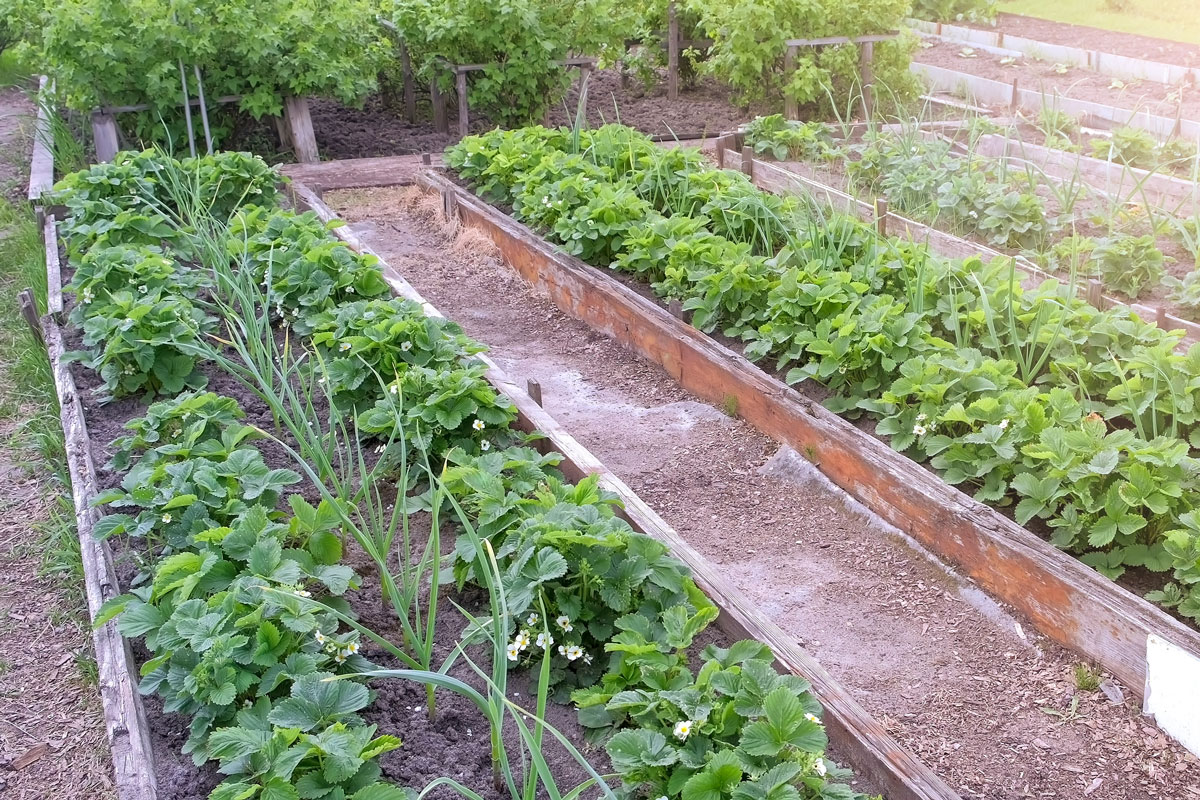
Vadim Zakharishchev/Shutterstock.com
Facts and figures
Planting & harvest times of Strawberry
Planting 1Transplant to bed from Mid July to Late August. Harvest begins around Early May and continues until Late July next year.
Planting 2Transplant to bed from Early August to Late October. Harvest begins around Early June and continues until Late October next year.
Plant Strawberry
The timing information refers to the planting year. In the following years you just care for and harvest the plants in the months shown. The best time to plant strawberries is in autumn. Alpine strawberries go in a little later than garden strawberries. Plant the young strawberry plants, whether bought or grown from runners, 25 cm apart. Make sure the crown, where all the leaves grow from, sits above the soil, and press down gently when planting. Leave 60 cm between rows so you can harvest comfortably and lay down enough straw. Water the young plants well after planting.
Location and soil
Strawberries prefer a slightly acidic, humus-rich soil in sun to partial shade – the sunnier the spot, the sweeter the fruit. Don't improve the strawberry bed with compost, they don't tolerate it very well. Better to work in humus and organic fertiliser like horn meal a few weeks before planting.
Good and bad companions of Strawberry
Growing garlic nearby in particular, but also other alliums like onions, protects strawberries from fungal diseases like grey mould (botrytis). Borage encourages flower formation when planted nearby. Bush beans, dill, lamb's lettuce, lettuce, orache, rocket, marigolds, spinach and French marigolds are all welcome neighbours too. French marigolds and pot marigolds promote soil health by fighting harmful nematodes, among other things.
Phacelia, potatoes, brassicas, legumes and tomatoes don't work well in the crop rotation because they partly encourage the same soil fungi, wireworms and nematodes that also damage strawberry plants.
Predecessors and successors of Strawberry
Strawberries should only grow in the same spot every 3 to 4 years – after that, yields and plant health decline. Potatoes are bad as both predecessors and successors, since they suffer from the same nematodes and fungal diseases as strawberries. Leek as a predecessor works well.
Varieties
There are roughly 1000 varieties worldwide, about 100 of which are available in Germany. You'll find plenty of variety comparisons and recommendations online and in books.
Care and fertilising
From early July, spread straw under and around the strawberry plants so the fruit doesn't touch the ground. This lets them dry off better after rain and protects against botrytis, the dreaded grey mould.
Feed the plants in autumn after the harvest. That's when the new fruit buds form. Use humus, ideally leaf mould, and organic fertiliser or well-rotted manure. Compost apparently contains too many salts, which the plants don't tolerate very well.
Whether that's entirely true, I can't say for certain – I've read elsewhere that a mix of garden soil, compost and potting compost from a bag works brilliantly as a substrate for strawberry plants. Sometimes it's hard to find reliable information, so the best thing is probably just to try it out. 😅🍓
You should also remove the runners to stop the plants putting their energy into growing them. Unless you want to propagate new plants in the 3rd year. To do this, from spring onwards, pot up the runners you want to keep into small pots with potting compost once they show root growth, while still attached to the mother plant. By autumn they'll have developed enough roots and you can separate them. Then plant them in a different spot in the garden so they get fresh soil. You can remove the old plants at that point. From the 4th year, yields apparently drop noticeably. If you don't need the space where the old strawberries are growing, you can always keep harvesting them and see just how dramatic the decline really is.
Harvest and processing
On the subject of harvesting, we'll just say this: enjoy them while strawberry season lasts! Go through the patch every 2 to 3 days to pick the ripe strawberries and remove any diseased ones. Depending on how much space you've planted with strawberries, you can end up with a decent haul each time during peak season. They keep in the fridge for about 3 days, so you can combine the strawberries from 2 harvest days and have enough to make strawberry jam or even strawberry ice cream. You can freeze strawberries too – they go mushy when defrosted, but they're still perfect for a compote or for making jam later on. Because even the biggest strawberry fan can't manage strawberry cake or strawberries and cream every single day for weeks on end.