
Carrots are the most commonly eaten root vegetable of all.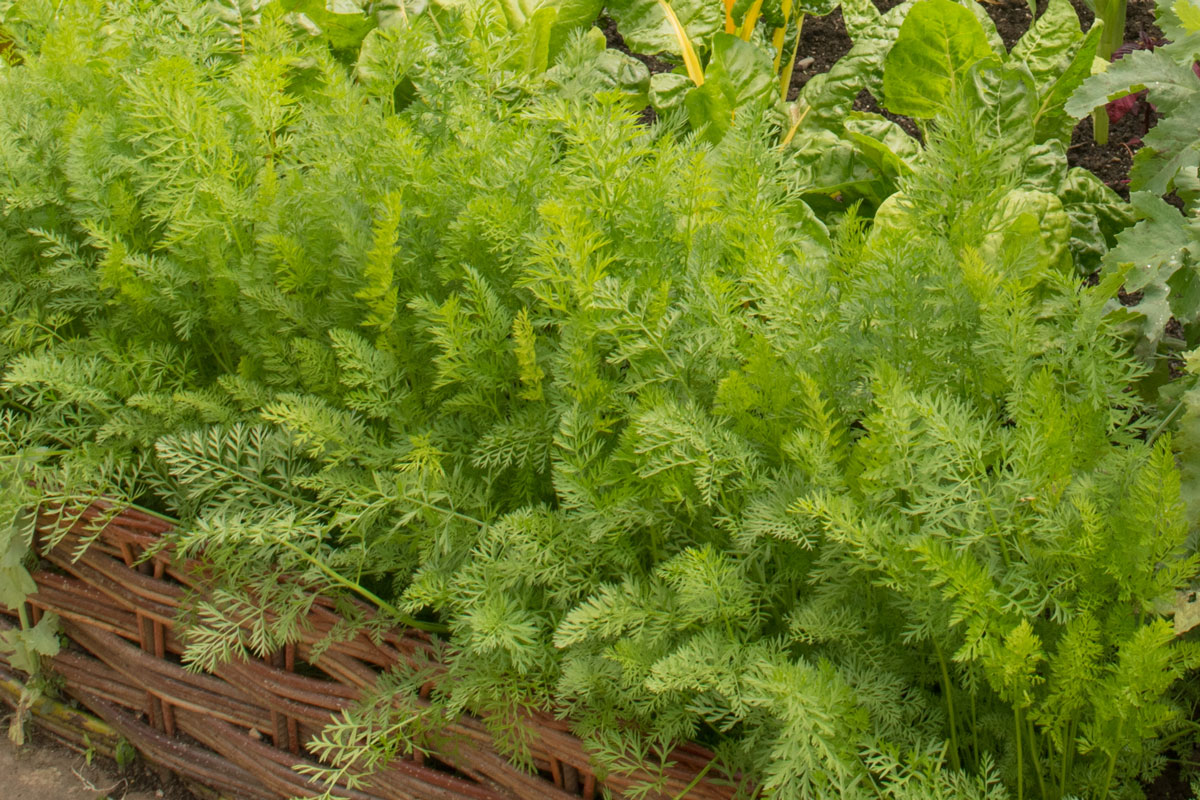
Peter Turner Photography/Shutterstock.com
Surprisingly though, they can be a bit tricky to grow because they're very sensitive to salt and don't cope well with too much fertiliser in the soil.
Slugs also love the seedlings. One day you're happily looking at the first little leaves and the next day they're all gone Oo
Facts and figures
Planting & harvest times of Carrot
SummerDirect sowing from Mid January to Mid June. After a growing period of 120 days, harvest can begin around Early May and continues until Late October.
AutumnDirect sowing from Mid May to Early July. After a growing period of 120 days, harvest can begin around Late October and continues until Late December.
Sow Carrot
Sow early varieties and those for summer harvest as early as possible.
For storage carrots to harvest in autumn, sow from mid-May to early July, depending on the maturation time of the variety.
They have an incredibly long germination time of up to 3 weeks during which you need to keep the seeds moist. You can mix the seeds with radish seeds to mark the rows and sow them together. By the time the carrots are big enough to need the space, you'll have already harvested the radishes.
After that, thin them out to 5 cm spacing.
Location and soil
They prefer rather lean soils and need consistent moisture, especially during their long germination period.
Good and bad companions of Carrot
Predecessors and successors of Carrot
Varieties
There are many varieties with different maturation times and storage qualities.
Care and fertilising
Carrots need space to develop. So make sure to thin them out and don't plant the rows too close together.
Don't fertilise — at most, spread a little mature compost on the bed in spring.
Keep them weed-free and mulch if needed. Water during dry spells.
Harvest and processing
Depending on the variety, you can harvest as early as summer for fresh eating.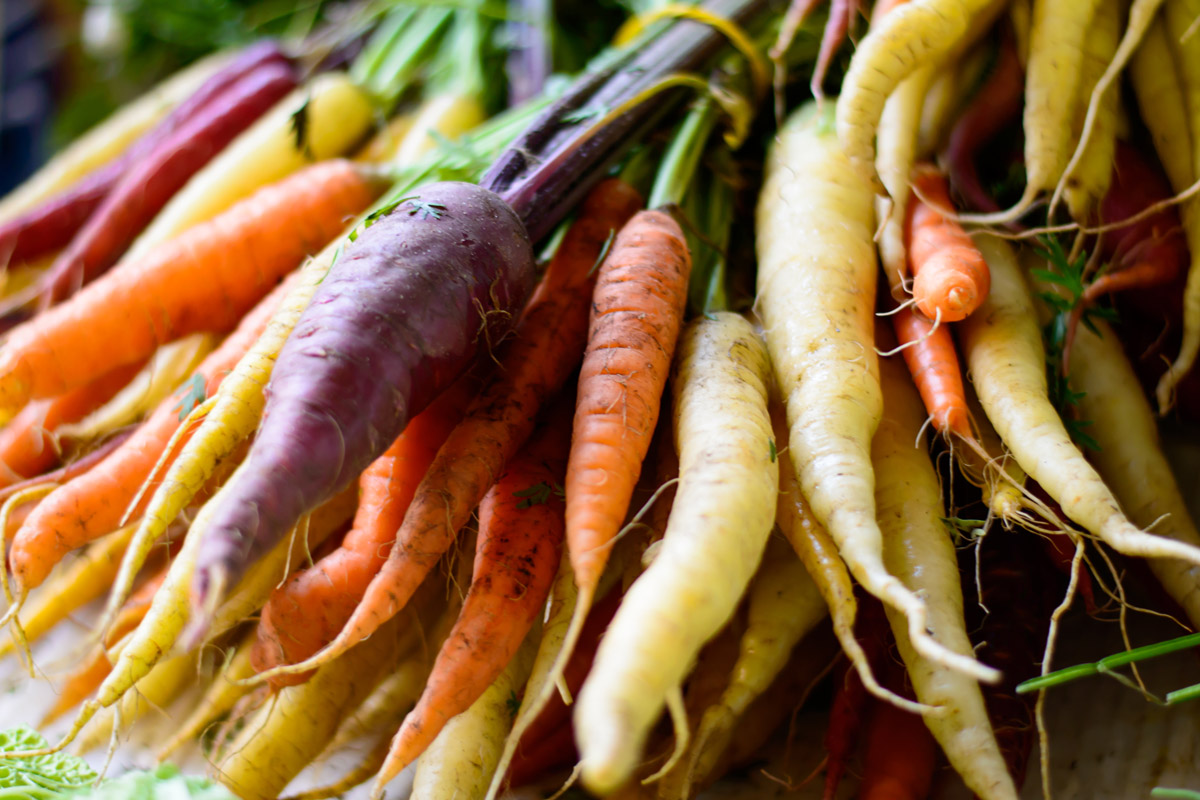
Milaspage/Shutterstock.com
Or if you have the chance, let them fully mature — you can tell by the leaf tips changing colour — and store them in autumn. The best way is to pack them in damp sand in a cool spot.