
The cucumber belongs to the cucurbit family and has been cultivated for over 3,000 years. Like the aubergine, it originates from India. That's why it loves warmth. Some cucumber varieties only thrive in a greenhouse — these are mostly the long, smooth slicing cucumbers you typically find in shops.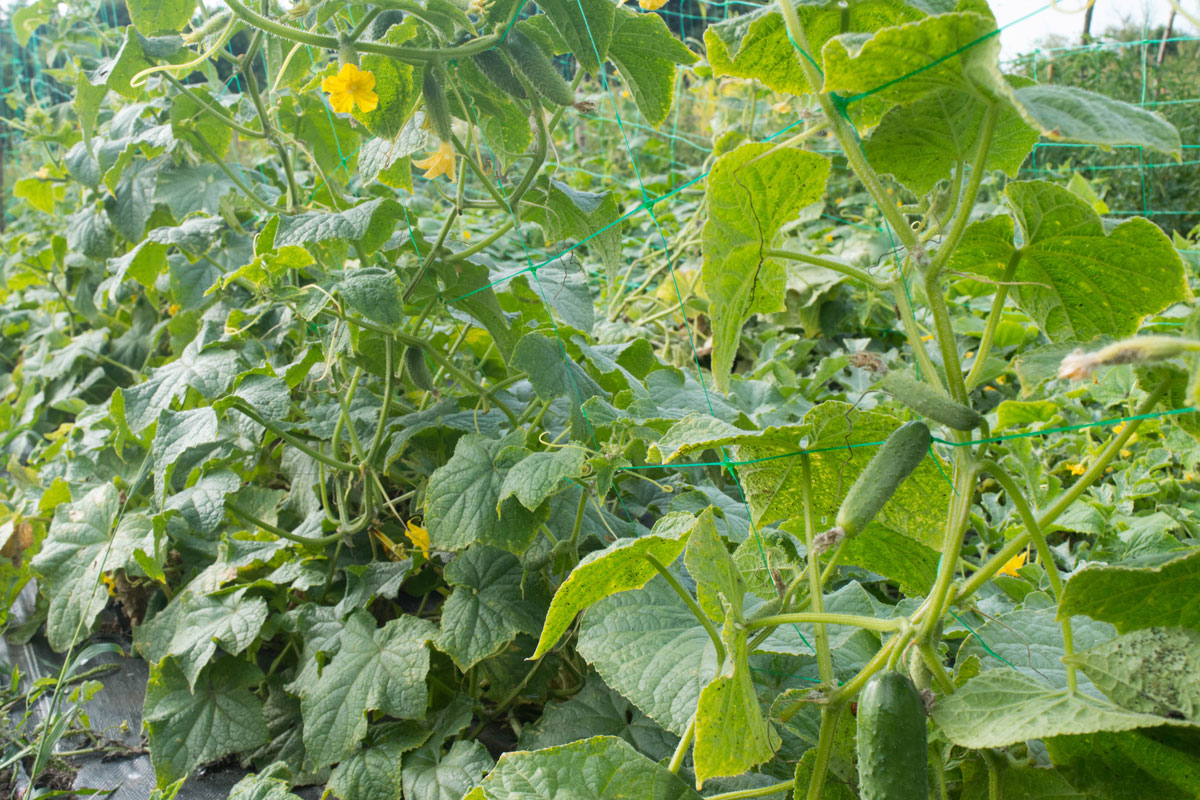
Anna Morenko/Shutterstock.com
Then there are outdoor cucumbers and pickling cucumbers, which you grow on the ground in the open. A few slicing cucumber varieties also do well outdoors, but they need a support to climb up.
Facts and figures
Planting & harvest times of Cucumber
Planting 1Direct sowing from Mid May to Early July. Transplant to bed from Mid May to Mid July. Pre-grow about 25 days before planting out, approximately between Mid April and Mid June. After a growing period of 60 days, harvest can begin around Late June and continues until Mid October.
GreenhouseDirect sowing from Mid April to Early July. Transplant to bed from Mid April to Early July. Pre-grow about 25 days before planting out, approximately between Mid March and Early June. After a growing period of 60 days, harvest can begin around Mid June and continues until Mid October.
Sow and plant Cucumber
Planting: Outdoors you can direct sow outdoor cucumbers and pickling cucumbers, as well as some outdoor-suitable slicing cucumbers, from the second week of May. Plant out pre-grown seedlings only after the last frost, so more towards the end of May.
In a heated greenhouse you can start a month earlier. Spacing in the greenhouse should be a bit more generous, around 130 x 45 cm. In the greenhouse it's best to train the cucumbers upwards, for example using netting.
You can do the same outdoors by attaching a coarse-meshed trellis at an angle to a frame. That way the space underneath is still usable for lettuce (and other crops) that appreciate a bit of shade in midsummer. We'll write a blog post about this.
Good and bad companions of Cucumber
Predecessors and successors of Cucumber
Care and fertilising
Cucumbers are heavy feeders and even enjoy coarse compost and half-rotted farmyard manure spread before planting. An occasional watering with comfrey liquid feed does them good too.
Most importantly, keep the water supply steady. If they get too dry, the fruits turn bitter. They're then not just inedible but actually toxic.
Cucumber plants don't like cold water.
Harvest and processing
Fun video about using cucumber: https://www.youtube.com/watch?v=SdL0CsZLieo