
Melons are a bit tricky to grow because they need so much warmth. Honeydew melons and other sugar melons are a little easier to grow than watermelons. Funnily enough, they're more closely related to cucumbers than to watermelons. There are even cucumber-like sugar melons that don't taste sweet and are used much like cucumbers.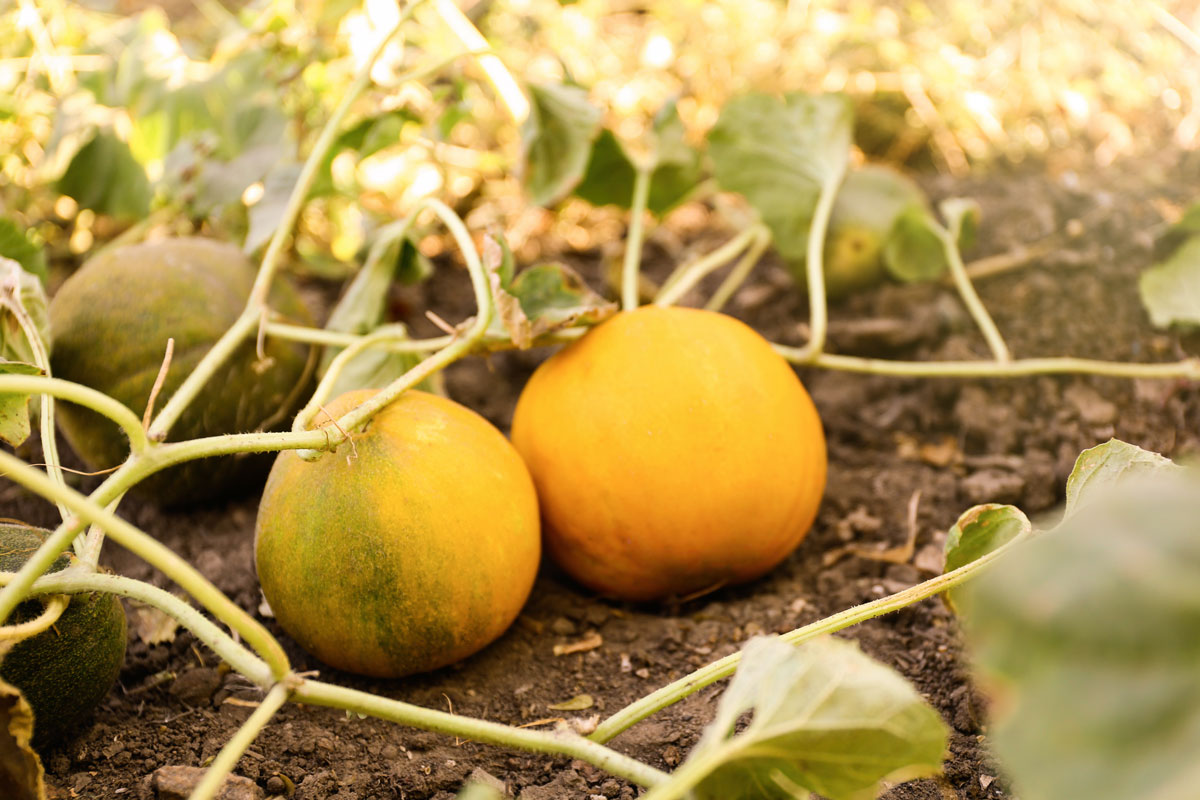
New Africa/Shutterstock.com
Melon seeds have been found in excavations of ancient settlements dating back almost 6,000 years.
Facts and figures
Planting & harvest times of Honeydew melon
OutdoorsTransplant to bed from Late May to Late June. Pre-grow about 30 days before planting out, approximately between Late April and Late May. After a growing period of 130 days, harvest can begin around Late August and continues until Late October.
GreenhouseTransplant to bed from Late April to Late June. Pre-grow about 30 days before planting out, approximately between Late March and Late May. After a growing period of 130 days, harvest can begin around Mid August and continues until Mid November.
Plant Honeydew melon
Sow the seeds straight into a larger pot with potting compost. Don't prick them out, as they can't handle root damage.
Make sure you plant at least two plants. The fruit only develops when pollinated by another plant.
Location and soil
This warmth-loving plant does best in a greenhouse or a hotbed. A hotbed is a special type of cold frame where you put a layer of fresh manure at the bottom. As the manure breaks down, it generates heat – basically a natural underfloor heating system.
It's best to always go for early-ripening varieties to make sure the fruit actually ripens in our climate.
Unlike watermelons, honeydew melons can cope with being planted outdoors in more regions – you don't necessarily need a wine-growing climate. Outdoors, pick a sheltered spot, ideally with black plastic mulch on the ground and a plastic tunnel over the top. You can also grow them in a large pot on a sheltered balcony or terrace.
The plant needs humus-rich soil with good water retention.
Good and bad companions of Honeydew melon
Predecessors and successors of Honeydew melon
Care and fertilising
In warm areas this isn't necessary, but in less favourable spots it's a good idea to prune your sugar melon plants.
Leave 3 to 5 fruits per plant and cut the shoots back about 3 leaves after the last fruit.
You can train sugar melons up a string in the greenhouse. If you do, support the fruit with a net bag so they don't tear off. Prune them in the greenhouse too. When the plant has 4 leaves, cut it back to 2 leaves, and on the side shoots always leave just 2 leaves as well.
Water regularly with lukewarm water while the fruit is growing. Once the fruit has reached its full size and is just ripening, ease off on the watering – otherwise it can split.
Harvest and processing
Unfortunately, every variety has slightly different signs of ripeness. What they all have in common is that a strong fragrance is a good sign. And when a crack starts to appear on the stem.