
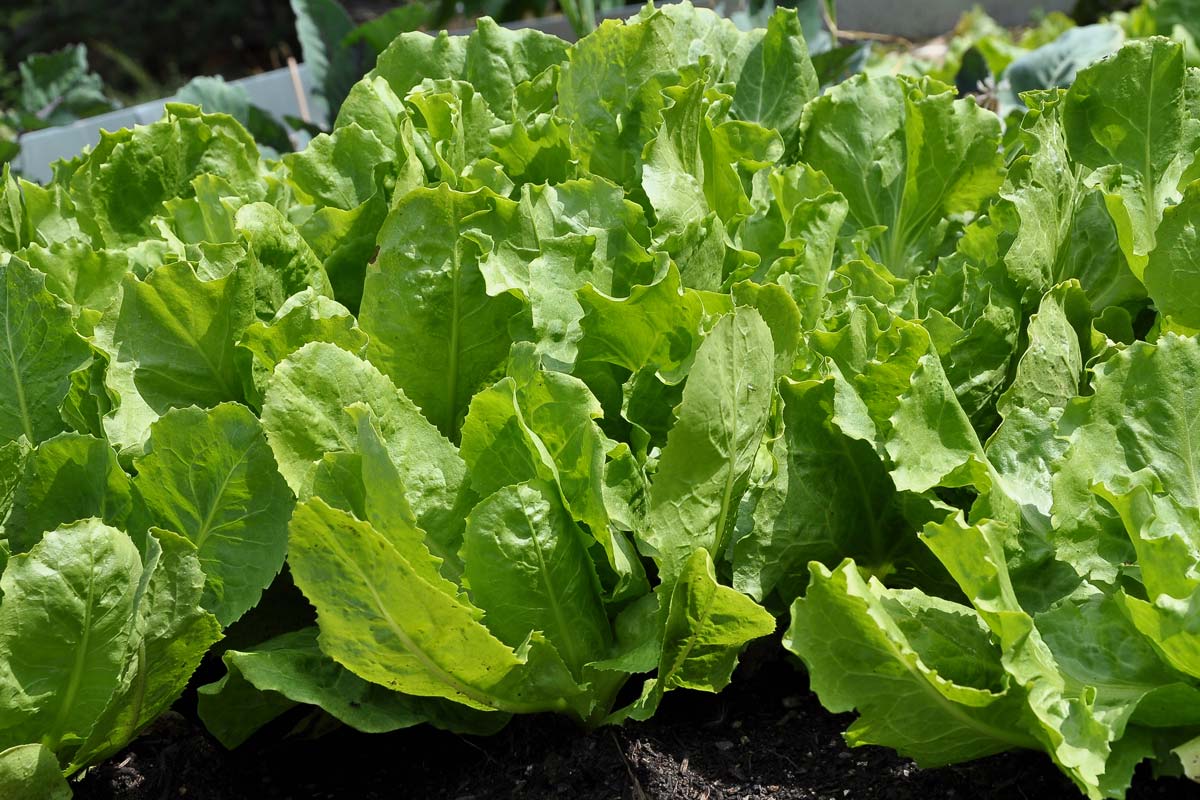
Chicory belongs to the cichorium family and is a relative of the mostly blue-flowering wild chicory. They are medicinal plants that have pain-relieving properties and other positive health effects. Chicory coffee is also made from its relatives and is said to be very healthy.
But back to chicory as a salad vegetable – growing it isn't quite that simple. It doesn't grow in the garden the way you know it from the supermarket.
Facts and figures
Planting & harvest times of Chicory
Direct sowing from Early May to Late May. After a growing period of 120 days, harvest can begin around Early September and continues until Late October.
Sow Chicory
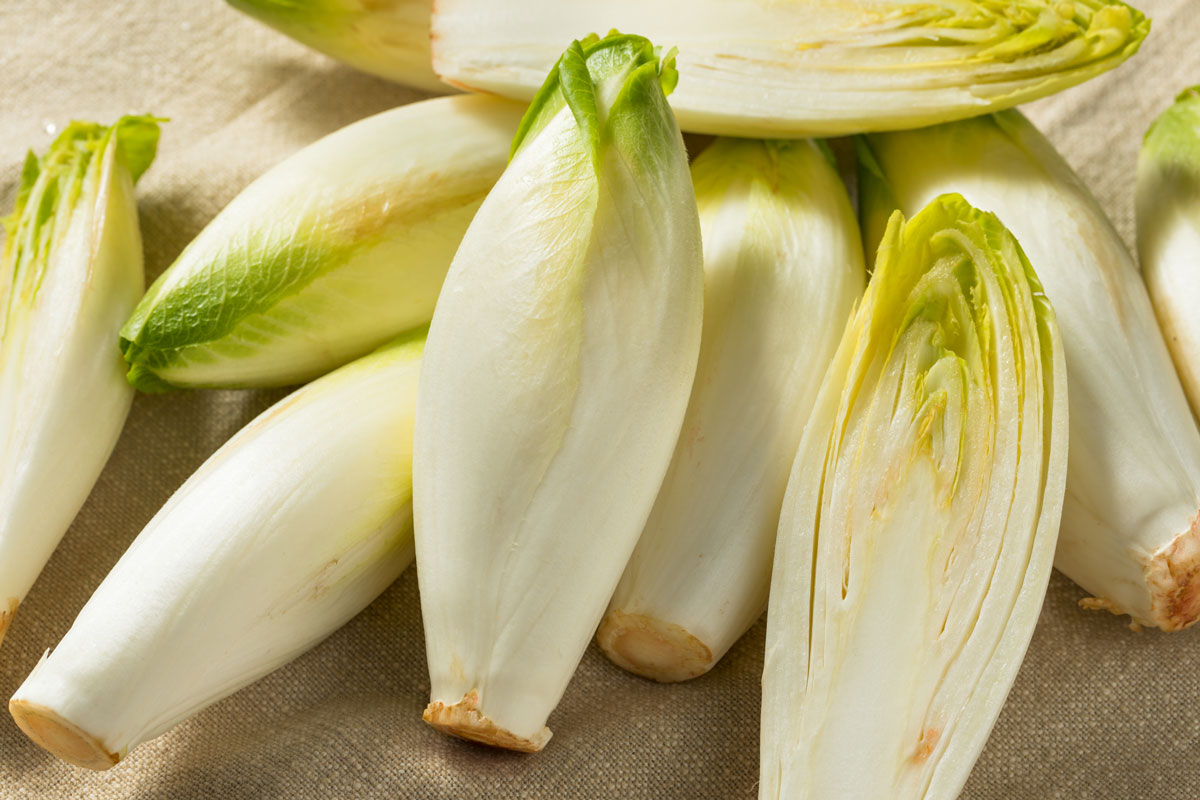
You grow chicory in two stages, and that is exactly why many people are puzzled on their first attempt. As I said, what grows in the bed is not what you eat later. From the bed you only harvest the root, and the crisp pale head comes later, in the dark.
The first stage happens in the bed. Sow directly outdoors, ideally in May, as soon as the soil surface has reached 14 degrees. You can skip raising seedlings and pricking out, because chicory forms a strong taproot and resents being moved. Draw shallow drills 30 to 40 centimetres apart and place the seeds about 15 mm deep.
The first seedlings appear after eight to fourteen days. Thin the plants now so that one plant stands every 10 to 15 centimetres in the row. If they stand closer, the roots stay thin, and thin roots never turn into decent chicory. What you want in the end are roots 3 to 6 centimetres across; anything smaller forces poorly.
The field stage ends between September and October. The outer leaves turn yellow, and that is your signal. Lift the roots carefully with a digging fork, keeping them as undamaged as possible. Then cut the foliage about five centimetres above the root, and whatever you do, don't damage the small bud in the middle. That bud is where the chicory head grows from later. Let the roots dry off in the air for two to three days, then pack them in moist sand, cool at 0 to 5 degrees, dark and frost-free. Stored like this they keep for up to eight months.
Now comes the second stage, the forcing phase. Before forcing, the roots need at least a week of rest in the cold, and most people start from December onwards. The advantage: you don't have to force everything at once. Just take a few roots out of store in batches, and you'll harvest fresh chicory over several weeks instead of all at the same time.
To force them, stand the roots upright and packed tightly together in a bucket or a crate with drainage holes, fill up with moist soil and keep them at 12 to 18 degrees. The key thing is complete darkness. It stops leaf green and the bitter compound lactucopicrin from forming, which is exactly why the heads stay pale and mild. If light gets in, your chicory turns bitter.
How you cover them depends on the variety. Old varieties such as Brüsseler Witloof need a covering layer of 15 to 20 centimetres of sand or soil to grow up into. Without that layer they only form loose heads. Newer varieties such as Etardo, Robin or Schriek produce firm heads in open air too, so a light-proof lid or black film is enough. After three to four weeks the heads are ready to cut, one per root.
Good and bad companions of Chicory
Predecessors and successors of Chicory
Care and fertilising
Over the summer the care stays manageable. Water evenly, hoe as long as the leaves haven't closed the rows yet, and go easy on the fertiliser. Too much nitrogen does give you thick roots, but later on those only push out loose, disappointing heads. Compost before sowing is plenty.
Diseases and pests
Harvest and processing
Open the bed planner Try free for 7 days, web, iOS and Android