
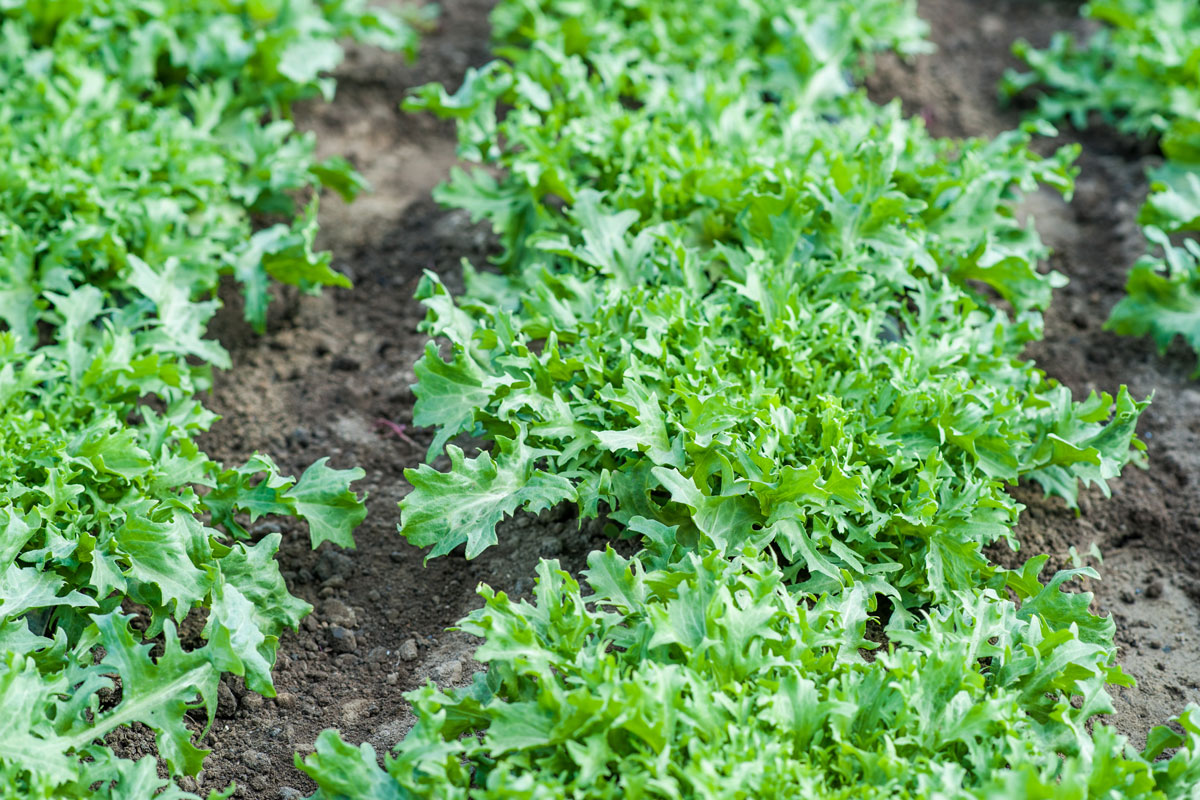
Endive is a chicory salad and a close relative of radicchio, sugarloaf chicory and chicory. It comes from the Mediterranean, and here it mainly grows as an autumn and winter salad, when the lettuces are winding down. There are two main types: smooth escarole with broad, firm leaves and curly frisée with finely cut leaves. Then there is cutting endive, which forms no head and can be cut several times. Its slightly bitter taste comes from the bitter compound intybin. Endive is actually biennial, but in the garden you harvest it in its first year as a leaf rosette.
Facts and figures
Planting & harvest times of Endive
SummerDirect sowing from Early May to Mid June. Transplant to bed from Mid April to Late June. Pre-grow about 30 days before transplanting, approximately between Mid March and Late May. After a growing period of 85 days, harvest can begin around Mid June and continues until Mid September.
AutumnDirect sowing from Mid June to Late July. Transplant to bed from Mid July to Mid August. Pre-grow about 30 days before transplanting, approximately between Mid June and Mid July. After a growing period of 90 days, harvest can begin around Mid September and continues until Late November.
Planting 1Direct sowing from Late March to Late June. After a growing period of 45 days, harvest can begin around Mid May and continues until Late September.
WinterTransplant to bed from Mid August to Late September. Pre-grow about 30 days before transplanting, approximately between Mid July and Late August. After a growing period of 100 days, harvest can begin around Early November and continues until Late February next year.
Sow and plant Endive
Summer: bolt-resistant frisée varieties
Autumn: escarole and frisée
Planting 1: cutting endive, sown in rows 20 cm apart, like other cut-and-come-again salads
Winter: Shows overwintering in an unheated greenhouse or in a cold frame under glass (suitable escarole varieties)
Sow endives for autumn from mid-June to the end of July, ideally in small pots, and plant them out after about four weeks, from mid-July to mid-August. You can start frisée varieties indoors from mid-March and plant them out under fleece from mid-April. Cover the seeds only thinly with soil. They germinate best at 20 to 22 degrees. If young endives are raised below 16 degrees, they tend to bolt later, so keep them warm and don't harden them off below 12 degrees. Space the plants 30 by 30 to 35 by 40 centimetres apart and set them no deeper than they sat in the pot. Sow cutting endive directly in rows 20 centimetres apart from the end of March to the end of June.
Location and soil
Endive likes a sunny spot and a medium, loose soil rich in humus that holds water well. It can't stand waterlogging, and on heavy, wet soils the heads rot quickly in autumn. On sandy soils, regular watering and a layer of mulch help. A neutral soil around pH 6.5 to 7 suits it well, so lime acidic soils beforehand.
Good and bad companions of Endive
Endive only goes into the bed in high summer and fills the gaps left by early vegetables. It works particularly well alongside brassicas: plant endives in the rows next to kale, Brussels sprouts, savoy or head cabbage, and put them straight into the spot left by early pointed cabbage. Carrots and fennel also count as good neighbours. Both appear in old companion planting tables, though without any detailed reason. Cutting endive is nice to sow together with lettuce, radicchio and rocket as a colourful salad mix like the Italian misticanza.
Sow chervil straight into the endive row. It's said to keep aphids and slugs away, and the last chervil sowing stays green over winter. Borage and summer savory belong at the edge of the bed.
If you grow chicory, radicchio and sugarloaf as single heads, keep them a little apart from your endives. All chicories share powdery mildew, which easily moves from one plant to the next in late summer. Serious damage is rare, and in young cut salad mixes it hardly matters. Other lettuces next to endive are no problem, as long as you keep them apart in your crop rotation.
- Practical tip for this pair
- Practical tip for this pair
- Practical tip for this pair
- Practical tip for this pair
- Practical tip for this pair
- Practical tip for this pair
- Pest control through scent or camouflage
- Practical tip for this pair
- Practical tip for this pair
- Practical tip for this pair
- Practical tip for this pair
- Practical tip for this pair
- Practical tip for this pair
- Practical tip for this pair
- Practical tip for this pair
- Practical tip for this pair
- Practical tip for this pair
- Practical tip for this pair
- Practical tip for this pair
- Practical tip for this pair
- Practical tip for this pair
- Shared pathogen, spreads through proximity
- Shared pathogen, spreads through proximity
- Shared pathogen, spreads through proximity
- Shared pathogen, spreads through proximity
Predecessors and successors of Endive
Endive belongs to the daisy family and shares soil fungi such as sclerotinia rot with lettuce, radicchio, sugarloaf chicory, chicory, sunflowers, Jerusalem artichokes and globe artichokes. So leave a three-year gap to these crops and to endive itself.
Endive does best as a second crop after vegetables that were cleared early in summer and well fed. Early broccoli, cauliflower and pointed cabbage, peas, dwarf French beans and early potatoes have proven themselves. It also grows well after onions, carrots and spring-sown fennel. Don't feed the endive itself, and keep fresh manure away from it: too much nitrogen makes the heads soft and prone to rot.
After endive the bed usually stays empty until spring, because the plants stand until November or later. The following year, crops from other families suit the bed. Lettuce and other members of the daisy family should only come back after three years.
- Nitrogen release
- Loosens soil, improves soil structure
- Shared soil-borne pathogen
- Family rule
- Shared soil-borne pathogen
- Shared soil-borne pathogen
- Family rule
- Shared soil-borne pathogen
- Family rule
- Shared soil-borne pathogen
- Shared soil-borne pathogen
- Family rule
- Shared soil-borne pathogen
- Self-incompatibility
- Shared soil-borne pathogen
- Family rule
- Shared soil-borne pathogen
- Family rule
- Shared soil-borne pathogen
- Family rule
- Volunteers from the previous crop smother the successor
- Shared soil-borne pathogen
- Family rule
- Shared soil-borne pathogen
- Family rule
- Shared soil-borne pathogen
- Shared soil-borne pathogen
- Shared soil-borne pathogen
- Family rule
- Shared soil-borne pathogen
- Family rule
- Shared soil-borne pathogen
- Family rule
- Shared soil-borne pathogen
- Family rule
- Family rule
- Shared soil-borne pathogen
- Shared soil-borne pathogen
- Family rule
- Shared soil-borne pathogen
- Self-incompatibility
- Shared soil-borne pathogen
- Family rule
- Shared soil-borne pathogen
- Family rule
- Shared soil-borne pathogen
- Family rule
- Shared soil-borne pathogen
- Family rule
- Shared soil-borne pathogen
- Family rule
- Family rule
- Shared soil-borne pathogen
- Shared soil-borne pathogen
- Shared soil-borne pathogen
- Family rule
Varieties
With endive you can tell three types apart. Smooth escarole, such as ‘Bubikopf’ or ‘Grüner Escariol’, copes better with wet and frost and keeps longer in storage. Curly frisée such as ‘Grüne Große Krause’ or ‘Wallone’ has a finer flavour but rots faster in a wet autumn. Cutting endives form no head and can be cut several times. Many newer varieties blanch their hearts on their own.
Care and fertilising
Endives need steady watering while they grow in summer. In autumn, only water during long dry spells, otherwise the hearts rot. You don't need to feed them. After a well-fed previous crop, they actually stay healthier and more frost-hardy when kept lean. If you want tender, mild hearts, tie the leaves together in dry weather two to three weeks before harvest, or put a bucket over them. From November, a cloche, fleece or cold frame protects the heads from wet and harder frosts.
Diseases and pests
Endive is healthier than lettuce, and downy mildew hardly ever appears on it. The most common problem is tipburn. It isn't a disease but a calcium deficiency in the leaf margins when plants grow very fast in heat or drought. The edges of the heart leaves turn brown and rot. Even watering, sparing feeding and liming acidic soils prevent it.
Soil fungi cause the worst damage when endives follow lettuce or other members of the daisy family too often. Rhizoctonia turns the leaves lying on the soil brown and rotten. With sclerotinia rot the whole plant wilts, and a white fungal web with black resting bodies grows on the stem base. In a wet autumn, grey mould and bacterial rots join in. A three-year break, an airy position and dry leaves are the best protection. White, floury coatings in late summer are powdery mildew, which rarely does endive serious harm.
Slugs and snails usually leave endives alone and only like to nibble young plants. Aphids, lettuce root aphids at the root collar, leaf miners and, in autumn, the caterpillars of the cabbage moth and silver Y moth turn up now and then. In winter, voles like to eat the heart and taproot of endive from below.
Harvest and processing
You harvest the first endives from mid-September, once the rosette has a well-filled heart. In the bed they tolerate light frosts down to about minus 4 degrees. Under a cloche, fleece or in a cold frame the harvest carries on until after Christmas. Cut the heads just above the ground. Cutting endive you can harvest several times like loose-leaf lettuce. For storage, pull up the plants with their roots in dry weather and heel them in in a cool cellar or a box of sand. That way they keep for up to three weeks. In the kitchen, cut endive into fine strips. It goes well with warm potatoes or a robust dressing. The green outer leaves taste more bitter and are good briefly fried or braised. If endive is too bitter for you, soak the leaves in water for half an hour before preparing them. The bitter compound intybin is said to stimulate the appetite and aid digestion.
Open the bed planner Try free for 7 days, web, iOS and Android