
The more well-known pak choi, sold as a stir-fry vegetable, also belongs to the Asian greens family. You can use it just as well as a baby-leaf addition to salads. Strictly speaking, these aren't actually salad plants but members of the brassica family, more precisely the leafy mustard greens. That explains their more or less piquant, mustardy flavour.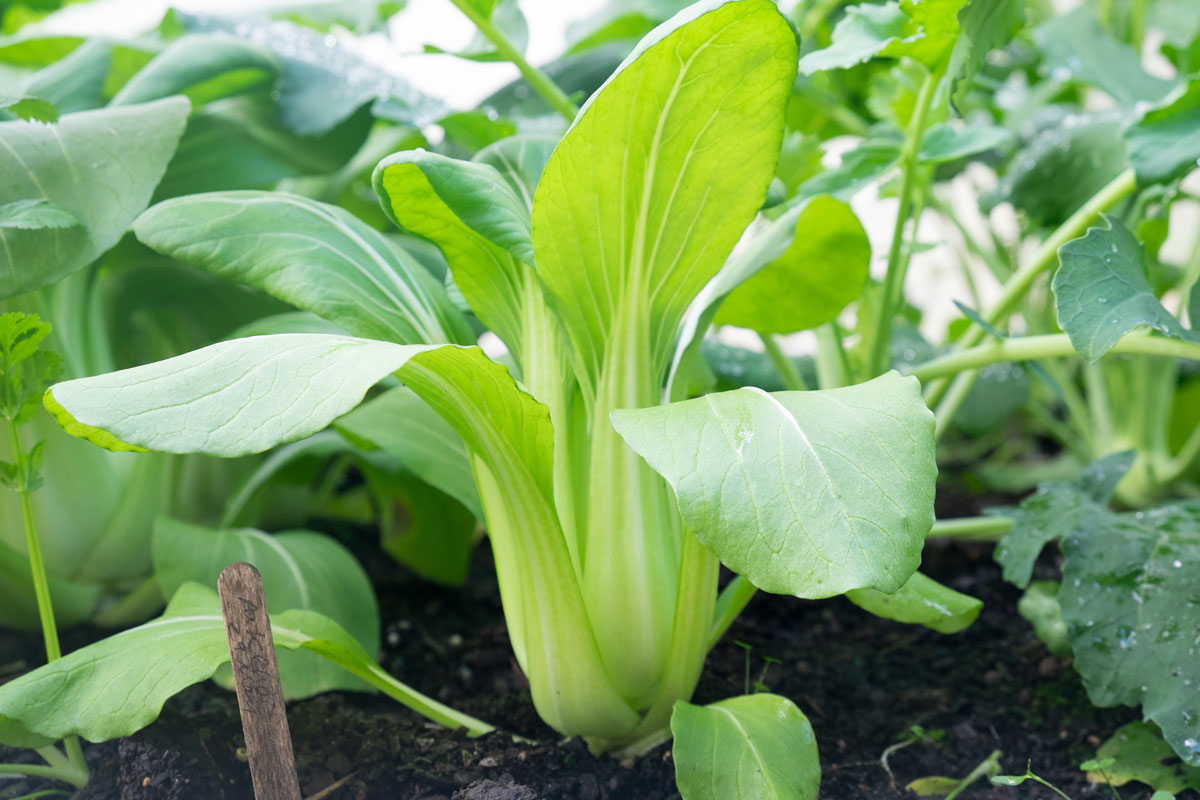
corners74/Shutterstock.com
Facts and figures
Planting & harvest times of Pak choi
SpringDirect sowing from Mid March to Late March. Transplant to bed from Mid March to Mid April. Pre-grow about 20 days before planting out, approximately between Mid February and Mid March. After a growing period of 60 days, harvest can begin around Mid April and continues until Mid June.
SummerDirect sowing from Mid July to Mid August. Transplant to bed from Mid July to Late August. Pre-grow about 20 days before planting out, approximately between Late June and Early August. After a growing period of 60 days, harvest can begin around Mid August and continues until Late October.
Sow and plant Pak choi
You can grow the plants in rows as indicated. The spacing given is fairly generous to allow larger plants to develop. For baby-leaf salad growing, you can reduce the distances. Or broadcast sow on a weed-free bed.
In a greenhouse, year-round growing is possible.
Good and bad companions of Pak choi
Predecessors and successors of Pak choi
If you only grow Asian greens in small strips alongside other crops, you can largely ignore crop rotation. If you dedicate whole beds to them, keep the usual 3-year break between them and other brassicas.
Diseases and pests
Pak choi attracts flea beetles and aphids like a magnet, just like Chinese cabbage. Both are susceptible to clubroot, Alternaria and Phoma. You're better off growing them under a protective net.
Harvest and processing
You can harvest the leaves young as baby-leaf or let them grow bigger for stir-fry dishes, for example. Even when they flower, the leaves stay tasty. Just avoid the tough flower stalks.