
Black kale is similar to curly kale in terms of growing, appearance and taste. Unlike curly kale, though, it handles high summer temperatures well but is barely frost-hardy. The plant won't survive prolonged cold spells or temperatures below -5 degrees Celsius. No surprise there — the common name Tuscan kale already gives away its Mediterranean origins.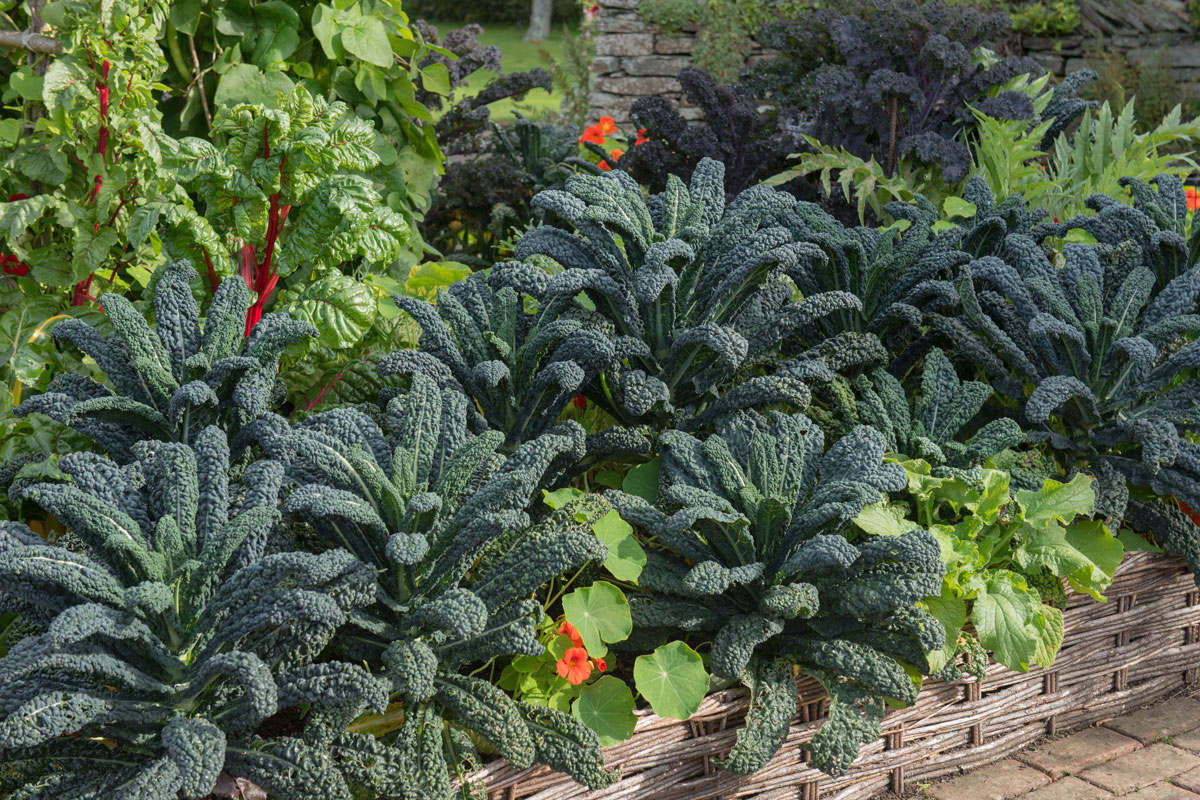
Peter Turner Photography/Shutterstock.com
Thanks to its striking looks, you'll sometimes see it planted as an ornamental in large pots.
Facts and figures
Planting & harvest times of Black kale
Direct sowing from Mid May to Mid June. Transplant to bed from Mid May to Early July. Pre-grow about 80 days before planting out, approximately between Late February and Mid April. Harvest begins around Mid July and continues until Early November.
Good and bad companions of Black kale
Predecessors and successors of Black kale
Care and fertilising
Regular feeding and above all a consistent water supply are key for good leaf development. Mulching with grass clippings helps a lot.
Harvest and processing
You can start harvesting black kale from about 8 weeks after planting. The main harvest season, though, is in midsummer and early autumn. Black kale doesn't need a touch of frost like curly kale — it tastes great without it. Pick the leaves from the bottom upwards. Over time, this makes the plant look more and more like a little palm tree.