
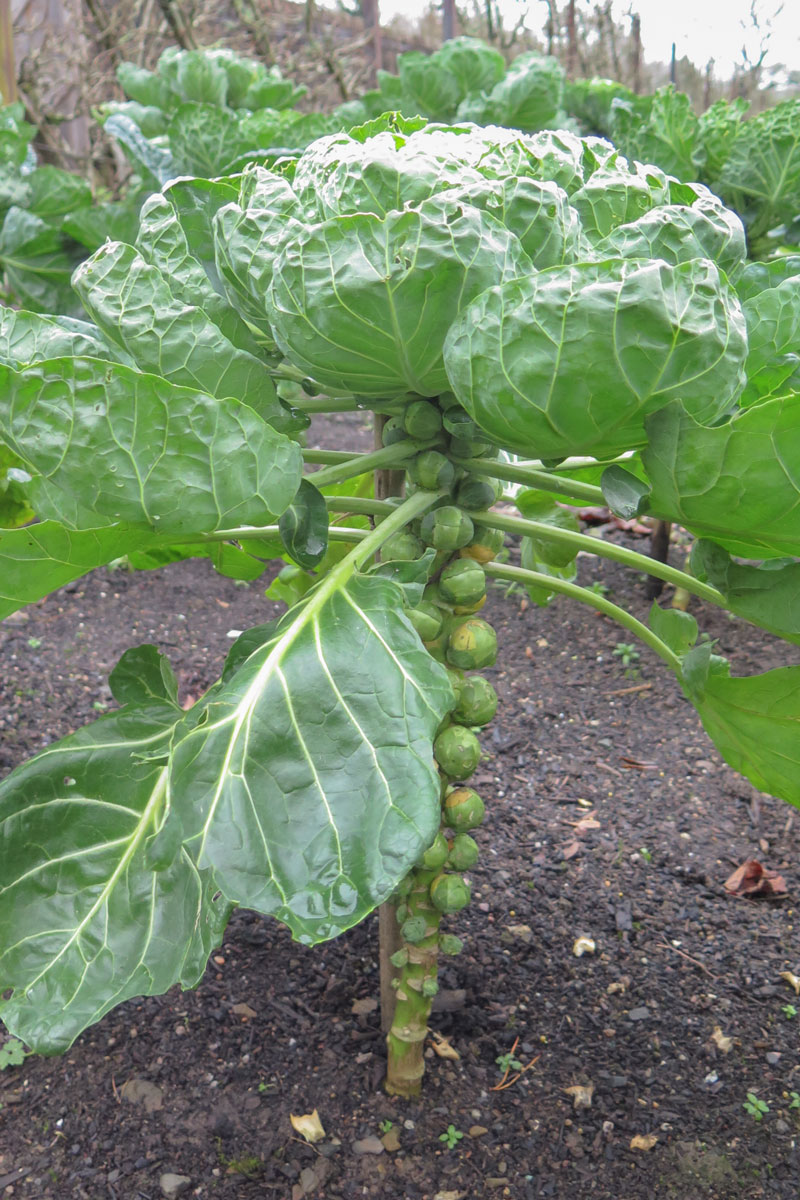
Brussels sprouts are among the hardiest of all cabbages when it comes to winter cold. They also have the highest vitamin C content, making them a valuable winter vegetable. Depending on the variety, you can harvest them right through to the following spring — so you'll always have fresh veg from the plot, even in the depths of winter.
Facts and figures
Planting & harvest times of Brussels sprouts
Direct sowing from Late March to Early May. Transplant to bed from Mid May to Late June. Pre-grow about 60 days before transplanting, approximately between Mid March and Late April. After a growing period of 200 days, harvest can begin around Mid October and continues until Mid March next year.
Sow and plant Brussels sprouts
You can sow directly from mid to late March, but starting them off indoors from early to mid March is the better option. After a few days of hardening off, you can then plant them out in the bed from early to mid May. It's a good idea to add a small amount of organic fertiliser into the planting hole when you set them out.
Location and soil
As heavy feeders, they prefer a good garden soil enriched with plenty of compost in a sunny spot. Brassicas don't like acidic soil, so add some lime if needed.
Good and bad companions of Brussels sprouts
Growing them near alliums can cause growth to stall. Strawberries and a few others don't sit well with them either. But you can happily plant them alongside peppers, lamb's lettuce and radicchio, among others.
- Practical tip for this pair
Predecessors and successors of Brussels sprouts
As always, don't plant the same crop in the same spot for several years, and close relatives like other brassicas don't make good predecessors or successors either. Members of the allium family and a few others also don't get on well with brassicas in rotation. There are, however, a few that work well — parsnips, chard and beetroot can follow or precede them without any trouble.
- Shared soil-borne pathogen
- Self-incompatibility
- Shared soil-borne pathogen
- Self-incompatibility
- Shared soil-borne pathogen
- Self-incompatibility
- Too much nitrogen for a sensitive successor
- Shared soil-borne pathogen
- Too much nitrogen for a sensitive successor
- Shared soil-borne pathogen
- Self-incompatibility
- Shared soil-borne pathogen
- Self-incompatibility
- Shared soil-borne pathogen
- Self-incompatibility
Crop rotation
What stood on that bed three years ago is hard to recall come spring. grove remembers. Once you have planned with it for a few seasons it knows your beds and warns you as you plant when a growing break is still running. The other way round, grove points you to the spots where Brussels sprouts fits particularly well right now.
As green manure before Brussels sprouts, grove suggests Sunflower good for example, provided the crop before it fits as well. As the crop before it, grove suggests Pea very good, Bush bean very good or Potato good. After it come Leek good or Parsnip good.
Broccoli very poor, Kohlrabi very poor, Oil radish very poor and 23 more plants may only return to the same spot after 4 years. grove still remembers that three years from now.
And as soon as next year is planned, the Garden Fairy looks for the right green manure for the cold season in between all by itself, Phacelia for example. How the Garden Fairy works
Plan crop rotation in the bed planner Try free for 7 days, web, iOS and Android
iv id="textCare">Care and fertilising
To protect them from cabbage white butterflies or whitefly, you can plant celery between the brassicas or cover them with crop protection netting. One or two feeds with organic fertiliser and/or watering with plant teas or liquid manures help provide the nutrients they need and keep the plants healthy. During the main growing period, always make sure they get enough water.
Diseases and pests
Harvest and processing
Depending on the weather and how well they've grown, you can harvest the sprouts from late autumn through to spring whenever it's frost-free. Pick from the bottom upwards — new ones keep forming higher up the stem. In spring, you can also harvest and use the small savoy-like head that forms at the top. The sprouts are still perfectly good to eat even when they've started to open slightly. These tender little sprouts cook quickly and are brilliant for a fast stir-fry.