
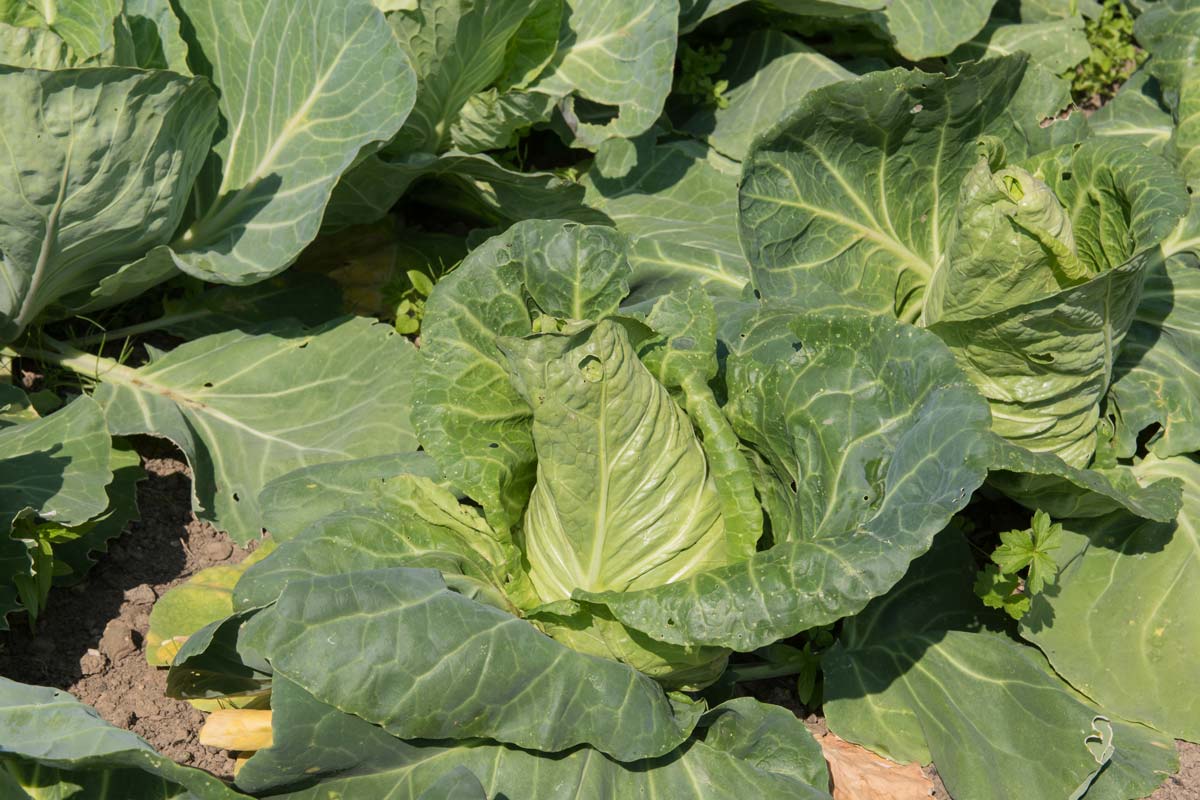
Pointed cabbage is a type of white cabbage but with some special qualities. It's much easier to digest and has more tender leaves. It contains the most vitamin C and leads in minerals compared to all other headed cabbages. But it does have one downside – it doesn't keep for very long.
Facts and figures
Planting & harvest times of Pointed cabbage
SpringDirect sowing from Early March to Mid May. Transplant to bed from Mid March to Mid June. Pre-grow about 40 days before transplanting, approximately between Late January and Late April. After a growing period of 95 days, harvest can begin around Late June and continues until Late October.
AutumnDirect sowing from Early April to Late April. Transplant to bed from Mid May to Late June. Pre-grow about 40 days before transplanting, approximately between Late March and Mid May. After a growing period of 160 days, harvest can begin around Mid September and continues until Mid November.
Sow and plant Pointed cabbage
Spring: you can start early varieties indoors from the beginning of February and plant them out from mid-March. That way you can harvest the first heads by late June or early July.
Autumn: late varieties go in later. You can direct sow them in early April or start them indoors from then to plant out in May.
Sow the seeds about 2 cm deep in small module trays or little pots filled with seed compost. Once the seedlings have their first true pair of leaves after the seed leaves, it's time to prick them out. When pricking out, plant the little seedlings up to their seed leaves in larger pots with potting soil, where they can grow until it's time to plant them outside.
Location and soil
As a heavy feeder, it prefers a deep, humus-rich loamy soil, ideally in full sun. Partial shade works too, but the heads will stay smaller. Enrich the soil with compost and a bit of organic fertiliser when planting.
Good and bad companions of Pointed cabbage
Pointed cabbage gets on well with peas, beans, lettuce and celeriac, among others. Don't plant other heavy feeders next to it.
- Practical tip for this pair
Predecessors and successors of Pointed cabbage
Legumes make good predecessors as they enrich the soil with nitrogen. Don't plant pointed cabbage or any other brassicas in the same spot before or after.
- Shared soil-borne pathogen
- Self-incompatibility
- Shared soil-borne pathogen
- Self-incompatibility
- Shared soil-borne pathogen
- Self-incompatibility
- Too much nitrogen for a sensitive successor
- Shared soil-borne pathogen
- Too much nitrogen for a sensitive successor
- Shared soil-borne pathogen
- Self-incompatibility
- Shared soil-borne pathogen
- Self-incompatibility
- Shared soil-borne pathogen
- Self-incompatibility
Care and fertilising
Cover your cabbage plants with a fine mesh netting to protect them from pests. Unfortunately, quite a few creatures love to munch on them – cabbage white butterflies, cabbage root flies and whiteflies, to name just a few.
Water regularly during dry spells and keep on top of weeds. Earthing up gives the plants better stability and encourages more side roots, which can take up more nutrients. Feed once or twice with an organic fertiliser during the growing season. A good drench with a plant brew or fermented plant feed always does wonders for plant health too.
Diseases and pests
Harvest and processing
To help prevent clubroot, always harvest your cabbage plants with the root attached. The less plant material left in the soil, the better. You can still put the remains on the compost heap. Cut the stem along with the root using a sharp knife. Remove the outer leaves from the pointed cabbage and then you can store it for about a week in the fridge or a cool cellar.
Open the bed planner Try free for 7 days, web, iOS and Android