
Cauliflower is rightly considered the king of the brassica family. Its mild, almost nutty flavour makes it popular even with people who normally steer clear of cabbage. What we harvest is actually the unopened flower head of the plant, the so-called "curd". It sits nestled among large, blue-green leaves on a short, sturdy stem. Besides the classic white cauliflower, there are now yellow, green and purple varieties that bring colour to your plate. A special variant is Romanesco with its fascinating spiral-shaped florets. Cauliflower is low in calories but packed with vitamin C, vitamin K, calcium, magnesium and valuable mustard oils.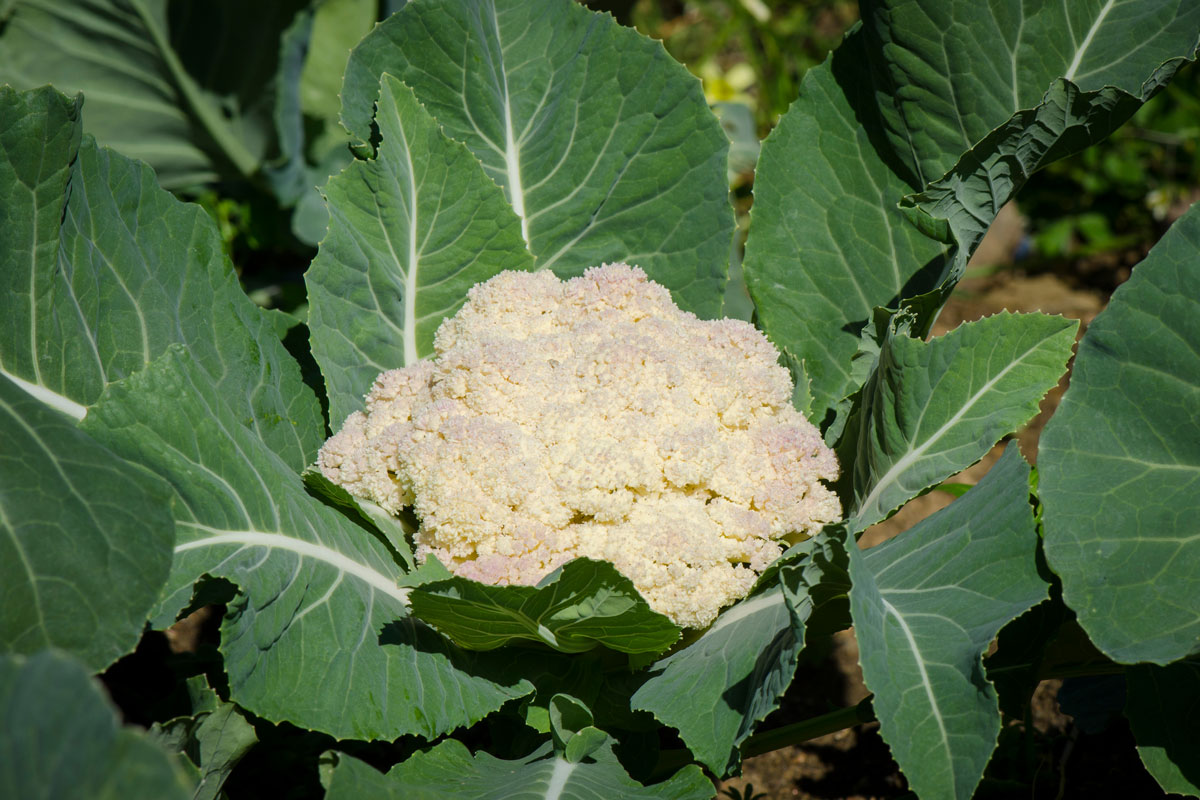
Palephotography/Shutterstock.com
Facts and figures
Planting & harvest times of Cauliflower
SummerDirect sowing from Mid April to Late June. Transplant to bed from Early April to Late July. Pre-grow about 30 days before planting out, approximately between Early March and Late June. After a growing period of 80 days, harvest can begin around Early June and continues until Late October.
WinterDirect sowing from Mid July to Mid August. Transplant to bed from Mid August to Mid September. Pre-grow about 30 days before planting out, approximately between Mid July and Mid August. After a growing period of 80 days, harvest can begin around Early May and continues until Late May next year.
Sow and plant Cauliflower
Cauliflower is best started as a young plant indoors and then transplanted into the bed. The pre-cultivation takes at least 30 days. You can start sowing indoors as early as February. Just cover the seeds lightly with soil. The optimal germination temperature is 18 °C. Once they've germinated, grow them on much cooler, at around 12 °C. After about two weeks, prick out the seedlings. Before planting out, harden them off for a few days.
Between April and July, young plants can go into the bed. If frost is still a risk, protect the plants with fleece. Direct sowing into the bed is possible from mid-April to the end of June, but in practice it's not quite as reliable as transplanting young plants.
For overwintering, plant the young plants out between mid-August and mid-September. Make sure you use winter-hardy varieties.
Space them 50 cm apart in the row. Plant the cauliflower deep enough so the soil reaches the cotyledons. A bit of lime in the planting hole helps prevent clubroot. A handful of horn shavings makes a good slow-release fertiliser.
Location and soil
When it comes to choosing a spot, cauliflower is quite fussy. It thrives best in a sunny position, though light shade during the hottest hours of the day is fine. Very sunny, dry spots don't suit it well.
Soil preparation is key to success. The soil should have a loose structure and be deep enough for the roots to develop properly. The soil's ability to retain moisture is particularly important. Loamy soil meets this requirement perfectly. The soil should also be rich in humus, as cauliflower is one of the most nutrient-hungry vegetables.
An often underestimated factor is the lime content. A pH value between 6 and 7 significantly reduces the risk of the dreaded clubroot. Generous compost additions of around 5 litres per square metre prepare the bed perfectly and meet the high nutrient demands of this demanding crop.
Good and bad companions of Cauliflower
In companion planting, cauliflower gets on particularly well with celery. The two are a real dream team in the bed and benefit from each other. In the first illustration in Gertrud Franck's book, cauliflower and celery are shown in the same row.
Since cauliflower only needs a lot of space over time, lettuces make ideal companion plants in the first half of the year. Peas and bush beans also get along well with it.
The relationship with onions, garlic and chives is less harmonious — don't plant those right next to your cauliflower. Potatoes aren't ideal neighbours either.
Predecessors and successors of Cauliflower
Like all brassicas, cauliflower should only return to the same spot as other cruciferous plants in the fourth year. This is essential to keep crop rotation diseases like clubroot in check.
Alliums aren't good predecessors either and can inhibit growth. We once harvested onions and planted cabbage in the same holes — it stayed extremely stunted.
Mustard is often advised against as green manure before brassicas, but Gertrud Franck sees it differently, as she sows the entire bed with white mustard at the end of the year. Although both are crucifers, they're so distantly related that there seem to be no negative effects.
You can also use phacelia or legumes as green manure.
Varieties
There's a decent selection of cauliflower varieties that differ in head shape, colour and planting time. For getting started with this already somewhat demanding plant, 'Neckarperle' and 'Erfurter Zwerg' are good choices.
If you want to bring colour to the bed, try purple varieties like 'Di Sicilia Violetto' or choose the bright orange 'Sunset' for autumn growing.
For earlier or later planting times, there are special varieties — it's worth taking a closer look. For overwintering in milder regions, there are cultivars that can withstand frosts down to minus 12 degrees.
Care and fertilising
Right after planting, the young plants need a good watering. After that, water more sparingly for about three weeks so the roots grow deep into the soil. If cauliflower doesn't get enough water, the heads stay small or the plant bolts prematurely.
Diluted nettle feed or horn shavings work well for feeding during the growing season.
To stop the cauliflower head turning yellowish, it needs some sun protection. If the inner leaves don't fold over the curd on their own, simply snap a few over to provide shade.
An important point for head formation: at the four to eight leaf stage, the plant needs temperatures around 12 °C for about ten days. Without this cooling phase, no head will form. That's why growing in a warm greenhouse usually doesn't work.
Diseases and pests
Unfortunately, cauliflower isn't just popular with us — all sorts of pests fancy it too. Cabbage white caterpillars, cabbage root fly, cabbage whitefly and flea beetles can make a gardener's life difficult. The best prevention is a fine-mesh crop protection net that you stretch over the plants straight after planting.
The cabbage gall midge is a particularly sneaky pest. It lays its tiny eggs deep between the flower buds. You can spot infested plants by their twisted heart leaves. Growing in open, windy positions and using fine-mesh nets with 0.8 mm mesh width help as prevention.
Clubroot is caused by the slime mould Plasmodiophora brassicae. Signs include stunted growth and bluish or yellowed leaves. If you suspect it, check the roots — they'll have white, knobby swellings. If it is clubroot, dig up the entire plant including roots immediately and put it in the bin. Don't compost it, or you'll spread the fungus. You'll need a break of at least 7 years for all crucifers on that spot. Work in extra lime to raise the pH value.
Harvest and processing
About two to three months after planting, the cauliflower is ready to harvest. The right moment has come when the head is well developed and firm, but the individual florets haven't yet opened. Don't wait too long, or the plant will start to bolt and the curd becomes loose and bitter.