
Chard is closely related to beetroot, sugar beet and fodder beet, with which it shares its botanical name. In Switzerland, Italy and the Balkans, chard is a staple vegetable in gardens. Over here, it has become more popular again in recent years. This vegetable plant comes in colourful varieties with vibrant colours and leaf patterns that really brighten up the vegetable garden. On top of that, it's easy to grow and you can harvest it throughout the year right up to the onset of winter — and sometimes even the following spring.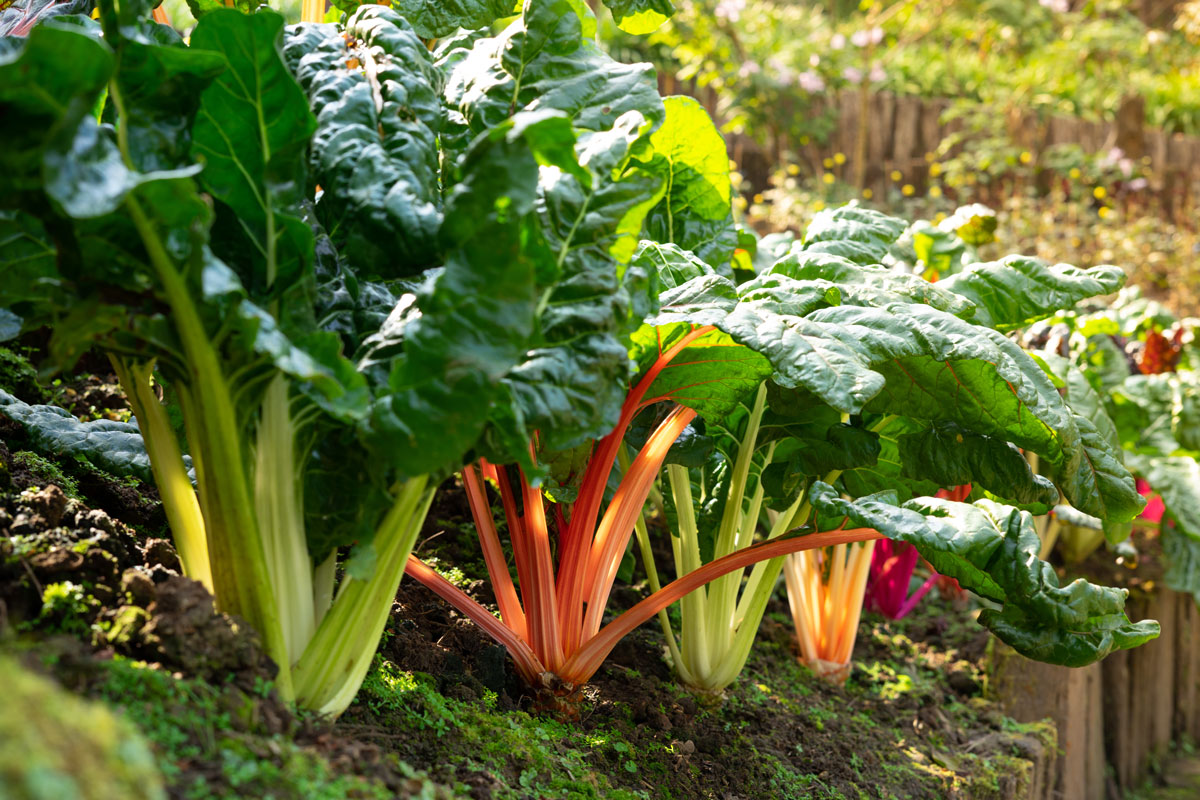
Supakvadee T/Shutterstock.com
Facts and figures
Planting & harvest times of Chard
SpringDirect sowing from Mid April to Mid July. Transplant to bed from Mid May to Mid July. Pre-grow about 30 days before planting out, approximately between Mid April and Mid June. After a growing period of 80 days, harvest can begin around Mid June and continues until Late April next year.
WinterDirect sowing from Mid August to Mid September. After a growing period of 80 days, harvest can begin around Late October and continues until Mid June next year.
GreenhouseDirect sowing from Early March to Mid July. After a growing period of 80 days, harvest can begin around Early May and continues until Late April next year.
Sow and plant Chard
Young plants can't handle frost — otherwise there's a real risk they'll bolt.
When planting, make sure you leave enough space between them. The plants grow surprisingly large and struggle if they're too close together.
Overwintering only works reliably in mild areas or in a greenhouse.
Green varieties cope better with frost than colourful ones.
In winter, the plants usually lose their leaves and sprout again in spring, provided they haven't frozen to death. A winter cover of brushwood can help.
Location and soil
It likes humus-rich soil and appreciates a good helping of compost in spring.
Good and bad companions of Chard
It doesn't get on well with tomatoes, cucumbers or spinach.
Predecessors and successors of Chard
Leave a three-year gap before growing it again in the same spot, and the same goes for its relatives in the goosefoot family — beetroot, sugar beet and spinach.
Varieties
Broadly speaking, there are two types: leaf chard and stem chard, where you also eat the thickened stems as a vegetable. With many varieties, you can use both.
Care and fertilising
Chard is a moderate feeder, so it only needs a modest amount of fertiliser. Water regularly during dry spells.
If you have a greenhouse, you can dig up your outdoor chard and replant it under cover once you've cleared out the summer crops — tomatoes, for example. That way you can keep harvesting through winter.
Harvest and processing
You can harvest leaves and stems right up until the plant flowers.