
Other names
Mountain spinach, French spinach
Botanical name
Atriplex hortensis
Family / Genus
Amaranthaceae / Atriplex
Plant category
Leafy Vegetables
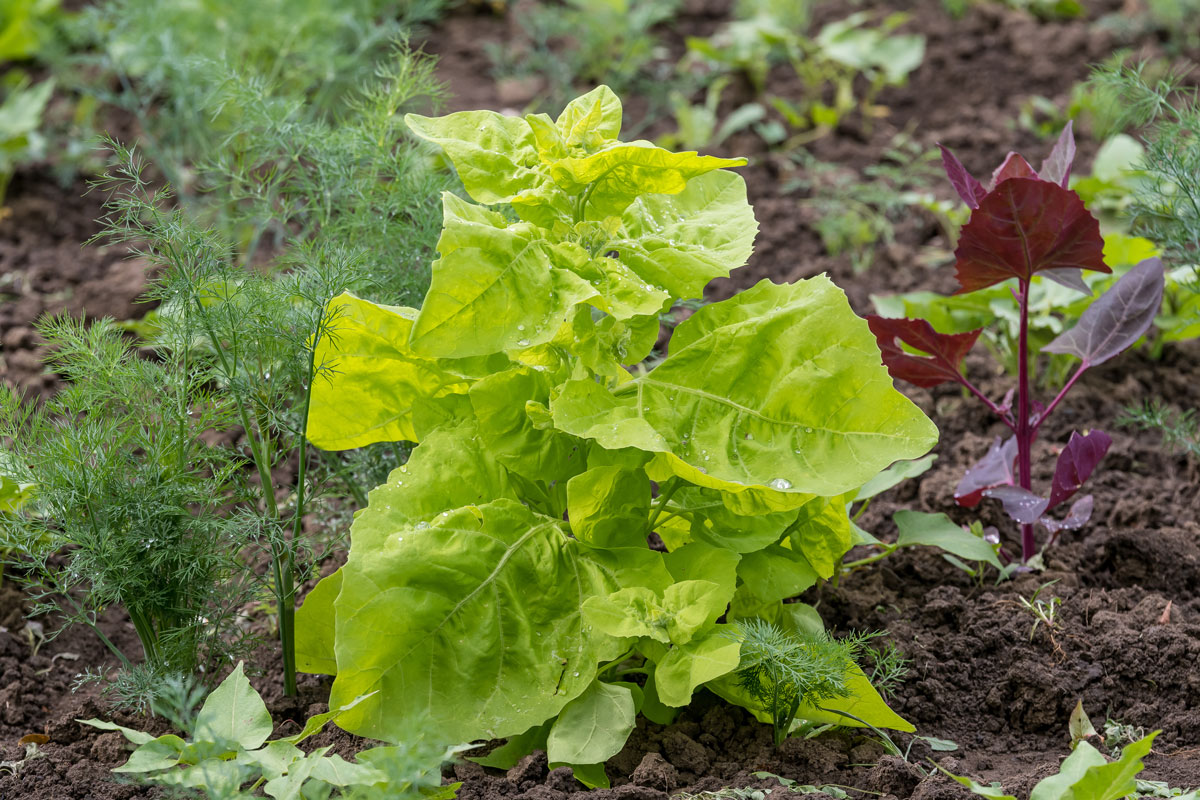
Cristina Ionescu/Shutterstock.com
Facts and figures
Light requirements
Sun / partial shade
Nutrient requirements
Light feeder
Difficulty level
Easy
Culture (according to Gertrud Franck)
C - low growth, short growing period
Culture (according to Sister C. Weinrich)
Companion crop
Row spacing
35 cm
Plant spacing
15 cm
Growth height
120 - 250 cm
Sowing depth
2 cm
Germination temperature (minimum)
3 °C
Germination temperature (optimal)
10 - 15 °C
Germination type
Light
Planting & harvest times of Orache
1
2
3
4
5
6
7
8
9
10
11
12
Direct sowing
Harvest
Direct sowing from Early March to Early September. Harvest begins around Early April and continues until Early October.
Good and bad companions of Orache
Good neighbours
Batavia lettuce
As underplanting: Batavia lettuce grows beneath Orache.
Orache can form the first rows like spinach; early lettuce goes into the rows in between and is harvested before the orache grows tall.
Evidence quality: moderate
Evidence: Long-standing companion planting practice (e.g. Gertrud Franck, Schwester C. Weinrich)
Reasons:
- Practical tip for this pair
Broad bean
As underplanting: Broad bean grows beneath Orache.
Plant guild: Plant them together, spread across a cluster or a whole bed.
Orache between the rows of broad beans shades the soil and provides tender leaves for the kitchen early in the year.
Evidence quality: moderate
Evidence: Long-standing companion planting practice (e.g. Gertrud Franck, Schwester C. Weinrich)
Reasons:
- Practical tip for this pair
Butterhead lettuce
As underplanting: Butterhead lettuce grows beneath Orache.
Orache can form the first rows like spinach; early lettuce goes into the rows in between and is harvested before the orache grows tall.
Evidence quality: moderate
Evidence: Long-standing companion planting practice (e.g. Gertrud Franck, Schwester C. Weinrich)
Reasons:
- Practical tip for this pair
Caraway
In the second year, sow orache early between the caraway rows and harvest it young, before the caraway flowers.
Evidence quality: moderate
Evidence: Long-standing companion planting practice (e.g. Gertrud Franck, Schwester C. Weinrich)
Reasons:
- Practical tip for this pair
Carrot
As underplanting: Carrot grows beneath Orache.
Orache can be sown together with carrots and weeded out before the carrot harvest. Until then it provides young leaves.
Evidence quality: good
Evidence: Specialist book, Long-standing companion planting practice (e.g. Gertrud Franck, Schwester C. Weinrich)
Reasons:
- Practical tip for this pair
Cos lettuce
As underplanting: Cos lettuce grows beneath Orache.
Orache can form the first rows like spinach; early lettuce goes into the rows in between and is harvested before the orache grows tall.
Evidence quality: moderate
Evidence: Long-standing companion planting practice (e.g. Gertrud Franck, Schwester C. Weinrich)
Reasons:
- Practical tip for this pair
Endive
After the cucumber harvest in August, sow two rows of orache between the endives. It provides young leaves until the end of October.
Evidence quality: moderate
Evidence: Long-standing companion planting practice (e.g. Gertrud Franck, Schwester C. Weinrich)
Reasons:
- Practical tip for this pair
Iceberg lettuce
As underplanting: Iceberg lettuce grows beneath Orache.
Orache can form the first rows like spinach; early lettuce goes into the rows in between and is harvested before the orache grows tall.
Evidence quality: moderate
Evidence: Long-standing companion planting practice (e.g. Gertrud Franck, Schwester C. Weinrich)
Reasons:
- Practical tip for this pair
Kohlrabi
As underplanting: Kohlrabi grows beneath Orache.
Kohlrabi can be planted between young orache and is harvested before the orache grows tall.
Evidence quality: good
Evidence: Specialist book
Reasons:
- Practical tip for this pair
Lamb's lettuce
As underplanting: Lamb's lettuce grows beneath Orache.
Sow orache between the overwintered rows of lamb's lettuce in March. The lamb's lettuce is harvested before the orache needs the space.
Evidence quality: moderate
Evidence: Long-standing companion planting practice (e.g. Gertrud Franck, Schwester C. Weinrich)
Reasons:
- Practical tip for this pair
Lollo bionda / Lollo rosso
As underplanting: Lollo bionda / Lollo rosso grows beneath Orache.
Sow orache in rows and loose-leaf lettuce in between. The orache is harvested before it grows tall, the lettuce keeps giving leaves.
Evidence quality: moderate
Evidence: Long-standing companion planting practice (e.g. Gertrud Franck, Schwester C. Weinrich)
Reasons:
- Practical tip for this pair
Oak leaf lettuce
As underplanting: Oak leaf lettuce grows beneath Orache.
Sow orache in rows and loose-leaf lettuce in between. The orache is harvested before it grows tall, the lettuce keeps giving leaves.
Evidence quality: moderate
Evidence: Long-standing companion planting practice (e.g. Gertrud Franck, Schwester C. Weinrich)
Reasons:
- Practical tip for this pair
Onion
As underplanting: Onion grows beneath Orache.
Like spinach, orache forms the first rows; onions go into the rows in between. The orache is harvested before it shades the onions.
Evidence quality: moderate
Evidence: Long-standing companion planting practice (e.g. Gertrud Franck, Schwester C. Weinrich)
Reasons:
- Practical tip for this pair
Potato
Evidence quality: limited
Evidence: Guidebooks, companion planting charts, tradition
Radish
As underplanting: Radish grows beneath Orache.
Like spinach, orache forms the first rows; radishes go into the rows in between and are harvested long before the orache.
Evidence quality: moderate
Evidence: Long-standing companion planting practice (e.g. Gertrud Franck, Schwester C. Weinrich)
Reasons:
- Practical tip for this pair
Winter purslane
Evidence quality: limited
Evidence: Guidebooks, companion planting charts, tradition
Bad neighbours
Beetroot
Like beetroot, orache belongs to the goosefoot family, and both share leaf spot and the beet leaf miner. Do not sow them right next to each other.
Evidence quality: good
Evidence: Advisory service, research institute, Specialist book
Reasons:
- Shared pathogen, spreads through proximity
- Shared pest is attracted or multiplies
Spinach
Orache and spinach are closely related and share leaf diseases and the beet leaf miner. Do not sow them right next to each other.
Evidence quality: moderate
Evidence: Advisory service, research institute, Derived from plant family or pathogen, pair not directly documented
Reasons:
- Shared pathogen, spreads through proximity
- Shared pest is attracted or multiplies
Swiss chard
Like chard, orache belongs to the goosefoot family, and both share leaf spot and the beet leaf miner. Do not sow them right next to each other.
Evidence quality: good
Evidence: Advisory service, research institute, Specialist book
Reasons:
- Shared pathogen, spreads through proximity
- Shared pest is attracted or multiplies
Predecessors and successors of Orache
Good predecessors
Butterhead lettuce
Lasting effect: 1 year
Evidence quality: moderate
Evidence: Long-standing companion planting practice (e.g. Gertrud Franck, Schwester C. Weinrich)
Cucumber
Lasting effect: 1 year
Evidence quality: moderate
Evidence: Long-standing companion planting practice (e.g. Gertrud Franck, Schwester C. Weinrich)
Onion
Lasting effect: 1 year
Evidence quality: moderate
Evidence: Long-standing companion planting practice (e.g. Gertrud Franck, Schwester C. Weinrich)
Radish
Lasting effect: 1 year
Evidence quality: moderate
Evidence: Long-standing companion planting practice (e.g. Gertrud Franck, Schwester C. Weinrich)
Tomato
Lasting effect: 1 year
Evidence quality: moderate
Evidence: Long-standing companion planting practice (e.g. Gertrud Franck, Schwester C. Weinrich)
Neutral predecessors
Amaranth
Amaranth is only distantly related to orache and shares hardly any diseases with it. It adds variety to its crop rotation.
Evidence quality: good
Evidence: Specialist book
Bad predecessors
Beetroot
Orache shares leaf spot and the beet leaf miner with beetroot. Keep a three-year gap between the two.
Rotation break: 3 years
Evidence quality: moderate
Evidence: Advisory service, research institute, Derived from plant family or pathogen, pair not directly documented
Reasons:
- Shared soil-borne pathogen
Orache
Orache can keep leaf spot and the beet leaf miner in the bed. Wait three years before growing it there again.
Rotation break: 3 years
Evidence quality: moderate
Evidence: Advisory service, research institute, Derived from plant family or pathogen, pair not directly documented
Reasons:
- Shared soil-borne pathogen
Spinach
Orache shares leaf spot and the beet leaf miner with spinach. Keep a three-year gap between the two.
Rotation break: 3 years
Evidence quality: good
Evidence: Specialist book
Reasons:
- Shared soil-borne pathogen
Strawberry spinach
Strawberry spinach shares leaf spot and the beet leaf miner with orache. Keep a three-year gap between the two.
Rotation break: 3 years
Evidence quality: moderate
Evidence: Advisory service, research institute, Derived from plant family or pathogen, pair not directly documented
Reasons:
- Shared soil-borne pathogen
Swiss chard
Orache shares leaf spot and the beet leaf miner with chard. Keep a three-year gap between the two.
Rotation break: 3 years
Evidence quality: moderate
Evidence: Advisory service, research institute, Derived from plant family or pathogen, pair not directly documented
Reasons:
- Shared soil-borne pathogen
Good successors
Cauliflower
Lasting effect: 1 year
Evidence quality: moderate
Evidence: Long-standing companion planting practice (e.g. Gertrud Franck, Schwester C. Weinrich), Derived from plant family or pathogen, pair not directly documented
Celeriac
Lasting effect: 1 year
Evidence quality: moderate
Evidence: Long-standing companion planting practice (e.g. Gertrud Franck, Schwester C. Weinrich), Derived from plant family or pathogen, pair not directly documented
Celery
Lasting effect: 1 year
Evidence quality: moderate
Evidence: Long-standing companion planting practice (e.g. Gertrud Franck, Schwester C. Weinrich), Derived from plant family or pathogen, pair not directly documented
Cucumber
Lasting effect: 1 year
Evidence quality: moderate
Evidence: Long-standing companion planting practice (e.g. Gertrud Franck, Schwester C. Weinrich)
Neutral successors
Amaranth
Amaranth is only distantly related to orache and shares hardly any diseases with it. It adds variety to its crop rotation.
Evidence quality: good
Evidence: Specialist book
Bad successors
Beetroot
Orache shares leaf spot and the beet leaf miner with beetroot. Keep a three-year gap between the two.
Rotation break: 3 years
Evidence quality: good
Evidence: Advisory service, research institute, Specialist book
Reasons:
- Shared soil-borne pathogen
Orache
Orache can keep leaf spot and the beet leaf miner in the bed. Wait three years before growing it there again.
Rotation break: 3 years
Evidence quality: moderate
Evidence: Advisory service, research institute, Derived from plant family or pathogen, pair not directly documented
Reasons:
- Shared soil-borne pathogen
Spinach
Orache shares leaf spot and the beet leaf miner with spinach. Keep a three-year gap between the two.
Rotation break: 3 years
Evidence quality: good
Evidence: Advisory service, research institute, Specialist book
Reasons:
- Shared soil-borne pathogen
Strawberry spinach
Strawberry spinach shares leaf spot and the beet leaf miner with orache. Keep a three-year gap between the two.
Rotation break: 3 years
Evidence quality: good
Evidence: Specialist book
Reasons:
- Shared soil-borne pathogen
Swiss chard
Orache shares leaf spot and the beet leaf miner with chard. Keep a three-year gap between the two.
Rotation break: 3 years
Evidence quality: good
Evidence: Advisory service, research institute, Specialist book
Reasons:
- Shared soil-borne pathogen
Diseases and pests
Susceptible to
Beet leaf miner
Cercospora leaf spot
Slugs(high susceptibility)
Not a host for
Spinach downy mildew
Open the bed planner Try free for 7 days, web, iOS and Android