
Dill belongs to the umbellifer family and is the only species in the genus Anethum. It originally comes from Western Asia and the eastern Mediterranean, where it was already used as a culinary and medicinal herb over 5,000 years ago. It made its way to Central Europe through medieval monastery gardens. The name derives from the Old Norse word dilla, meaning to soothe. This annual plant grows between 30 and 150 cm tall depending on the variety, with most landing in the 60 to 100 cm range. A characteristic feature is the deep taproot, which loosens the soil nicely. You can use all parts of the plant: the fine leaves, the yellow umbel flowers and the seeds. Dill contains plenty of essential oils with digestive and calming properties, as well as notable amounts of potassium and calcium. In the garden, dill is a valuable magnet for beneficial insects. Its flowers attract hoverflies, ladybirds and wild bees. Hoverfly larvae devour large numbers of aphids in the surrounding area.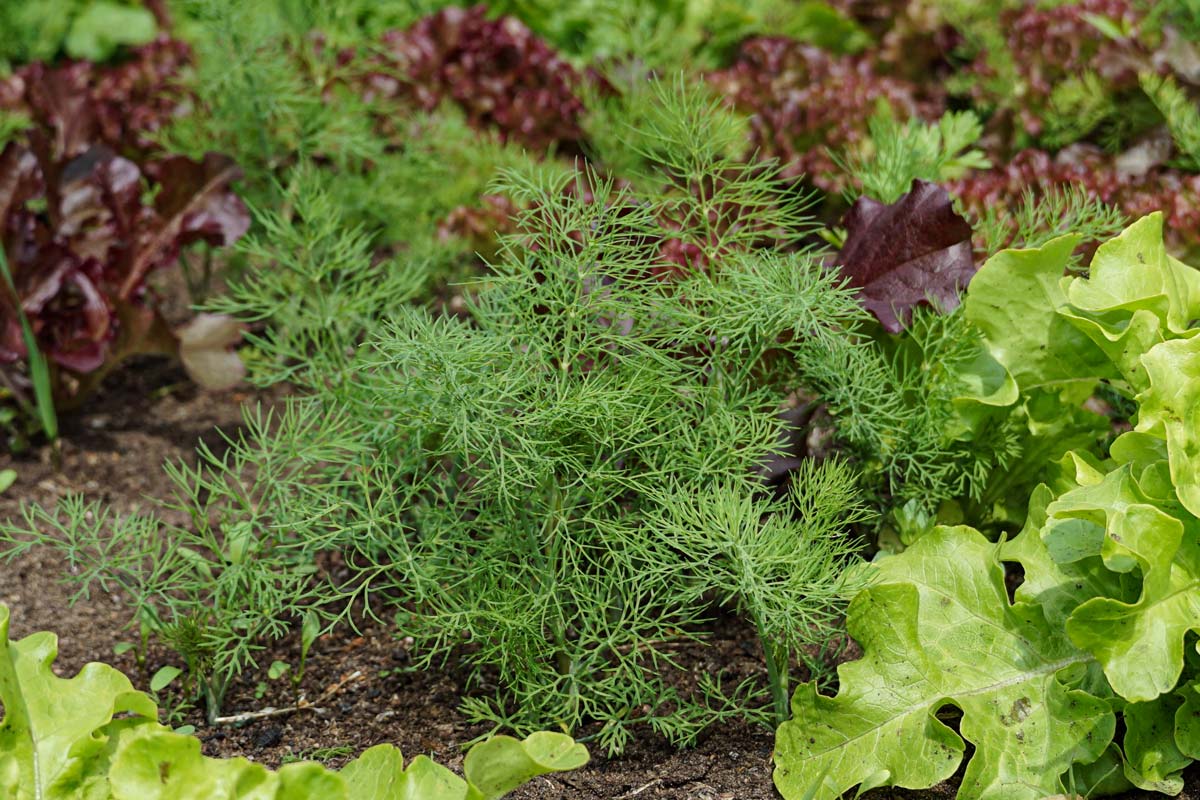
Weintraube/Shutterstock.com
Facts and figures
Planting & harvest times of Dill
Direct sowing from Early April to Late July. After a growing period of 30 days, harvest can begin around Early June and continues until Late October.
Sow Dill
Dill is best sown directly where it's to grow, as it forms a sensitive taproot and doesn't transplant well. From April, once temperatures are consistently above 15 °C, you can get started. You can sow right through to July or August. For a continuous harvest, stagger your sowings every three to four weeks.
Only cover the seeds with a very thin layer of soil or rake them in lightly, as dill needs light to germinate. This protects against wind displacement without inhibiting germination. Row spacing should be about 25 cm, and thin the seedlings to 15 cm within the row. Loosen the soil well before sowing and work in some compost.
In our garden, we skip rows and spacing entirely with dill and simply broadcast it across the area near the cucumbers.
Germination takes one to three weeks depending on the weather. Make sure to use fresh seed, as dill seeds only remain viable for about one to two years.
Location and soil
Dill needs a sunny spot with at least six to eight hours of direct sunlight. Partial shade works at a pinch, but the flavour suffers noticeably. A sheltered position is important because the hollow stems of taller varieties snap easily.
The soil should be loose, rich in humus and well-drained. A loamy soil with some sand or gravel mixed in for drainage works particularly well.
What dill really can't tolerate is waterlogging. Standing water encourages fungal diseases, especially the dreaded Fusarium wilt. Keep the moisture as even as possible. Big swings between dry and wet are just as problematic. A layer of mulch helps keep the soil evenly moist.
Good and bad companions of Dill
Cucumber is the absolute classic companion for dill. The combination works both ways: dill improves cucumber germination, and the broad cucumber leaves shade the soil and prevent it from drying out.
Brassicas like broccoli, cauliflower, savoy cabbage and kale benefit enormously because dill's essential oils confuse the cabbage white butterfly and reduce infestations. At the same time, flowering dill attracts hoverflies, whose larvae decimate aphids in the surrounding area. Sown between broad beans, dill keeps black bean aphids at bay.
Lettuce, lamb's lettuce and endive grow well next to dill. Beetroot, onions, peas and courgettes are also tried-and-tested partners.
Fennel is by far the worst neighbour. As closely related umbellifers, dill and fennel can cross-pollinate, producing flavourless hybrids. They also inhibit each other's growth. Caraway, lovage, coriander and parsnip should likewise not stand directly next to dill, as they compete for the same nutrients or share the same diseases.
Predecessors and successors of Dill
As an umbellifer, dill follows a strict crop rotation rule: at least three to four years before growing another umbellifer in the same spot. The main reason is Fusarium wilt, a soil fungus whose spores survive in the ground for years.
As a light feeder, dill does wonderfully after heavy feeders like tomatoes, cabbage or squash. The soil may be somewhat depleted, but it's perfectly sufficient for undemanding dill. Legumes like beans and peas make particularly good predecessors because they enrich the soil with nitrogen and loosen it with their roots. Potatoes also work well, provided there's no nematode problem.
Bad predecessors are all umbellifers: parsley, carrots, celeriac, fennel, parsnip and chervil share the same soil-borne diseases and pests. After dill, brassicas like cabbage and radishes, goosefoot plants like spinach and chard, or nightshades like tomatoes and peppers make good successors. Dill's deep taproot loosens the soil, which particularly benefits shallow-rooted successors.
Varieties
With dill, you can broadly distinguish between leaf dill for fresh use and seed dill for seasoning and pickling. There's a wide selection, and depending on your goal, it's worth taking a closer look at the varieties.
If you want to harvest leaves for as long as possible without the plant bolting quickly, go for late-flowering varieties like 'Elefant' or 'Dukat'. 'Elefant' grows up to 120 cm tall and produces an abundance of dark green foliage. 'Dukat' scores with a high oil content and intense flavour.
For growing in pots or on a balcony, compact varieties like 'Ella', 'Delikat' or 'Fernleaf' work well. They only reach 20 to 40 cm tall, have fine foliage and fit into smaller containers. At the other end of the scale, 'Hercules' grows up to 160 cm tall — a late-flowering variety with vigorous growth.
Older heritage varieties often self-seed reliably and come back year after year. Once a robust variety is established in your garden, you barely need to worry about resowing.
Care and fertilising
Dill is an undemanding herb that needs little attention. When watering, consistency is key. Big swings between wet and dry encourage fungal problems. On hot summer days, water in the morning or evening and try not to splash the leaves. In pots, water requirements are higher, so check more regularly.
When it comes to feeding: less is more. A single application of compost before sowing covers the whole season in the bed. Plant teas made from comfrey or nettle can give growth an extra boost. Overfeeding does harm — it leads to soft, unstable stems and less flavour. In pots, you can give a diluted organic liquid feed weekly from April.
Regular weeding is particularly important in the first few weeks, as dill seedlings grow very slowly and get smothered by weeds quickly. Hoe the soil occasionally to improve aeration. In windy spots, stake taller plants. If you let dill flower and set seed, you can expect self-sown plants the following year.
Diseases and pests
Fusarium wilt (Fusarium oxysporum) is by far the biggest problem with dill. This soil fungus appears particularly where there's waterlogging and no crop rotation. Affected plants wilt despite having enough moisture, and the stem base turns brownish. Remove infected plants immediately and never compost them. Prevention is everything here: strictly observe the three to four year break for all umbellifers and avoid waterlogging.
Damping off affects freshly germinated seedlings that topple over and die shortly after emerging. Even, not-too-wet moisture levels help prevent this. Umbel blight shows as browning and drying out of the flower heads.
Aphids are the most common pest, especially on young plants. You'll spot an infestation by sticky, curled leaves. Beneficial insects like ladybirds and lacewings help here. Companion planting with dill partly takes care of itself: flowering dill attracts hoverflies, whose larvae devour aphids. Nematodes damage the roots and are best kept in check through consistent crop rotation.
Harvest and processing
Leaf harvesting begins about six to eight weeks after sowing, once the plants are 15 to 20 cm tall. Keep snipping the shoot tips as needed — this encourages further growth. The leaves have the most intense flavour just before flowering. The yellow umbel flowers appear from June to September and are also edible. Harvest dill seeds when the umbels turn brown, usually late August to September. Cut the stems and hang them upside down to dry. Freshly cut dill keeps in the fridge wrapped in a damp cloth or in a screw-top jar for up to three weeks. The best way to preserve it is freezing: chop the dill fresh and freeze it in portions to retain most of the flavour. Drying works too, but dried dill loses a lot of taste compared to fresh or frozen. In the kitchen, dill goes with cucumber salad, pickled gherkins, fish dishes, potatoes, cream cheese, herb butter and egg dishes. Don't cook dill — add it just before serving. Heat destroys the delicate flavour. The seeds can be used similarly to caraway for breads and pastries. You can also brew a soothing, calming tea from them. Dill flowers are excellent for flavouring herb vinegar and pickling vegetables. And when seasoning: be generous rather than stingy.