
Amaranth is one of the oldest cultivated plants in the world. The Aztecs and Incas grew it as a staple food long before the Spanish conquistadors temporarily banned its cultivation. Today this plant from the Amaranthaceae family is making a real comeback, and rightly so: amaranth produces both nutrient-rich seeds and spinach-like leaves, all while looking stunning with its long, often bright red flower panicles. This annual plant forms a strong taproot and reaches between 30 and 200 cm in height depending on the variety. The flower heads can grow up to 60 cm long in some varieties, arching gracefully downwards. Amaranth flowers from June to October and attracts plenty of bees and other pollinators. Each plant produces countless tiny seeds, which makes self-sowing a real consideration. The seeds contain around 15% high-quality protein with plenty of lysine, plus iron, calcium and magnesium. They're gluten-free and can be cooked, popped or ground into flour. The young leaves taste pleasantly mild, reminiscent of tender spinach. If you're sensitive to oxalic acid or prone to kidney stones, you should enjoy them in moderation though.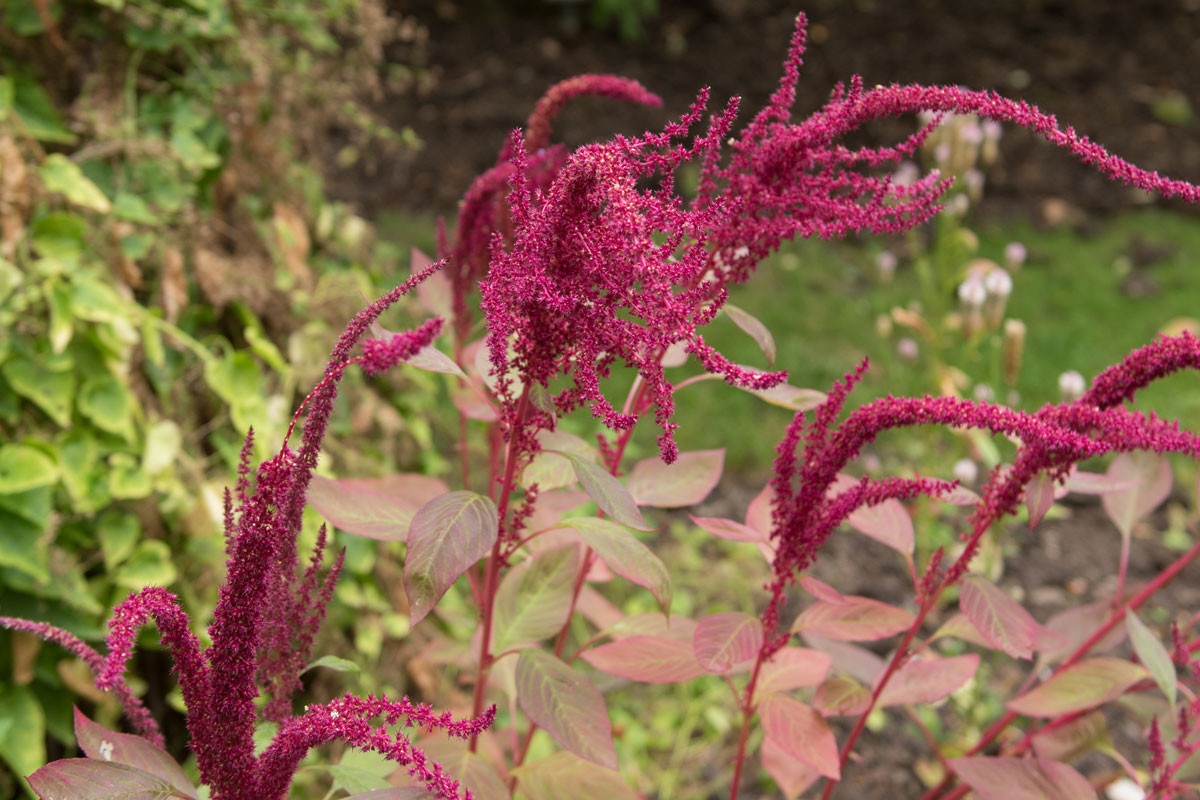
Peter Turner Photography/Shutterstock.com
Facts and figures
Planting & harvest times of Amaranth
Direct sowingDirect sowing from Mid May to Late May. After a growing period of 150 days, harvest can begin around Early July and continues until Mid October.
TransplantTransplant to bed from Mid May to Late May. Pre-grow about 60 days before planting out, approximately between Mid March and Late March. After a growing period of 150 days, harvest can begin around Mid September and continues until Mid October.
Sow and plant Amaranth
Amaranth needs light to germinate. Cover the fine seeds with only the thinnest layer of soil, no more than 5 mm deep. Mix the seeds with a little sand before sowing so they spread more evenly. After sowing, press them down gently and keep the soil moist throughout the entire germination phase. At an optimal 18 to 22 °C, the first seedlings appear after about 8 to 14 days. From around 13 °C, amaranth will still germinate but takes considerably longer.
Planting 1: If you mainly want to harvest leaves and flowers, direct sowing from mid to late May works perfectly. Once the risk of late frost has passed, sow the seeds straight into the bed. Amaranth grows quickly and easily catches up with any head start from indoor sowing.
Planting 2: If you're after the grain or live in an area with shorter summers, starting indoors is worthwhile. From March, sow two to three seeds per pot in low-nutrient seed compost and keep the pots warm. Once two pairs of leaves have developed, prick them out. The young plants can only go outside after the last frost in mid-May, as amaranth cannot tolerate frost at all. Take a bit of care when transplanting because the taproot reacts badly to damage.
Whether direct sowing or starting indoors, space plants about 40 cm apart, or 50 cm for particularly tall varieties. Row spacing is between 30 and 50 cm.
Location and soil
Amaranth loves warmth and sunshine. A fully sunny, sheltered spot is ideal, such as against a heat-retaining house wall. It will grow in partial shade too, but flowering will be noticeably less impressive.
The soil should be loose, well-drained and deep. A good helping of compost before planting does wonders. Waterlogging quickly leads to root rot. Thanks to its deep taproot, amaranth copes surprisingly well with short dry spells. Still, you should water regularly during hot summers. In pots, you may even need to water daily on hot days.
Below 8 °C, amaranth practically stops growing, and the first frost finishes it off. Overwintering unfortunately doesn't work.
Good and bad companions of Amaranth
Cucurbits like cucumber, courgette and squash are among the best companions for amaranth. Its tall growth provides them with wind protection and light shade, while the ground-covering cucurbits keep the soil from drying out. Keep at least 50 cm of space between them.
Sweetcorn is another dream partner. Both plants love warmth and have different nutrient requirements. In the traditional milpa systems of Mexico, they were grown together centuries ago. Amaranth also attracts predatory ground beetles that keep maize pests in check.
Beans fit in well too, as they enrich the soil with nitrogen. Basil and oregano repel aphids with their essential oils while attracting pollinators at the same time. Lettuce also benefits from the dappled shade cast by tall amaranth plants, as it bolts less quickly.
Keep brassicas like broccoli, cauliflower and cabbage well away though. As heavy feeders, they compete fiercely for nutrients. Scientific literature confirms this. Fennel is another bad neighbour because it releases growth-inhibiting substances through its roots. And other members of the Amaranthaceae family like spinach, chard or beetroot share the same pests and diseases as amaranth.
Predecessors and successors of Amaranth
Amaranth belongs to the Amaranthaceae family alongside spinach, chard and beetroot. In the vegetable patch, leave a gap of 2 to 3 years before growing plants from this family in the same spot again. This prevents soil-borne diseases and one-sided nutrient depletion.
It grows without problems after heavy feeders like cabbage or squash, though too much nitrogen can delay seed ripening.
After amaranth, root vegetables like carrots or parsnips benefit from the deep soil loosening left by the taproot. Watch out for vigorous self-sowing and cut off the flower heads before the seeds fully ripen.
Varieties
The range of amaranth varieties is impressive, spanning from compact pot plants to imposing standalone specimens. For small gardens and containers, 'Green Thumb' is a great choice at just 30 to 50 cm tall with light green flower heads. If you prefer the classic look, go for 'Love Lies Bleeding' with its trailing, crimson flower tassels at 60 to 100 cm tall.
From the species Amaranthus cruentus comes 'Velvet Curtains', a deep red, container-friendly variety reaching 100 to 150 cm. 'Bärnkrafft' is the only variety approved by the German Federal Plant Variety Office and suits serious grain production. Things get really spectacular with 'Elefantenkopf' (A. hypochondriacus), which pushes dark red flower heads up to 200 cm high.
For leaf harvesting, 'Roter Meier' (A. lividus var. rubrum) is a good pick with particularly tender, spinach-like leaves. The species Amaranthus tricolor offers 'Illumination', a variety whose bronze-red-gold foliage is almost too beautiful to harvest. Whether you want a leaf vegetable, grain producer or ornamental plant, there's a variety to match.
Care and fertilising
Amaranth is easy to look after, but the young plants grow slowly and get overwhelmed by weeds easily. Regular weeding and a straw mulch layer help during the first few weeks. Water evenly without causing waterlogging. Support tall varieties over about 80 cm in good time. Earthing up around the base, similar to potatoes, gives extra stability.
For feeding, a basic organic supply of compost and horn shavings before planting is enough. If needed, apply diluted nettle feed every two to three weeks. Nitrogen-rich mineral fertiliser only promotes leaf growth at the expense of seed production.
Diseases and pests
Amaranth is tough and slugs usually leave it alone. The most common pest is aphids, which settle on shoot tips and the undersides of leaves. You'll spot them by sticky leaves and small green-black colonies. A soft soap solution works fast, and horsetail tea helps as a preventative. Ladybirds and lacewings take care of the rest.
Powdery mildew shows up as a white, floury coating on the leaves. A mixture of fresh milk and water at a ratio of 1:8 sorts it out. Root rot only occurs with waterlogging, and affected plants need to be removed completely.
In companion planting, aromatic herbs like basil keep aphids at bay, while tagetes also suppress nematodes in the soil.
Harvest and processing
You can start harvesting the young leaves of amaranth about 8 weeks after sowing. They taste most tender and mild before flowering. Pick individual leaves regularly — this encourages the plant to keep producing new growth. If possible, harvest the leaves in the evening when the nitrate content is at its lowest. Prepare them like spinach: blanch or steam briefly, and you're done. The flower heads can be harvested at the bud stage between July and September. Coated in breadcrumbs and fried in a pan, they're a real delicacy you won't forget in a hurry. For seed harvesting, wait until September or October when the seed heads become dry and brittle. Cut them off, let them dry for about a week, then knock the tiny seeds out. A fine sieve helps with cleaning. Before cooking, wash the seeds thoroughly to reduce bitter compounds and phytic acid. Then simmer with three times the volume of water for 20 to 30 minutes. To pop them, add the dry seeds in small batches to a hot pan without oil. Store the dried seeds in an airtight container, somewhere cool and dark. And don't forget: amaranth self-sows prolifically. If you don't want that, cut off the flower heads in good time before they fully ripen.