
The perennial tree onion doesn't produce flowers but instead grows small bulbils directly in clusters. These sprout green shoots – onion leaves – which you can harvest straight away. Otherwise, new little bulbs grow at their tips again. Those are the tiers. Eventually the weight pulls them down to the ground, where the bulbs take root and form a new clump. That's where the name "walking onion" comes from.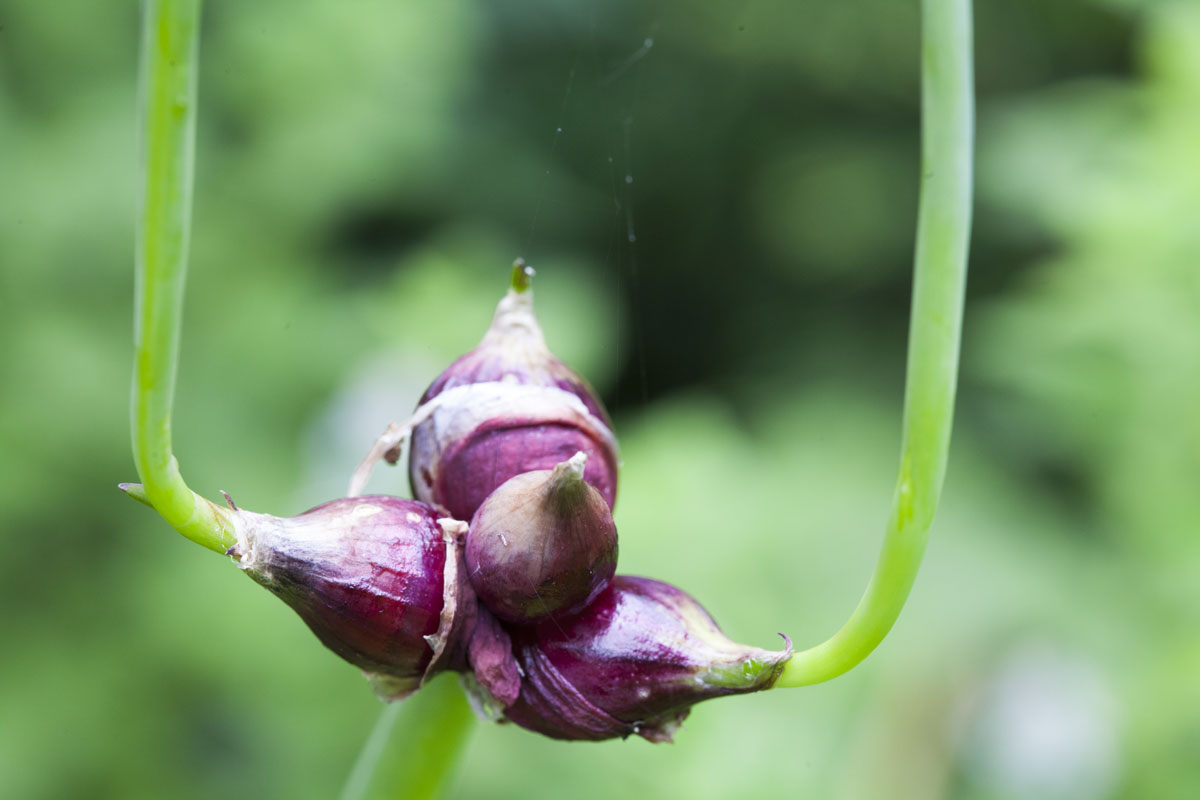
Jen duMoulin/Shutterstock.com
Facts and figures
Planting & harvest times of Tree onion
Transplant to bed from Late February to Late March. Harvest begins around Late April and continues until Late October.
Plant Tree onion
You can't propagate tree onions from seed, since they don't flower and therefore don't produce any seeds. You can only plant the bulbils directly. Plant them about 5 cm deep with 30 cm spacing. They also grow well in pots – it looks quite striking with the tiers dangling down.
Location and soil
They thrive in almost any soil, as long as it's not too wet. They prefer a sunny spot.
Good and bad companions of Tree onion
Don't plant next to other alliums.
Lamb's lettuce and strawberries are good neighbours, and cucumbers and cucamelons (Melothria) are very good neighbours.
Predecessors and successors of Tree onion
Leave at least 3 years before planting tree onions or other alliums in the same spot again.
Care and fertilising
You don't need to feed them. As light feeders they're very undemanding. Regular harvesting encourages growth and keeps the plants healthy. Every 4 years you should divide the clumps and replant them somewhere else to prevent disease and soil exhaustion.
Harvest and processing
You can harvest both the fully grown shoots and bulbs growing in the ground and the ones growing up in the air. You can pickle the bulbils like pearl onions. And the young, still small bulbils with their leaves – just toss them in the pan like spring onions. You can do all of this from spring right through to autumn.