
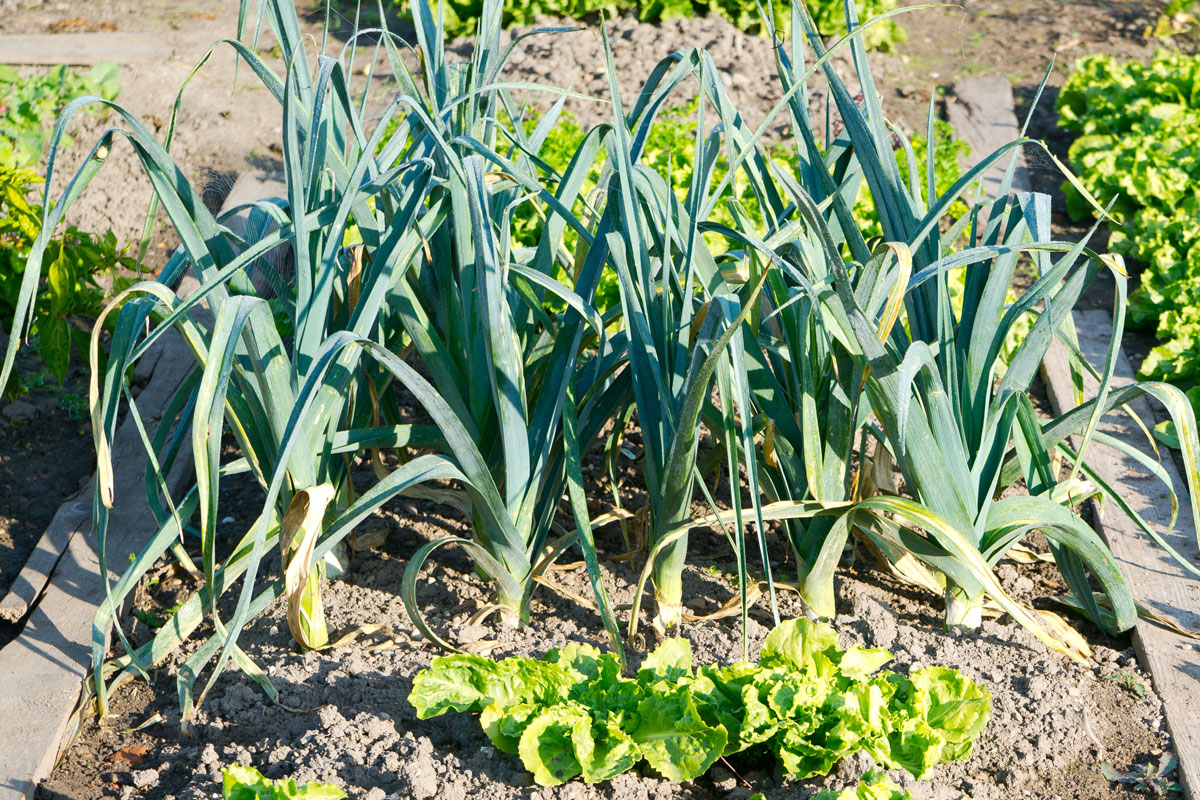
Leek probably originates from the Mediterranean region but was already valued in the kitchen by the ancient Egyptians.
Facts and figures
Planting & harvest times of Leek
SummerTransplant to bed from Early April to Late May. Pre-grow about 60 days before transplanting, approximately between Early February and Late March. After a growing period of 110 days, harvest can begin around Early July and continues until Late August.
AutumnDirect sowing from Mid March to Early April. Transplant to bed from Early April to Mid April. Pre-grow about 60 days before transplanting, approximately between Early February and Mid February. After a growing period of 170 days, harvest can begin around Early September and continues until Late November.
WinterDirect sowing from Mid April to Early May. Transplant to bed from Mid June to Mid July. Pre-grow about 60 days before transplanting, approximately between Mid April and Mid May. After a growing period of 140 days, harvest can begin around Early September and continues until Early April next year.
Sow and plant Leek
When you transplant or sow leeks, space them 15 cm apart with 35 cm between rows. When starting indoors, sow into seed trays that are as deep as possible, about 2 cm deep. Once the seedlings have about 3 or 4 leaves, prick them out into individual pots until they are roughly pencil-thick. Don't press the small plants down — instead fill up with soil to just below the fork and then water them in gently with a fine stream. The same applies when transplanting outdoors.
Location and soil
It likes nutrient-rich, deep and loose soil. Before planting, work rotted animal manure or a good portion of compost into the ground. Full sun to partial shade.
Good and bad companions of Leek
Carrots, tomatoes and celery make good neighbours for leeks, and so do strawberries and lettuce. Planted between tomatoes, leeks are said to be protected from the leek moth. Peas, beans and other alliums, on the other hand, are poor neighbours.
- Practical tip for this pair
- Pest control through scent or camouflage
- Practical tip for this pair
- Practical tip for this pair
- Practical tip for this pair
- Pest control through scent or camouflage
- Practical tip for this pair
- Practical tip for this pair
- Practical tip for this pair
- Practical tip for this pair
- Practical tip for this pair
- Practical tip for this pair
- Shared pathogen, spreads through proximity
- Shared pest is attracted or multiplies
- Shared pathogen, spreads through proximity
- Shared pest is attracted or multiplies
- Shared pest is attracted or multiplies
- Shared pest is attracted or multiplies
- Shared pest is attracted or multiplies
- Shared pathogen, spreads through proximity
- Shared pest is attracted or multiplies
- Shared pest is attracted or multiplies
Predecessors and successors of Leek
Leave four years before you grow other alliums in the same spot. Cabbage and potatoes make good preceding crops. After leeks, lettuce, cucumbers and carrots do well. Don't follow leeks straight away with beetroot or chard, because leeks build up beet cyst nematodes.
- Weed suppression for the next crop
- Both host the same nematode species
- Both host the same nematode species
- Shared soil-borne pathogen
- Both host the same nematode species
- Shared soil-borne pathogen
- Both host the same nematode species
- Shared soil-borne pathogen
- Both host the same nematode species
- Shared soil-borne pathogen
- Both host the same nematode species
- Self-incompatibility
- Shared soil-borne pathogen
- Both host the same nematode species
- Both host the same nematode species
- Both host the same nematode species
- Both host the same nematode species
- Shared soil-borne pathogen
- Both host the same nematode species
- Shared soil-borne pathogen
- Both host the same nematode species
- Shared soil-borne pathogen
- Both host the same nematode species
- Loosens soil, improves soil structure
- Loosens soil, improves soil structure
- Loosens soil, improves soil structure
- Loosens soil, improves soil structure
- Both host the same nematode species
- Both host the same nematode species
- Both host the same nematode species
- Shared soil-borne pathogen
- Both host the same nematode species
- Shared soil-borne pathogen
- Both host the same nematode species
- Shared soil-borne pathogen
- Both host the same nematode species
- Shared soil-borne pathogen
- Both host the same nematode species
- Self-incompatibility
- Shared soil-borne pathogen
- Both host the same nematode species
- Both host the same nematode species
- Both host the same nematode species
- Both host the same nematode species
- Shared soil-borne pathogen
- Both host the same nematode species
- Shared soil-borne pathogen
- Both host the same nematode species
- Both host the same nematode species
- Shared soil-borne pathogen
- Both host the same nematode species
Varieties
You need to look closely at the varieties. There are ones for spring, summer and autumn growing. Depending on the type, the growing times change.
Care and fertilising
Feed several times with small amounts of organic fertiliser or plant brews. Hoe between the rows and carefully earth up the shanks as you go. Try not to get soil into the leaf axils.
Diseases and pests
Harvest and processing
Once the leek stalks are thick enough, around 3 cm, you can harvest them. Carefully loosen the soil next to the leek with a digging fork. That way you can pull them out of the ground more easily. In the fridge, leeks keep for about 1 to 2 weeks. In a cool cellar or similar, stood upright in damp sand, they last around 3 to 4 weeks. Cut into fine strips, blanched and frozen, they keep for between 9 months and a year. If you don't have that many leek plants in the garden, you can also just cut them off just above the soil surface — they'll grow back again.
Open the bed planner Try free for 7 days, web, iOS and Android